Ekiti, NiMet Unite To Avert Climate Disasters Early
Ado Ekiti- The Ekiti State Government has intensified efforts to protect lives, livelihoods and critical infrastructure from the growing threats of climate change by forging a strategic partnership with the Nigerian Meteorological Agency (NiMet) to domesticate the 2026 Seasonal Climate Prediction (SCP) and Annual Flood Outlook (AFO) for the state.
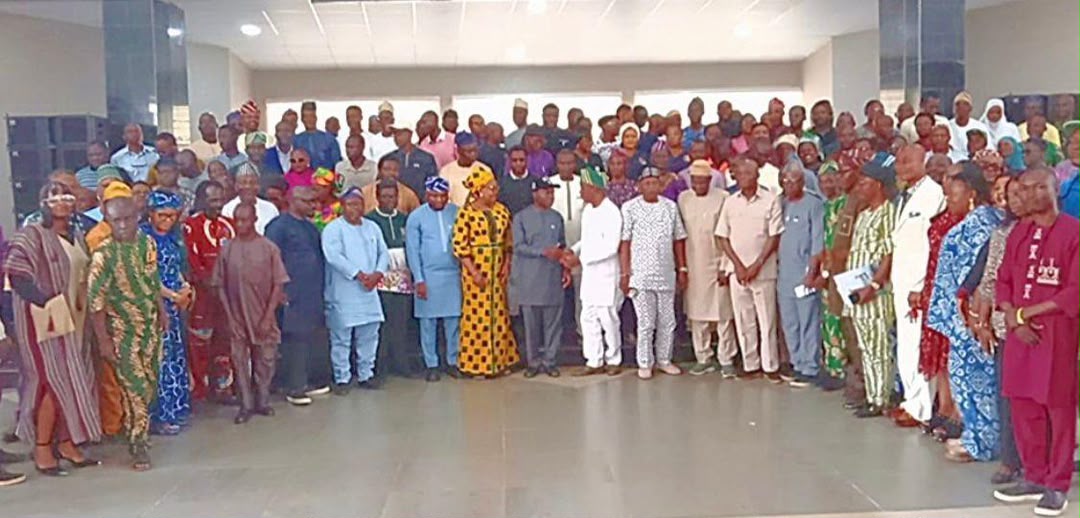
The collaboration, unveiled during a one-day stakeholders’ workshop in Ado-Ekiti, is aimed at providing localized weather and climate intelligence that will support planning, disaster preparedness and sustainable development across key sectors of the state’s economy.
Representing Governor Biodun Oyebanji at the event, the Commissioner for Agriculture and Food Security, Hon. Ebenezer Boluwade, emphasized that the administration recognizes climate change as one of the most pressing challenges confronting modern societies.
He noted that the government remains committed to deploying science-driven solutions to address the environmental, agricultural, health and socio-economic consequences of changing weather patterns.
According to him, access to dependable climate information has become essential for effective governance and long-term development planning.
“Reliable weather forecasts and climate predictions are indispensable tools for informed governance and sustainable development,” Boluwade stated.
He explained that the annual presentation of the Seasonal Climate Prediction and Annual Flood Outlook goes beyond a routine scientific exercise, describing it as a practical decision-making framework that empowers policymakers, farmers, emergency responders, environmental managers and other stakeholders to take proactive measures against climate-related risks.
Boluwade also praised NiMet for its sustained commitment to delivering accurate and timely forecasts, stressing that such interventions have continued to help safeguard lives, agricultural investments and public infrastructure across the country.
In his address, the Director-General and Chief Executive Officer of NiMet, Professor Charles Anosike, represented by the Director of Applied Meteorological Services, Mrs. Glory Onyegbule, warned that climate change is accelerating the frequency and severity of extreme weather events worldwide.
“Climate change has increased the frequency and intensity of extreme weather events globally, making reliable forecasts and flood predictions more important than ever,” Anosike said.
He noted that flooding remains one of the most devastating natural disasters affecting both developed and developing nations, often resulting in the destruction of homes, farmlands and public assets.
Consequently, he called for stronger collaboration among government agencies, communities and private stakeholders to reduce vulnerabilities and build resilience.
The NiMet chief further stressed the importance of climate-smart agriculture in Ekiti, given the state’s strong agricultural base.
He urged farmers and agricultural stakeholders to pay close attention to weather advisories and seasonal forecasts in order to improve yields, reduce losses and strengthen food security.
Professor Anosike commended the Ekiti State Government for its proactive disposition toward disaster preparedness and flood management, describing the partnership as a commendable model worthy of emulation by other states.
Also speaking, the Commissioner for Infrastructure and Public Utilities, Professor Mobolaji Aluko, highlighted the critical role weather and climate data play in infrastructure development. He explained that road construction, drainage systems, public utilities and other developmental projects are increasingly influenced by climate realities.
The Chairman of the All Farmers Association of Nigeria (AFAN), Ekiti State Chapter, Mr. Sunday Adekogbon, described the workshop as a timely intervention that demonstrates a shared commitment to protecting lives, supporting farmers and promoting sustainable economic growth through informed decision-making.
Participants drawn from government ministries, emergency agencies, the health sector, environmental organizations and the private sector lauded the initiative, expressing optimism that the knowledge acquired would improve farming decisions, enhance flood preparedness and strengthen resilience across communities.
The workshop concluded with a unanimous call for greater adoption of climate science and weather-based planning as indispensable tools for environmental sustainability, economic prosperity and long-term development in Ekiti State.
 politics
 Adebayo Challenges Tinubu: Where Is Subsidy Money? Come Out and Account for It
 politics
 NDC Wins Logo Battle as Abuja Court Orders INEC to Use Modified Design
 news
news Atiku Exposes Tinubu’s FAAC Scam: Bigger Naira, Poorer Nigerians
 news
news Police Arrest Hafsat Abubakar Over Fake Fintech Shutdown Document Circulated Online
 politics
 Sowore Declares Peter Obi Yelwata Blockade Government-Sponsored Political Attack
How do you feel about this news?
Community Additions
Have a news tip, correction, or extra context about this story? Post it below instantly. All submissions appear live on this screen immediately.