ISWAP Bomb Specialist Surrenders in Major Yobe Breakthrough
Geidam, Yobe State, Nigeria — In a quiet but potentially game-changing moment for Nigeria’s long-running counter-insurgency campaign, troops of the 159 Battalion under Operation Hadin Kai accepted the surrender of two senior Islamic State West Africa Province (ISWAP) figures on June 8 in Geidam, Yobe State.
One of them is a seasoned bomb-making specialist whose expertise in Vehicle-Borne Improvised Explosive Devices (VBIEDs) — commonly known as car bombs — has made him a high-value target for years.
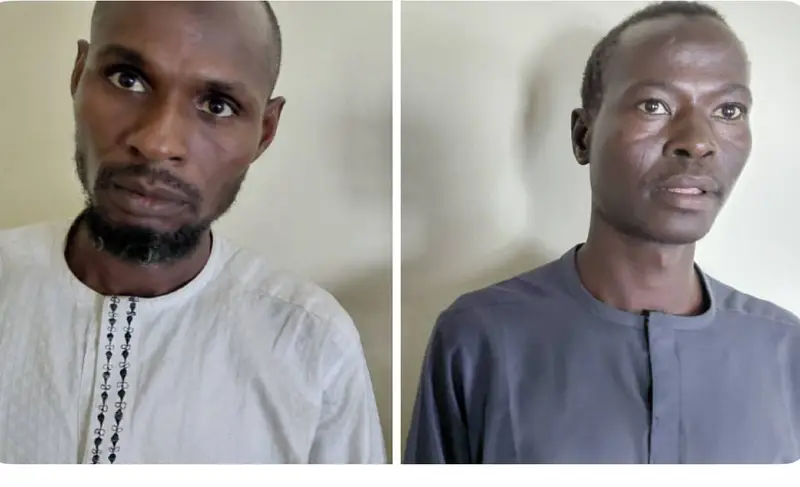
Security analyst Zagazola Makama, citing military sources, reported the development on June 11 as a “major breakthrough.” The two men — identified as Ismail Mohammed and Abu Umar — walked into the hands of Nigerian troops rather than continuing to fight.
Photographs released with the report show two men in traditional attire, their faces bearing the quiet exhaustion of lives spent in hiding and conflict.
Abu Umar is described by sources as a renowned ISWAP engineer and specialist in designing and deploying VBIEDs. In terrorist organizations, such technical experts occupy critical positions.
They enable the high-profile attacks that define the group’s asymmetric warfare: suicide car bombs targeting military formations, crowded markets, places of worship, and infrastructure.
Their knowledge of bomb construction, storage, and logistics is not easily replaced.
Ismail Mohammed, meanwhile, is linked to the notorious Baa Shuwa axis in the Timbuktu Triangle — a strategic insurgent enclave straddling parts of Borno and Yobe states.
Commanders from this area have long coordinated movements, supplies, and attacks across the porous borders of the Lake Chad basin.
The surrender of someone with Abu Umar’s skill set is rare. It potentially opens a window into hidden bomb factories, training sites, storage caches, and supply routes that have sustained ISWAP’s campaign.
Military sources emphasize that information from such defectors can save lives by enabling pre-emptive strikes and disrupting future plots.
VBIEDs have been among the most feared weapons in Nigeria’s Northeast for over a decade.
A single well-placed car bomb can kill dozens in seconds, turn a bustling market into a scene of carnage, and leave entire communities traumatized.
Over the years, these attacks have struck military bases, civilian gatherings, and public spaces, contributing to the displacement of millions and the deaths of thousands — soldiers and civilians alike.
The human cost is staggering. Families have lost breadwinners in an instant. Children have grown up with the sound of explosions as their soundtrack.
Traders have abandoned once-vibrant markets out of fear. For residents of Yobe and neighboring states, the news that a key VBIED specialist has laid down his arms carries a visceral, personal resonance: one less person capable of turning everyday life into sudden tragedy.
This development occurs against the backdrop of sustained military operations under Operation Hadin Kai, which combines kinetic action with efforts to encourage defections.
Nigeria has seen waves of surrenders in the past — sometimes in the thousands — as fighters grow weary of life on the run, internal purges, drone strikes, and the hardships of the Lake Chad islands and Sambisa-like terrain.
Yet the insurgency has shown remarkable resilience. ISWAP, which emerged as a more ideologically rigid and tactically sophisticated splinter from Boko Haram around 2015–2016, continues to launch attacks.
Recent months have seen strikes on military outposts in Borno and suicide operations in the broader Lake Chad region.
Just weeks before this surrender, reports emerged of another group of ISWAP bomb makers dying in a premature IED explosion — a grim reminder of the dangerous, unstable “profession” these specialists practice.
The Timbuktu Triangle itself remains a focal point. Long viewed as a strategic hideout and transit corridor, it allows insurgents to exploit difficult terrain and cross-border movement.
Disrupting leadership and technical expertise there matters.
While this surrender represents progress, several nuances deserve attention.
Not every defector delivers transformative intelligence; some information may be outdated, incomplete, or deliberately misleading.
Screening processes for “repentant” fighters exist, but risks of infiltration or recidivism remain real in any long conflict.
There is also the human element on the other side. What drove these two men to surrender? Disillusionment? Fear for their families? Recognition that the group’s cause is faltering?
Or simply survival instinct after years of relentless pressure? These questions rarely have simple answers, yet they shape how effectively security agencies can turn surrenders into lasting gains.
Broader challenges persist. Root causes — poverty, governance gaps, youth unemployment, and the lingering effects of climate stress on Lake Chad — continue to create conditions where recruitment remains possible. Military victories alone have never fully ended insurgencies of this nature.
For the soldiers who received the surrender, it validates years of difficult work in harsh conditions.
For communities that have endured the terror of car bombs, it offers a small measure of relief and perhaps a signal that even hardened fighters see a different path.
For the wider counter-insurgency effort across the Lake Chad basin — involving Nigeria, Niger, Chad, and Cameroon through the Multinational Joint Task Force — every high-value defection chips away at the enemy’s specialized capabilities.
Abu Umar’s knowledge, if fully exploited, could help map and dismantle parts of ISWAP’s bomb-making infrastructure.
Yet veteran observers know better than to declare victory. The groups adapt. New specialists can be trained or recruited. The terrain favors concealment. The ideological appeal, however diminished, still finds takers in pockets of despair.
This surrender in Geidam on June 8 is best understood not as an ending, but as one more data point in a grinding, multi-year campaign: evidence that sustained pressure works, that expertise can be peeled away, and that even senior figures sometimes choose life over ideology.
The two men are now in military custody. Their interrogations have likely begun.
What they reveal — and how security forces act on it — will determine whether this “major breakthrough” translates into fewer explosions and safer roads in the months ahead.
For now, in the villages and towns of Yobe and beyond, people will watch, hope, and continue the daily work of rebuilding lives scarred by years of conflict. One less bomb specialist in the field is one less nightmare waiting to happen.
 politics
 Adebayo Challenges Tinubu: Where Is Subsidy Money? Come Out and Account for It
 politics
 NDC Wins Logo Battle as Abuja Court Orders INEC to Use Modified Design
 news
news Atiku Exposes Tinubu’s FAAC Scam: Bigger Naira, Poorer Nigerians
 news
news Police Arrest Hafsat Abubakar Over Fake Fintech Shutdown Document Circulated Online
 politics
 Sowore Declares Peter Obi Yelwata Blockade Government-Sponsored Political Attack
How do you feel about this news?
Community Additions
Have a news tip, correction, or extra context about this story? Post it below instantly. All submissions appear live on this screen immediately.