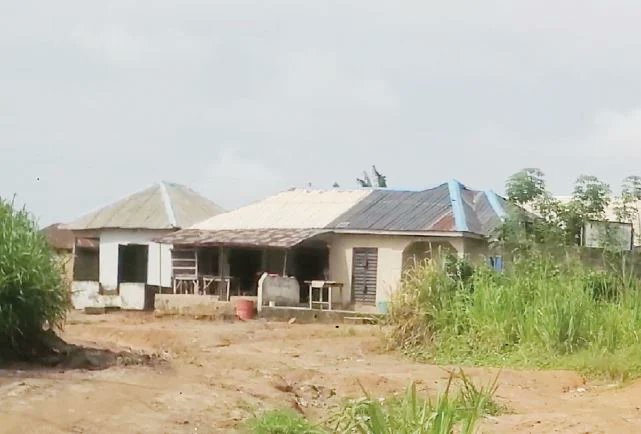
Ogun Communities Flee Homes After Six Killed in Raid
Abeokuta, Ogun State | June 11, 2026 - In the predawn hours of Monday, June 8, 2026, the usual hum of activity at a private sand-dredging site in Magbon-Etido, Mowe, Obafemi-Owode Local Government Area of Ogun State, turned into a scene of terror.
Gunmen — suspected kidnappers — stormed the location in a coordinated commando-style raid, targeting either a prominent local sand miner known as Kapo or Chinese expatriates working there.
What followed was a fierce gun battle that left at least six people dead, including a soldier on security duty, a local hunter named Ewe, and four others. One suspected attacker was also killed.
By Wednesday and into Thursday, the ripple effects had emptied parts of three communities — Fowowawo, Ajerogun, and Magbon-Etido.
Residents packed what they could and fled, leaving homes and shops locked. The once-bustling area, alive with traders, dredgers, and daily commerce along the Lagos-Ibadan corridor, fell eerily quiet. Fear had won the day.
The raid exposed both bravery and heartbreaking vulnerability. Two soldiers guarding the site confronted the gunmen. In the exchange, one soldier was killed and another seriously injured — his leg broken.
Local hunters from the Agbekoya group, responding to initial gunshots they mistook for a workers’ dispute, walked into an ambush.
One of them, Ewe, lost his life. A trader selling koko (a local corn porridge) to security personnel was also cut down.
Attackers seized four people — three workers and the trader — using them as human shields while fleeing toward the Ogun River, the same escape route used in a similar kidnapping at the site three years earlier.
Three of the captives were killed; one escaped by plunging into the water and raising the alarm.
For families in these riverine communities, the tragedy is deeply personal. A soldier who had been protecting others paid with his life. A hunter answering his Baale’s call never returned home.
A small trader, simply earning a living feeding workers, became collateral in someone else’s criminal enterprise.
These were not abstract statistics — they were neighbors, providers, and protectors whose absence now haunts the survivors.
Ogun State Police Command, through Public Relations Officer DSP Babaseyi Oluseyi, confirmed the deaths and described the incident as an “isolated criminal attack,” not connected to broader banditry or terrorism.
One kidnapper was neutralized; others remain at large. Joint security operations involving police, military, and local stakeholders continue, with reinforced patrols in the area.
The Nigerian Army’s 35 Artillery Brigade echoed this, stating troops foiled an attempted abduction of Chinese expatriates at the dredging site.
They recovered bodies of hostages and confirmed the soldier’s death along with injuries to other personnel. One attacker was killed; another reportedly arrested.
Yet nuances persist. Community leader Baale Nurudeen Salisu of Ajerogun provided a vivid account: the gunmen specifically targeted a Chinese national who had joined the site about a year ago.
He noted that an earlier similar attack three years ago ended with a ₦5 million ransom payment.
The escaped hostage reportedly identified the gunmen as suspected Fulani assailants.
Security response was delayed by poor roads linking the communities to the nearest police post in Ofada — a chronic infrastructural gap that left first responders under-equipped and late.
These details raise uncomfortable questions. Was this truly isolated, or part of a pattern targeting economic assets in the Southwest? Why do attackers repeatedly exploit the same riverine escape routes?
And how many more communities must empty before systemic fixes — better roads, properly armed local security, and sustained intelligence — replace reactive statements?
What remains in Magbon-Etido and its neighboring settlements is a profound sense of loss and uncertainty.
Agbekoya Chairman Musbau Adenekan described the sudden panic: “This community is always full of activities from traders and dredgers, but since the incident happened on Monday, there has been panic, and some people have already left their homes.”
The Baale has appealed for residents to return, insisting the situation is now under control. Yet many families, having seen history repeat itself, are choosing safety over sentiment.
The economic ripple is real — sand mining and dredging support construction far beyond Ogun State. Disrupted operations here affect livelihoods and supply chains.
Public reaction, visible across social media and local discourse, mixes grief with frustration. Many ask why security appears perpetually stretched thin despite official assurances.
Others point to the bravery of local hunters and soldiers who stood their ground.
Some invoke traditional or community defense mechanisms, while officials urge calm and cooperation.
This incident is not happening in a vacuum. Ogun State, strategically located between Lagos and the interior, has seen sporadic kidnapping attempts at mining and farming sites.
The 2023 precedent at the same dredging location — resolved only after ransom — shows these criminals study vulnerabilities and return when opportunities arise.
For residents, the choice between staying and fleeing is not abstract. It is about whether their government and security agencies can guarantee their safety in real time, not just after the fact.
It is about whether poor roads will continue to delay help. It is about whether economic activities that sustain families will be protected or abandoned.
As a veteran journalist who has covered countless such tragedies across Nigeria’s regions, I see the same patterns: courageous responders stretched thin, communities paying the highest price, and official narratives emphasizing control while lived reality shows fear driving people from their ancestral lands.
The six lives lost — the soldier, the hunter Ewe, the trader, and the others — demand more than condolences.
They demand honest reckoning with why such raids keep succeeding and what concrete steps will prevent the next community from becoming a ghost town at dawn.
For now, in Fowowawo, Ajerogun, and Magbon-Etido, doors remain locked, voices are hushed, and the river that once carried commerce now carries memories of escape and loss.
The question hanging over Ogun — and indeed Nigeria — is no longer just who will protect these communities, but when the protection will finally match the courage of those who live there.
The situation remains fluid. Security agencies continue operations. Residents watch, wait, and hope that this time, the promises of reinforced presence translate into lasting safety rather than another cycle of tragedy and flight.
 politics
 Adebayo Challenges Tinubu: Where Is Subsidy Money? Come Out and Account for It
 politics
 NDC Wins Logo Battle as Abuja Court Orders INEC to Use Modified Design
 news
news Atiku Exposes Tinubu’s FAAC Scam: Bigger Naira, Poorer Nigerians
 news
news Police Arrest Hafsat Abubakar Over Fake Fintech Shutdown Document Circulated Online
 politics
 Sowore Declares Peter Obi Yelwata Blockade Government-Sponsored Political Attack
How do you feel about this news?
Community Additions
Have a news tip, correction, or extra context about this story? Post it below instantly. All submissions appear live on this screen immediately.