Troops Bust ISWAP Informant Supply Chain in Damboa
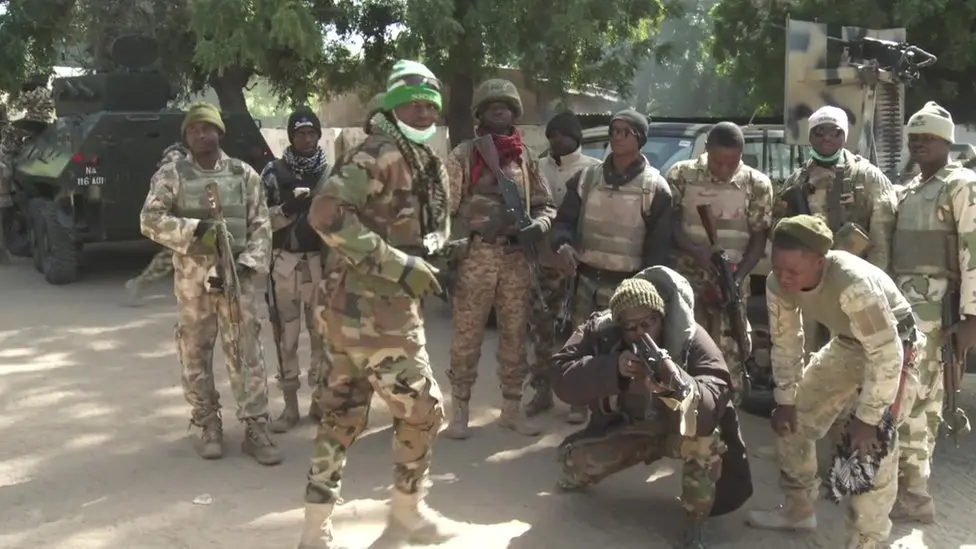
MAIDUGURI, BORNO STATE — In a quiet but significant blow to terrorist logistics networks, Nigerian troops have arrested two suspected informants linked to ISWAP and Boko Haram in Borno State, disrupting their ability to channel supplies and intelligence to insurgents operating in the troubled North-East.
The arrests, carried out on June 9 under the umbrella of Operation Hadin Kai and its sub-operation Desert Sanity, underscore the military’s relentless focus on choking the support systems that have sustained years of insurgency — a conflict that has devastated communities, displaced families, and turned once-thriving farmlands into zones of fear.
In Damboa town, combined troops from the 19 Battalion and 25 Brigade Garrison, working closely with members of the Civilian Joint Task Force (CJTF), apprehended Adams Shittima, a 23-year-old man, while he was allegedly purchasing farm inputs and mosquito nets — items reportedly destined for terrorist elements hiding in the area.
During preliminary interrogation, Shittima reportedly confessed to serving as a logistics supplier and informant, feeding information and materials to both Boko Haram and ISWAP factions.
He is now undergoing further investigation at the Headquarters of the 25 Brigade to map out the wider network and identify other accomplices.
In a separate but coordinated action the same day, troops of the 162 Amphibious Battalion detained another suspected Boko Haram informant within their area of responsibility.
The second suspect is being held at the Abogo Largema Military Cantonment for interrogation.
These were not random sweeps. They were intelligence-driven operations targeting the human and material pipelines that keep insurgents fed, informed, and mobile.
For residents of Damboa and surrounding communities in Borno, these arrests carry deep meaning. Insurgents have long relied on local facilitators — sometimes young men like Shittima — to move unnoticed, gather intelligence on troop movements, and smuggle essentials such as fuel, food, and even simple items like mosquito nets for their camps.
Every successful supply run prolongs the suffering: farmers cannot tend their fields without fear, families live in perpetual anxiety of attacks or forced recruitment, and entire villages have been emptied over the years.
The 23-year-old suspect’s involvement highlights a painful reality — how the insurgency continues to ensnare youth, turning them into cogs in a violent machine that destroys their own communities.
The involvement of the Civilian Joint Task Force in the Damboa arrest is particularly telling.
These local volunteers, who have paid a heavy price in blood over the years, represent the resilience of Borno people who refuse to surrender their land to terror.
Their partnership with regular troops shows that security in the North-East is increasingly a shared endeavour.
The arrests fit into a wider pattern of sustained pressure. Troops under Operation Hadin Kai have in recent weeks and months repelled coordinated ISWAP attacks on military bases, conducted precision airstrikes that destroyed terrorist hideouts and logistics vehicles, cleared camps in the Timbuktu Triangle, and discovered facilities such as bread-producing factories run by insurgents.
These operations — kinetic and intelligence-focused — aim to degrade not just fighters but the entire ecosystem that supports them. Denying logistics and information is as critical as direct combat.
When supply chains are disrupted, fighters become more vulnerable, movements more restricted, and local support harder to maintain.
Security analysts note that while the overall situation in Borno remains “calm but unpredictable,” troops maintain high combat readiness and morale.
The focus on support networks represents a strategic evolution: winning the war requires winning the battle for local cooperation and cutting off the oxygen of logistics.
No single arrest ends an insurgency that has lasted more than a decade. ISWAP and Boko Haram have shown remarkable adaptability, often regenerating networks even after heavy losses.
The youth of one suspect raises difficult questions about recruitment pathways and the need for stronger deradicalization and alternative livelihood programmes alongside military action.
There is also the human dimension of justice: as investigations continue, ensuring due process and distinguishing between willing collaborators and those coerced or misled remains essential to maintaining community trust.
For the people of Borno, however, each disrupted supply line is a small victory — one less mosquito net reaching a terrorist camp, one less piece of intelligence helping insurgents evade justice, one more signal that the security forces are watching the shadows where terror hides.
The fight in Borno is not just about guns and airstrikes. It is about protecting farmers in Damboa, restoring normalcy to families who have lost everything, and giving young people like Adams Shittima — and those who might follow his path — a different future.
These latest arrests, though modest in scale, form part of the patient, grinding work of dismantling terror from the ground up.
As long as troops and communities continue working together under operations like Hadin Kai, the space for ISWAP and Boko Haram to operate will keep shrinking — one informant, one supply run, one network at a time.
The road to lasting peace in the North-East remains long and demanding. But on June 9 in Damboa and across Borno, Nigerian forces took another deliberate step forward.
For the communities that have endured the most, that step matters.
 politics
 Adebayo Challenges Tinubu: Where Is Subsidy Money? Come Out and Account for It
 politics
 NDC Wins Logo Battle as Abuja Court Orders INEC to Use Modified Design
 news
news Atiku Exposes Tinubu’s FAAC Scam: Bigger Naira, Poorer Nigerians
 news
news Police Arrest Hafsat Abubakar Over Fake Fintech Shutdown Document Circulated Online
 politics
 Sowore Declares Peter Obi Yelwata Blockade Government-Sponsored Political Attack
How do you feel about this news?
Community Additions
Have a news tip, correction, or extra context about this story? Post it below instantly. All submissions appear live on this screen immediately.