
Our Planet’s Habitable Days Are Numbered — Here’s the Timeline
Rising solar luminosity will trigger CO₂ collapse, end photosynthesis, and sterilize the planet long before the Sun expands into a red giant.
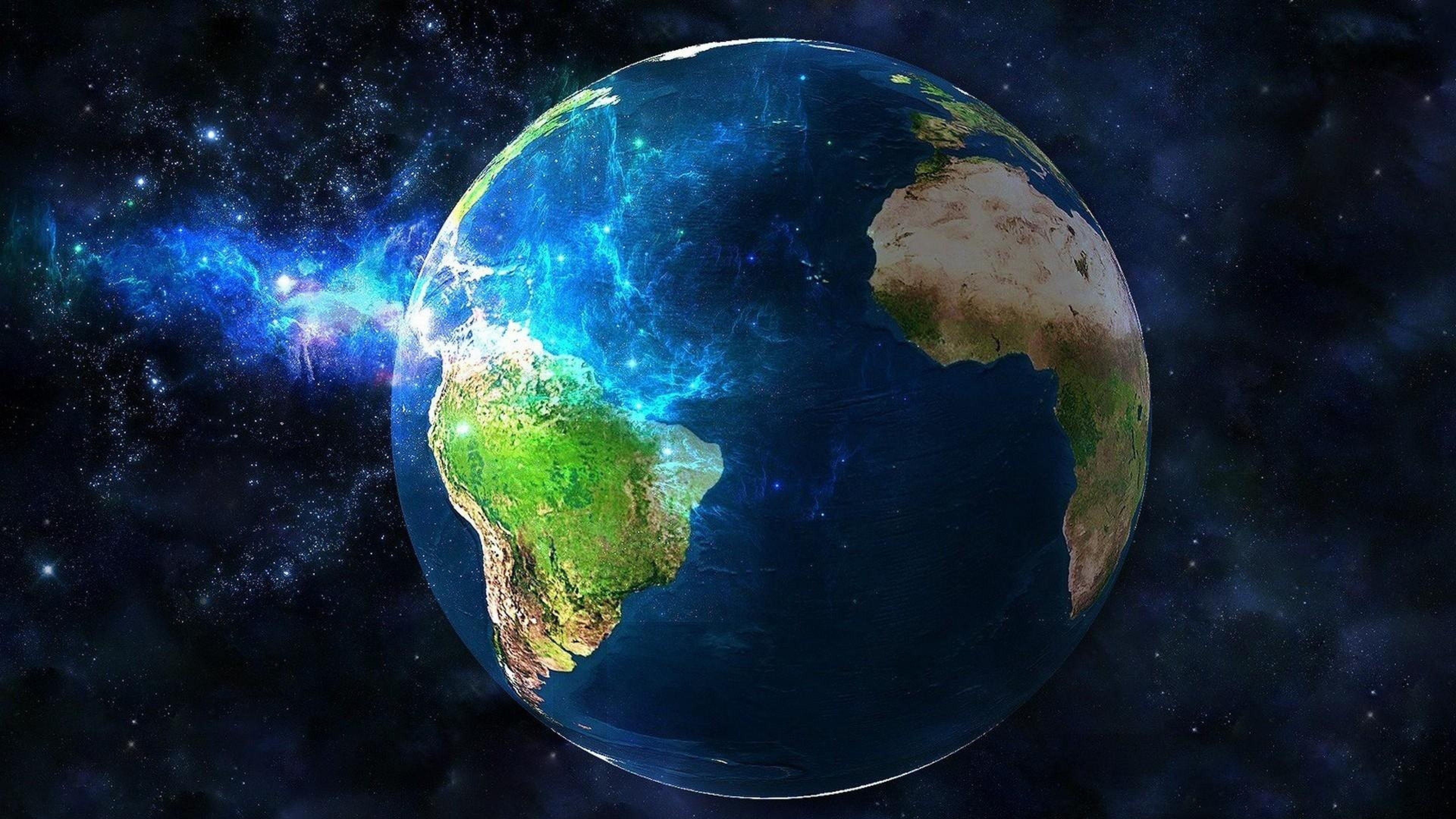
Earth will not remain a living world forever. New climate and biogeochemical models show that our planet’s window for complex life is finite, closing in roughly 1.8 billion years as the Sun steadily brightens and disrupts the delicate carbon cycle that sustains the biosphere.
The Sun, a middle-aged G-type star, is already about 30 percent brighter than when the solar system formed 4.5 billion years ago. It continues to gain luminosity at a rate of roughly one percent every 110 million years.
That gradual increase forces higher surface temperatures and accelerates silicate weathering, which steadily draws carbon dioxide out of the atmosphere.
Plants depend on atmospheric CO2 for photosynthesis. Once levels fall too low, vegetation collapses. Without plants, oxygen production ceases. Earlier projections placed the end of the vegetative biosphere at less than one billion years.
A 2026 study published in the Journal of Geophysical Research: Atmospheres by researchers including Jacob Haqq-Misra and Eric Wolf revised that timeline upward. Using three-dimensional climate simulations that account for both strong and weak temperature dependence of weathering, the team concluded the maximum lifetime of Earth’s vegetative biosphere is approximately 1.86 billion years.
In the more optimistic “weak-weathering” scenario, temperatures climb until they exceed the thermal tolerance of complex life around 1.87 billion years from now. Even plants adapted to low-CO₂ conditions, such as those using CAM or C₄ photosynthesis, eventually fail.
Once the biosphere crashes, oxygen levels plummet, oceans begin to evaporate under a runaway greenhouse effect, and the surface becomes sterile.
The physical planet itself may endure longer. In about five billion years the Sun will exhaust the hydrogen in its core, swell into a red giant, and expand dramatically.
Mercury and Venus are expected to be engulfed. Whether Earth shares that fate remains under debate.
Updated models that incorporate realistic mass loss from the aging star and refined tidal interactions suggest Earth’s orbit could expand enough for the planet to survive as a barren rock orbiting the eventual white dwarf remnant.
Either outcome is academic on human timescales. The decisive deadline for life is the far nearer loss of a breathable, photosynthesizing world.
Scientists emphasize that these projections describe natural stellar evolution on geological timescales and have no connection to present-day climate change driven by human activity.
The research sharpens our understanding of planetary habitability across the galaxy. Earth’s long but finite biosphere reminds us that even the most successful living worlds eventually face an ending written in the physics of their host stars.
For now, the clock still reads in the billions of years—ample time for curiosity, stewardship, and the search for other homes among the stars.
Community Additions
Have a news tip, correction, or extra context about this story? Post it below. Submissions appear here straight away.