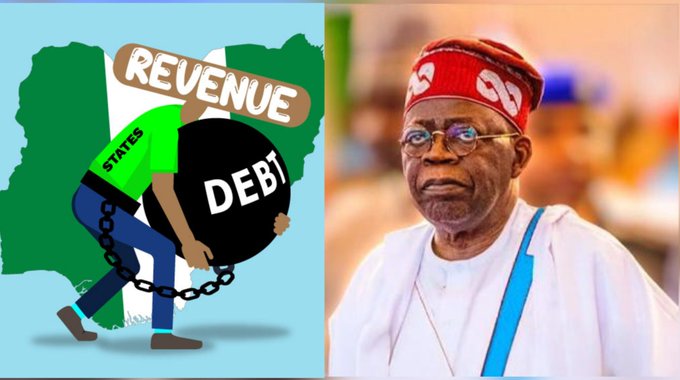
Five Nigerians Crushing Under One Failed Economy Tinubu Built with His Own Hands
Five Nigerians. Five different mornings. One brutal reality that this government refuses to face.
A driver turns the key and already knows the day is lost. A trader opens her stall and prays someone still has money left to spend. A farmer looks at his field and wonders if the harvest will even cover the cost of getting it to market.
A student counts the notes in his pocket and realizes transport alone might finish them. A worker collects his salary and watches it disappear before the second week ends.
They do not share the same job. They share the same enemy: the crushing cost of simply staying alive in Nigeria right now.
This is not misfortune. This is the direct result of choices made in Abuja since 2023. And the people paying the price are not the ones who made those choices.
The Driver Who Pays With His Blood
Every morning the same calculation plays out across the country. Petrol sits between ₦1,400 and ₦1,500 in the big cities. In some northern towns it climbs higher.
Diesel has gone even madder. A man who once filled his tank and still had something left for his family now watches the pump drain his entire day’s hope.
He is not imagining it. The subsidy was ripped away with one announcement. No real protection. No serious plan for the people who keep this country moving.
Three years later the government still talks about “necessary pain” while the driver eats less so he can keep working. That is not reform. That is abandonment dressed up as courage.
The Trader Watching Her Customers Starve Slowly
Walk through any market and you will hear the same quiet complaint. People still come, but they buy half of what they used to. Bread. Tomatoes. Rice.
Everything has climbed beyond the reach of ordinary pockets. Food inflation remains stubbornly high even when the official headline number pretends to be improving.
Traders are not economists. They do not need a press conference to know the truth. Their customers are poorer.
Their own capital is trapped in goods that no longer move. Many have started borrowing just to restock. Some have already closed.
The government points to “easing inflation.” On the street that phrase means nothing. Prices did not fall. They simply stopped rising as fast after they had already broken people.
The Farmer Trapped Between Bandits and Empty Pockets
In the villages the story is even harder. Fertilizer costs more. Transport costs more. Security is a daily gamble. A man plants knowing that if bandits do not take his harvest, the cost of moving it to market might finish him anyway.
Agriculture is supposed to be the backbone of this country. Under this administration it has become another place where ordinary people are left to bleed. Food insecurity numbers remain ugly. Millions still go to bed hungry.
The speeches about mechanization and investment sound beautiful in Abuja. They mean very little when a farmer cannot afford to plant or to sell.
The Student Calculating Hunger Against Education
Young people are carrying a special kind of weight. Transport to school. Feeding. Basic materials. Everything has become a negotiation with poverty.
Many now combine lectures with hustles just to stay enrolled. Some have dropped out quietly. Their parents face impossible choices between fees and food.
Education was once sold as the escape route. Today it feels like another expensive trap. A generation is being told to work harder while the ground under their feet keeps shifting. That is not motivation. That is cruelty with a smile.
The Worker Whose Salary Is a Bad Joke
The salaried worker might be the most common casualty. Seventy thousand naira a month. On paper it looks like an increase.
In real life it buys far less than the old minimum wage did before 2023. Housing. Electricity. Food. Transport. The money is gone before the middle of the month.
Many now live as the working poor—employed full time and still unable to survive without loans or side jobs.
Consumer debt is climbing because people are borrowing just to eat. This is what “stabilization” looks like when it never reaches the people who actually keep the country running.
The Ugly Truth Behind the Numbers
Yes, some macroeconomic figures have improved. Growth is higher. Reserves look better. Headline inflation has come down from its worst peak. The government waves these numbers around like a victory flag.
But poverty sits at around 63 percent. Food insecurity still grips tens of millions. The gap between the official story and the kitchen table has become a national scandal.
International institutions have said the quiet part out loud: the reforms strengthened the books, yet conditions for most Nigerians remain extremely difficult.
People cannot eat foreign reserves. They cannot cook GDP growth. They cannot send their children to school on a press release.
This Was a Choice
Removing the fuel subsidy and floating the naira were presented as unavoidable. What was avoidable was the near-total failure to protect ordinary citizens from the shock.
The palliatives were too small, too late, and too poorly targeted. The pain was predictable. The indifference that followed was not.
Three years later the same government now claims the emergency is over and that cutting the cost of living is the new priority.
For the driver, the trader, the farmer, the student and the worker, the emergency never ended. It simply became permanent.
The Real Test
Economic reform always demands sacrifice. But when the sacrifice is demanded only from those who already have the least, and when the people who designed the policy continue to live comfortably while preaching patience, something fundamental has broken.
Nigerians are not against difficult decisions. They are against decisions that break them and then insult them with statistics.
They are against a government that speaks of prosperity while families choose between food and transport every single day.
Five lives. One pressure. A country still waiting for its leaders to feel even a fraction of what ordinary people feel every morning when they open their eyes.
Until the price of fuel, food, and transport begins to ease in ways that ordinary people can actually touch, all the speeches in the world will remain what they currently are: expensive noise.
The streets already know the truth. The only question left is how much longer those in power will pretend they do not.
 news
news Presidency Brands Economist’s Tinubu Hate Claim Intellectual Fraud as Reforms Push On
 world
world Hegseth Declares Commanders Back in Charge with Major IG Reforms Across War Department
 news
news Suspected Cattle Rustlers Injure Youth in Isolated Bokkos Attack as Plateau Troops Respond
 world
world Trump Credits US Forces as Dozens of Iranian Terror Leaders Sent Straight to Hell
 politics
 Sowore Demands ₦500,000 Wage for INEC Staff, Threatens 2027 Election Boycott
How do you feel about this news?
Community Additions
Have a news tip, correction, or extra context about this story? Post it below instantly. All submissions appear live on this screen immediately.