Iran Suspends Nuclear Talks After Israeli Assault on Southern Lebanon
In a sharp and immediate challenge to the hard-won US-Iran memorandum of understanding signed just days earlier, Israeli forces launched a new overnight ground advance into southern Lebanon, triggering direct clashes with Hezbollah fighters and prompting Tehran to suspend follow-on negotiations with Washington.
Veteran observers of the region describe the sequence as a stark reminder of how proxy conflicts and entrenched regional rivalries can unravel diplomatic breakthroughs almost overnight.
The developments unfolded against a backdrop of cautious optimism following the Islamabad MOU, a 14-point framework mediated in part by Pakistan that aimed to halt fighting on multiple fronts, reopen the Strait of Hormuz, and set the stage for deeper talks on Iran’s nuclear program and sanctions relief.
According to reports cited in the initial X post from The Hormuz Letter and corroborated by Al Jazeera and other outlets, Israel conducted more than 20 airstrikes that leveled residential buildings, killing at least 18 people—including entire families—in what was described as the heaviest assault since a prior ceasefire took hold.
Ground operations followed, with Israeli troops advancing and engaging Hezbollah forces at close range. Hezbollah claimed to have destroyed four Israeli military vehicles and downed helicopters during evacuation efforts.
Residents who had begun returning home under the truce were once again displaced amid the chaos.
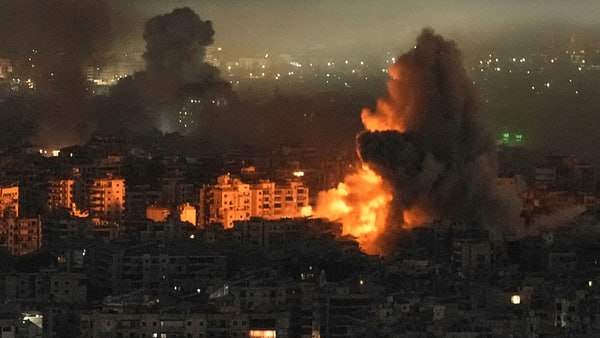
Images circulating from the area depict dramatic nighttime scenes of explosions, fireballs illuminating urban landscapes, and tracer fire streaking across smoke-filled skies—visceral illustrations of a conflict that refuses to stay dormant.
This violence directly implicates the first clause of the US-Iran MOU, which calls for the “immediate and permanent termination of military operations on all fronts, including in Lebanon,” while committing parties to respect Lebanese sovereignty and refrain from the threat or use of force.
Iran moved quickly, suspending the entire negotiation framework and halting its participation in planned talks. Officials stated Tehran would not unilaterally implement MOU commitments until the US ensures Israeli attacks cease permanently.
A planned trip by Iranian representatives—and crucially, US Vice President JD Vance—to Switzerland for technical discussions on nuclear issues and implementation was effectively derailed.
The White House confirmed Vance’s travel was postponed due to logistical issues and unfinalized plans, though the timing aligns with Iran’s suspension.
This marks an early and public test of the agreement’s durability, signed electronically and announced amid G7-related diplomacy.
The MOU emerged from months of intense, indirect negotiations amid active conflict. Key elements include reopening the Strait of Hormuz to shipping (critical for global oil flows), lifting aspects of the US naval blockade, releasing frozen Iranian assets, and outlining a 60-day window for further talks toward a comprehensive deal.
It also addressed reconstruction support potentially totaling hundreds of billions.
For Iran, the Lebanon clause was a non-negotiable red line, reflecting its longstanding support for Hezbollah as a core part of the “Axis of Resistance.”
Israeli leaders, however, have signaled they do not consider themselves fully bound by the agreement where their security is concerned, citing the need to maintain a buffer zone and counter Hezbollah’s capabilities.
This divergence was evident even before the ink was metaphorically dry. Analysts note that while the US pushed for de-escalation, Israel’s actions—whether framed as self-defense or proactive security measures—highlight the limits of superpower diplomacy in a multipolar, proxy-laden theater.
The immediate human cost is clear: civilian deaths, renewed displacement, and heightened tensions in a region already exhausted by years of conflict.
Economically, any sustained disruption risks reversing recent gains in oil markets and shipping confidence following the Hormuz reopening.
Politically, the episode underscores the fragility of the 60-day negotiation window. Success will require not just US-Iran coordination but active management of Israeli and Hezbollah dynamics—potentially through parallel US-mediated tracks with Lebanon and Israel.
Failure could see renewed escalation, with Iran leveraging its proxies and the US facing pressure to rein in its ally while advancing its own strategic goals regarding Iran’s nuclear ambitions.
As one seasoned Middle East diplomat might observe, ceasefires in this neighborhood are rarely clean breaks; they are often uneasy pauses shaped by the enduring realities of power, history, and survival.
Both Washington and Tehran now face the delicate task of salvaging momentum from a deal that, while historic on paper, must prove resilient in the face of entrenched realities on the ground.
Further updates will depend on how quickly quiet diplomacy can de-escalate the Lebanon front and whether the parties recommit to the MOU’s core principles. For now, the region holds its breath once more.
 news
news FG Slashes Late Tax Interest Rates from October 1, Ties Them to Market Benchmarks
 news
news IGP Disu Bags Prestigious CIPM Fellowship for Reform Leadership and Welfare Excellence
 news
news Atiku Pledges Targeted Fuel Subsidy, Hails Warm Ondo ADC Reception
 news
news Shipping Lines Hail US Lift of 12-Year Security Restriction on Nigerian Ports
 business
 Tinubu in Paris Backs $7bn Ogun Deep Seaport Deal with DP World for Jobs and Trade
How do you feel about this news?
Community Additions
Have a news tip, correction, or extra context about this story? Post it below instantly. All submissions appear live on this screen immediately.