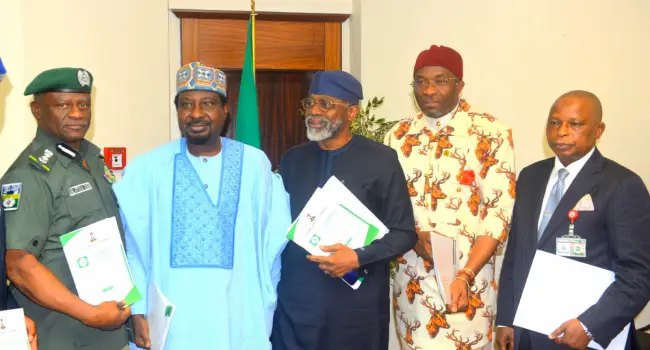
State Police Framework Nears Completion Amid Rising Security Fears
Abuja, June 4, 2026—Nigeria may be on the verge of one of its most significant security reforms in decades as the Presidency and the National Assembly move closer to finalizing a constitutional framework for the establishment of state police, a development widely seen as a potential game-changer in the country’s battle against insecurity.
The disclosure comes amid growing concerns over persistent attacks by bandits, kidnappers, terrorists, and other criminal groups across several parts of the country.
For years, stakeholders, including governors, security experts, and civil society groups, have argued that Nigeria’s highly centralized policing structure has become overstretched and inadequate for addressing local security challenges.
Speaking after a Sallah visit to President Bola Tinubu, Senate President Godswill Akpabio revealed that the presidency and the National Assembly are actively working on a constitutional template that will pave the way for the creation of state police formations across the federation.
According to Akpabio, the proposed framework is designed to strengthen Nigeria’s security architecture while ensuring that state governments play a more direct role in protecting lives and property within their jurisdictions. He explained that lawmakers are considering safeguards that would prevent abuse and guarantee uniform operational standards nationwide.
“We are looking at ways of creating a positive and not a negative state police,” Akpabio said, adding that a national regulatory body may be established to oversee recruitment, training, promotions, and operational conduct of state police officers across the country.
The latest development follows months of intense consultations among federal and state authorities.
Earlier this year, Inspector-General of Police Olatunji Disu submitted a comprehensive 75-page framework to the National Assembly, outlining the governance structure, operational procedures, and coordination mechanisms between federal and state policing systems.
The document is expected to serve as a key reference during the ongoing constitutional review process.
Momentum for the initiative has also received a major boost from the Nigeria Governors’ Forum, whose members recently endorsed a state police framework ahead of anticipated constitutional amendments.
Governors argued that decentralized policing would improve intelligence gathering, community engagement, and rapid response to local threats.
President Bola Ahmed Tinubu has repeatedly expressed support for the proposal, urging lawmakers to amend relevant sections of the Constitution to accommodate state police.
The president maintains that Nigeria’s evolving security challenges require innovative and localized solutions capable of complementing the efforts of federal security agencies.
Despite the growing consensus, concerns remain over funding, political interference, and the possibility of governors misusing state police for partisan purposes.
However, proponents insist that strong constitutional safeguards and independent oversight mechanisms can address such fears while delivering the benefits of community-based policing.
With insecurity continuing to dominate national discourse, the nearing completion of the constitutional framework signals what could become a historic turning point in Nigeria’s security landscape.
If approved by the National Assembly and ratified by at least two-thirds of state legislatures, the long-debated state police initiative could finally move from proposal to reality, reshaping law enforcement and security governance across Africa’s most populous nation.
 politics
 Adebayo Challenges Tinubu: Where Is Subsidy Money? Come Out and Account for It
 politics
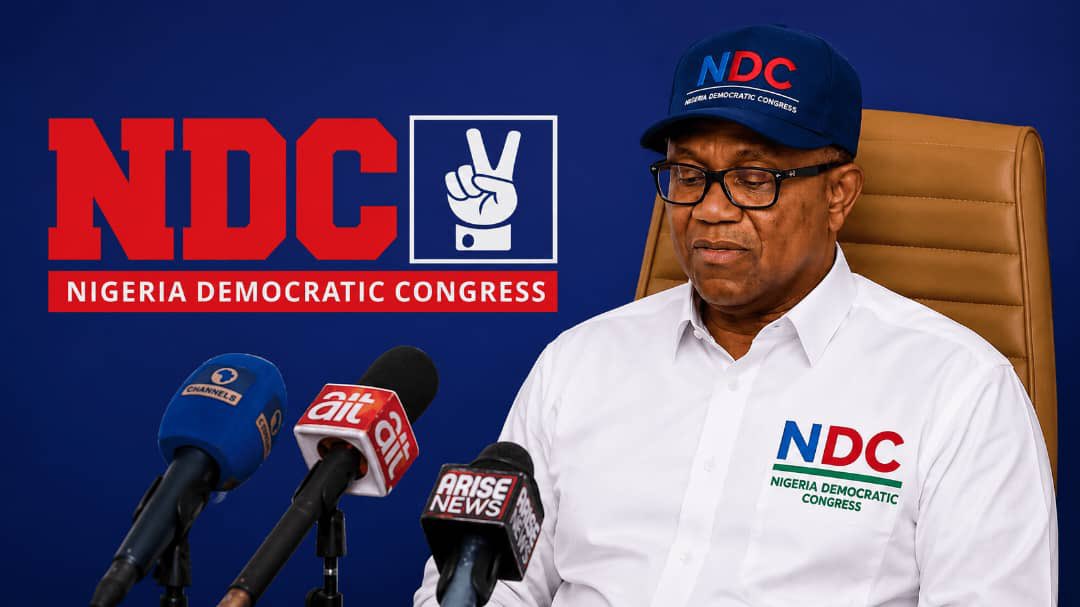
 NDC Wins Logo Battle as Abuja Court Orders INEC to Use Modified Design
 news
news Atiku Exposes Tinubu’s FAAC Scam: Bigger Naira, Poorer Nigerians
 news
news Police Arrest Hafsat Abubakar Over Fake Fintech Shutdown Document Circulated Online
 politics
 Sowore Declares Peter Obi Yelwata Blockade Government-Sponsored Political Attack
How do you feel about this news?
Community Additions
Have a news tip, correction, or extra context about this story? Post it below instantly. All submissions appear live on this screen immediately.