Deaf BBC Presenter Defies Odds, Conquers Everest Peak
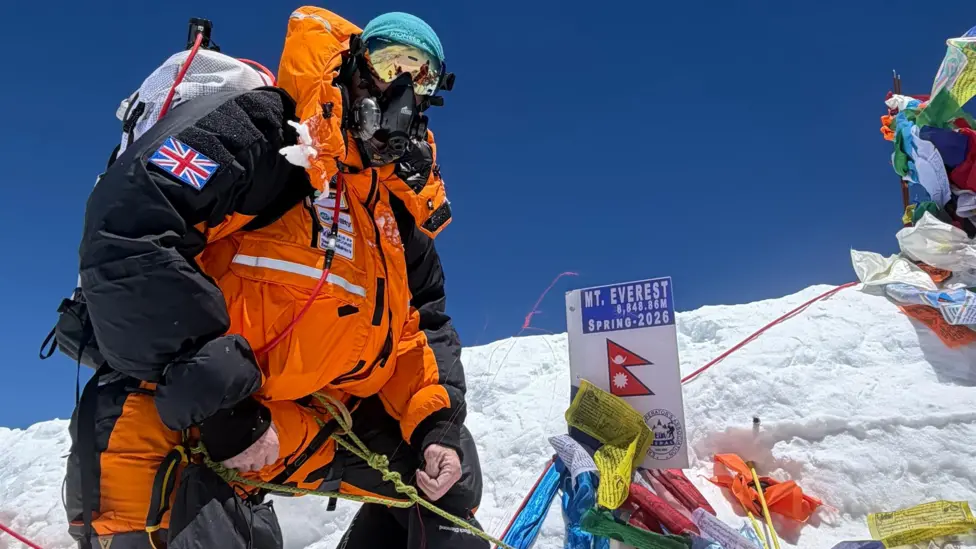
In a remarkable feat of courage, resilience, and determination, BBC Sign Language presenter Michael Woods has become the first deaf British person to reach the summit of Mount Everest, the world’s highest mountain, shattering barriers and inspiring millions across the globe.
Woods, a profoundly deaf mountaineer and British Sign Language (BSL) user, achieved the historic milestone on May 21 after years of preparation, training, and sacrifice.
His successful ascent of the 8,848.86-meter Himalayan giant marks a defining moment not only for the deaf community in the United Kingdom but also for advocates of inclusion and equal opportunity worldwide.
The achievement crowns a dream more than a decade in the making. Woods had long set his sights on Everest as part of his ambitious Seven Summits Challenge, a mission to climb the highest mountain on each continent. For him, however, the climb represented far more than a personal adventure.
“This is years of dreaming, sacrifice, and proving to myself that anything is possible if you refuse to give up,” Woods said after standing atop the world’s highest peak. He described the expedition as “one of the hardest battles mentally and physically” that he had ever faced.
His path to the summit was anything but easy.
Woods revealed that he battled illness, exhaustion, and severe energy depletion during the grueling expedition. Yet he continued pushing forward despite moments when he questioned whether he would be able to complete the climb.
“There were moments during this expedition where I genuinely didn’t know if I could make it,” he admitted. “But somehow I found a way to keep fighting all the way to the top of the world.”
The triumph was followed by a terrifying ordeal during his descent. Near the notorious Hillary Step, Woods became separated from his Sherpa guide and found himself alone in Everest’s infamous “death zone”—an oxygen-starved region above 8,000 meters where survival becomes increasingly difficult.
Recalling the frightening experience, Woods said he spent between two and three hours alone on the mountain after his oxygen supply ran out.
“In that moment my kids came into my mind, and I fought my way back down to stay alive,” he said. His guide later rejoined him and assisted him safely back to Camp Four.
Beyond breaking records, Woods used the expedition to raise funds for the National Deaf Children’s Society (NDCS), an organisation that supported his son and family. His fundraising effort has attracted widespread support and praise from disability advocacy groups across Britain.
The National Deaf Children’s Society hailed his achievement as “truly incredible,” saying he had shown deaf children everywhere that “nothing is out of reach.” Similarly, members of the British deaf community described the feat as a powerful symbol of what determination can accomplish.
While other deaf climbers from different countries have previously conquered Everest, Woods is widely recognised as the first deaf Briton—and reportedly the first deaf European—to achieve the feat. His accomplishment comes at a time when conversations about accessibility, representation and inclusion are gaining momentum worldwide.
From the BBC studio to the roof of the world, Michael Woods has delivered a powerful message: physical limitations need not define a person’s destiny. His historic climb now stands as a testament to the strength of the human spirit and a reminder that extraordinary dreams remain within reach for those willing to pursue them against all odds.
 politics
 Adebayo Challenges Tinubu: Where Is Subsidy Money? Come Out and Account for It
 politics
 NDC Wins Logo Battle as Abuja Court Orders INEC to Use Modified Design
 news
news Atiku Exposes Tinubu’s FAAC Scam: Bigger Naira, Poorer Nigerians
 news
news Police Arrest Hafsat Abubakar Over Fake Fintech Shutdown Document Circulated Online
 politics
 Sowore Declares Peter Obi Yelwata Blockade Government-Sponsored Political Attack
How do you feel about this news?
Community Additions
Have a news tip, correction, or extra context about this story? Post it below instantly. All submissions appear live on this screen immediately.