
EFCC Boss Demands Urgent End to Corruption Trial Delays
Ola Olukoyede blames adjournments and congested courts for stalled high-profile cases, backs CSJ report seeking judicial reforms and faster justice.
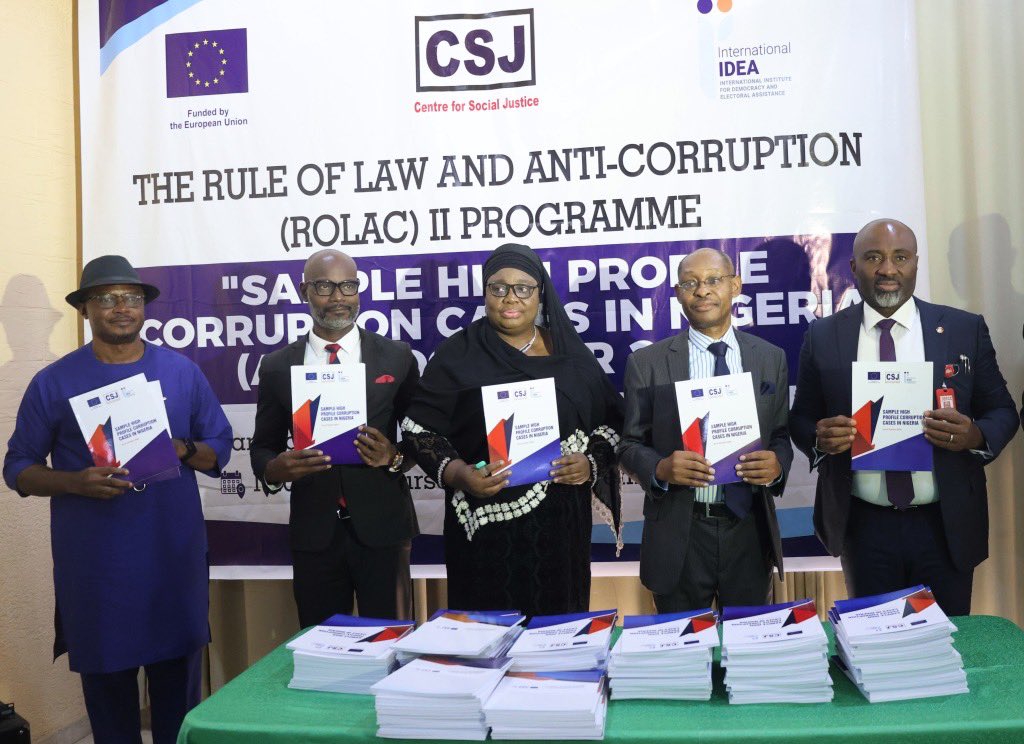
ABUJA, Nigeria — November 27, 2026 — The Executive Chairman of the Economic and Financial Crimes Commission (EFCC), Mr. Ola Olukoyede, has thrown a fresh challenge to Nigeria’s justice system, demanding collective responsibility to end the endless delays that keep high-profile corruption cases crawling in courts for years.
Olukoyede made the call on Thursday, November 27, 2026, in Abuja at the public presentation of a damning report titled “Sample High-Profile Corruption Cases as at October 2026,” organized by the Centre for Social Justice (CSJ).
Represented by his Chief of Staff, Commander of the EFCC, CE Michael Nzekwe, the anti-graft boss stressed that speedy resolution of corruption cases cannot be left to the EFCC alone.
“Our objective must be a criminal justice system in which investigations are diligent, prosecutions are credible, trials are conducted without avoidable delay, constitutional rights are protected and judgments command public confidence,” Olukoyede declared.
He insisted that prolonged trials are rarely the fault of one institution, listing repeated adjournments, interlocutory appeals, difficulties in securing witnesses, delays in obtaining documentary evidence, congested court schedules, and the reassignment of part-heard cases following transfers of judges as major culprits.
He warned that prolonged litigation increases costs for both prosecution and defence, while uncertainty takes a heavy toll on defendants, victims, and institutions, and delays recovery of stolen public funds.
Olukoyede assured that the EFCC will continue to tackle economic crimes without fear or favour, guided by evidence, professionalism, and respect for the rule of law. To lead by example, he said the Commission has started looking inward—ensuring thorough investigations, carefully prepared charges, preserved evidence, prepared witnesses, and early cooperation between investigators and prosecutors.
“We must continue to improve cooperation between investigators and prosecutors from the earliest stages of complex investigations,” he said, adding that the EFCC is investing heavily in digitization, forensic capabilities and professional development.
The CSJ report, which reviewed 30 pending corruption cases plus Code of Conduct Tribunal cases, paints a grim picture. According to CSJ Lead Director Eze Onyekpere, institutional weaknesses, poor case management, and administrative bottlenecks are fuelling delays, with some cases adjourned since 2009 and 2010 without progress.
The report, produced under the project “Improving the Effectiveness of Anti-Corruption Processes and Reforms in Nigeria” with support from the European Union, IDEAS, and the Rule of Law and Anti-Corruption (RoLAC 2) project, recommends improved funding, electronic filing, digital documentation, and better case management.
Crucially, it laments that the Code of Conduct Tribunal has only one three-member panel for the entire federation, urging establishment of additional tribunals across the six geopolitical zones and eventually in states.
Dignitaries at the event included representatives of the Code of Conduct Bureau (CCB), Code of Conduct Tribunal (CCT), Nigerian Law Reform Commission (NLRC), Nigerian Bar Association (NBA), civil society and the media—all agreeing that justice delayed is development denied.
Community Additions
Have a news tip, correction, or extra context about this story? Post it below. Submissions appear here straight away.