
Scrap Petrol Subsidy or Lose Financing, Fashola Reveals World Bank Ultimatum
Former Lagos governor says international lender’s ultimatum, debt burden and Petroleum Industry Act made removal inevitable under Tinubu.
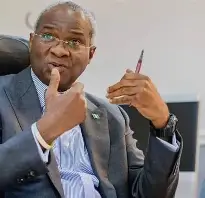
Abuja, Nigeria—November 18, 2026—Former Lagos State Governor and ex-Minister of Power, Works, and Housing, Babatunde Fashola, has disclosed that the World Bank explicitly warned Nigeria it would halt all financing to the country unless the petrol subsidy was removed.
Speaking on Channels Television’s Politics Today on Tuesday, Fashola said the decision to end the decades-old subsidy was not merely a political or policy preference of President Bola Tinubu’s administration but a combination of external pressure, legal requirements, and harsh fiscal realities that left the country with little room to manoeuvre.
“The World Bank simply said, ‘We won’t finance your country again unless you remove subsidy.’ It was that simple,” Fashola stated.
He explained that the issue had already been discussed during the previous administration of the late President Muhammadu Buhari, when he served as a member of the Federal Executive Council.
At that time, Nigeria was spending close to 90 per cent of its revenue on debt servicing, making continued subsidy payments unsustainable.
Fashola also pointed to the Petroleum Industry Act (PIA), which requires petroleum products to be sold at competitive market rates.
Any attempt to reinstate subsidy, he argued, would run contrary to this existing law and create fresh legal complications.
He urged Nigerians to revisit President Tinubu’s full inaugural address of May 29, 2023, rather than focusing solely on the famous line “subsidy is gone.”
According to him, the broader speech outlined the economic constraints and the necessity of the reform beyond the soundbite that captured public attention.
The former minister acknowledged the hardship that subsidy removal has caused for many households through higher transport and living costs.
However, he maintained that the government deserves credit for sticking to the policy instead of reversing course under pressure.
“What this government deserves commendation for is not falling over on its word and saying, ‘Because the people like it, let’s bring it back.’ It was a road to perdition,” he said.
Fashola listed several measures the Tinubu administration has introduced to cushion the impact, including tax reforms, the Nigerian Education Loan Fund (NELFUND), salary adjustments, and the promotion of Compressed Natural Gas (CNG) as a cheaper alternative fuel.
He also highlighted the decline in inflation from over 30 per cent to about 14 per cent as evidence that the reforms are beginning to yield results, warning that reversing the policy midway could undo the progress.
In the same interview, Fashola dismissed calls by some opposition figures, particularly African Democratic Congress presidential candidate Atiku Abubakar, to restore the subsidy if elected in 2027.
He described such proposals as “abracadabra without proof,” challenging proponents to explain the source of funding and how they would overcome Nigeria’s crude oil production and security challenges.
The disclosure has reignited debate about the origins and necessity of one of the most consequential economic decisions of the Tinubu era, with supporters viewing it as proof of fiscal realism and critics questioning the influence of international lenders on Nigeria’s policy choices.
This report is based on statements made by Babatunde Fashola during an interview on Channels Television and subsequent coverage by TheCable and other Nigerian media on November 18, 2026.
Community Additions
Have a news tip, correction, or extra context about this story? Post it below. Submissions appear here straight away.