
Customs Begins Release of 98 Power Equipment Containers Stranded for 20 Years
Nigeria Customs Service flags off evacuation of long-trapped transformers and transmission gear at Apapa and Tin-Can ports after presidential directive and finance ministry waivers
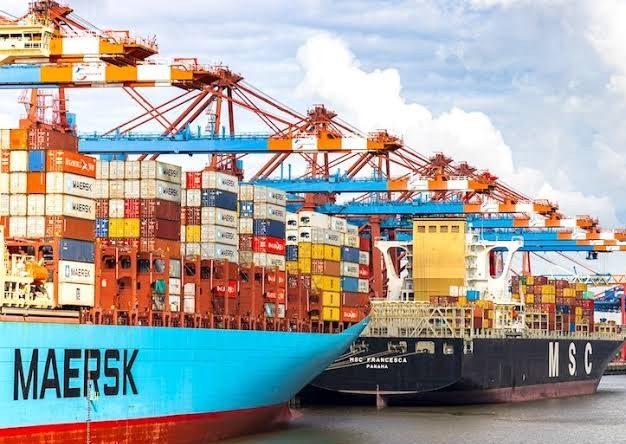
In a significant step toward strengthening Nigeria’s struggling power infrastructure, the Nigeria Customs Service on Friday commenced the evacuation of 98 containers of critical electricity transmission equipment that had languished at the Apapa and Tin-Can Island ports in Lagos for between 14 and 20 years.
Comptroller-General of Customs Adewale Adeniyi flagged off the exercise alongside Minister of Power Joseph Tegbe, marking the first major release from a larger stockpile of more than 300 containers of power equipment imported years ago but left uncleared due to unpaid charges, administrative bottlenecks, and poor inter-agency coordination.
The first batch of 44 containers is being released from the ENL Consortium Terminal, while another 54 containers located at APM Terminals and Sun & Moon terminals in the Tin-Can area will follow.
The consignments contain high-capacity transformers, electrical cables, switchgear, and other transmission materials originally procured for projects under the Federal Ministry of Power, the Transmission Company of Nigeria (TCN), and the Niger Delta Power Holding Company (NDPHC).
Adeniyi explained that the breakthrough followed a presentation by the Power Minister to the Federal Executive Council, prompting President Bola Tinubu to direct the immediate clearance of the equipment and the resolution of all outstanding charges.
Finance Minister and Coordinating Minister of the Economy Taiwo Oyedele subsequently approved waivers on the accumulated demurrage and related port charges that had kept the containers locked in place for nearly two decades.
“In line with that presidential directive, this service has commenced the immediate clearance of more than 200 containers of power equipment,” Adeniyi said at the flag-off ceremony.
He noted that Customs had introduced priority processing, dedicated officers for joint examinations, and the application of the approved waivers to accelerate the exercise.
The Service is collaborating closely with the Ministry of Power, TCN, NDPHC, the Nigerian Ports Authority and terminal operators to complete the clearance as quickly as possible.
Minister Tegbe described the prolonged detention as a costly setback for the nation’s power sector. The equipment had been intended to expand the transmission network, relieve overloaded substations, and improve electricity delivery to homes, businesses, and public institutions.
Instead, the delay left existing facilities under severe strain, exposed valuable assets to deterioration, and piled up demurrage costs.
“The cost is felt daily by businesses spending more on alternative power, families enduring interruptions, and public institutions struggling to maintain essential services,” he said.
Technical experts will now inspect, verify, and test the recovered equipment. Serviceable items will be refurbished where necessary and deployed to complete stalled transmission projects, including identified sites in Kaduna, Ajaokuta, Lokoja, and Enugu.
Obsolete materials will be disposed of according to expert recommendations. The Ministry of Power has pledged to oversee the process through installation and commissioning and to provide updates on the remaining containers.
Adeniyi also used the occasion to criticize contractors who accept government contracts, receive payment, and then abandon the equipment at the ports.
He labelled such defaulting contractors “economic saboteurs” and said Customs would share information with relevant authorities to ensure accountability.
The release of these long-stranded assets represents more than a routine clearance exercise. It is a practical attempt to recover public investment, unlock stalled infrastructure, and deliver tangible improvement to a national grid that has for years struggled to meet demand.
For ordinary Nigerians who live with daily power outages, the movement of these containers from the ports toward actual project sites offers a rare note of progress in a sector long defined by delays and frustration.
Further releases from the remaining stock of more than 200 containers are expected in the coming weeks as inter-agency coordination continues under the presidential directive.
Community Additions
Have a news tip, correction, or extra context about this story? Post it below. Submissions appear here straight away.