
Buratai: Military Force Alone Cannot Defeat Terrorism in Nigeria
Ex-Army Chief urges poverty emergency in North, cites unemployment and poor governance as key drivers of insecurity
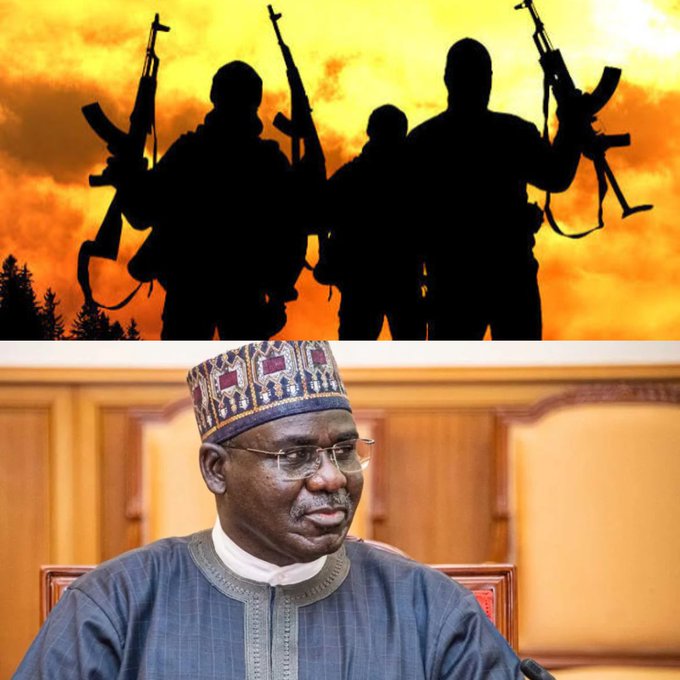
Former Chief of Army Staff, Lieutenant General Tukur Buratai (retd.), has declared that military force alone cannot defeat terrorism and insurgency in Nigeria, calling instead for urgent action on the deep socio-economic roots that fuel the crisis.
Speaking on Friday in Lagos at the public presentation of the book Beyond Military Force: A Strategy for Countering Terrorism in Nigeria, written by Dr. Joan Ugo Mbagwu, a professor of Peace, Criminology, and Security Studies, Buratai delivered a blunt assessment drawn from his years leading the Nigerian Army between 2015 and 2021.
He urged the Federal Government under President Bola Tinubu to declare a state of emergency on poverty in Northern Nigeria as a critical step toward lasting security.
“Military force, however professional, is a shield, not a substitute for governance,” Buratai said. “It can create the conditions for peace, but it cannot by itself build peace.
It can degrade a terrorist group; it cannot alone remove the grievances of poverty, ignorance and manipulation from which such groups recruit.”
The retired general argued that persistent poverty, high unemployment, illiteracy, poor governance and limited economic opportunities have left many young people in the North-East and North-West vulnerable to recruitment by extremist groups.
He stressed that while the military can weaken terrorist organisations on the battlefield, it cannot eliminate the underlying conditions that sustain them.
Sustainable peace, he insisted, requires a combination of military operations and non-military interventions focused on effective governance, economic empowerment, community engagement and regional cooperation.
Buratai warned that over-reliance on the armed forces has stretched the military thin, forcing it to take on roles better suited to civil authorities, the police, social welfare agencies, and the education system.
When soldiers are deployed to perform tasks outside their primary mandate, he noted, the roots of conflict remain untouched and public confidence can erode.
He highlighted research findings presented in the book, drawn from field surveys across Adamawa, Borno, Yobe, Kano, Kebbi, Kogi, Niger states and the Federal Capital Territory.
According to the data, 84 percent of respondents linked terrorist recruitment to poor economic conditions and challenges surrounding the Almajiri system.
A large majority also believed communities could play a major role in intelligence gathering and that negotiation and dialogue could help address the crisis.
On the proposed poverty emergency, Buratai identified priority areas including out-of-school children, reform of the Almajiri system, youth unemployment, vocational training, and social protection programmes.
He cautioned, however, that such interventions must be shielded from political interference and the diversion of resources by influential individuals.
“Poverty is not an excuse for terrorism, but it is a fertile ground for recruitment and manipulation. We must treat it with the seriousness it deserves,” he said.
The former army chief’s remarks come against the backdrop of ongoing security challenges in northern Nigeria, where Boko Haram, ISWAP and bandit groups continue to exploit ungoverned spaces and socio-economic grievances.
His call reinforces a long-standing argument that counter-terrorism success depends not only on kinetic operations but also on addressing the conditions that allow extremism to take root and regenerate.
Buratai’s message is clear: soldiers can create space for peace, but only good governance, economic opportunity, and social investment can build and sustain it.
Without a coordinated national strategy that goes beyond the gun, the cycle of violence is likely to persist.
Community Additions
Have a news tip, correction, or extra context about this story? Post it below. Submissions appear here straight away.