
Shettima Pledges Legal Rights, Reliable Salaries for Community Health Workers
Vice President launches continental plan as Africa CDC praises Nigeria’s Ebola response and Tinubu’s health reform leadership.
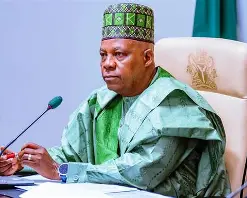
Abuja, Nigeria—October 29, 2026—Vice President Kashim Shettima on Thursday restated the Federal Government’s commitment to securing guaranteed legal rights, certification, dependable salaries and career pathways for community health workers across Nigeria.
Speaking at the launch of the Community Health Programme Continental Acceleration Plan 2026–2030 during the Continental High-Level Forum on a Fit-for-Purpose Health Workforce in Abuja, Shettima emphasized that fair and consistent remuneration is essential for building strong community health systems.
Recognition for Frontline Workers
“We cannot afford the luxury of taking our community health workers for granted,” the Vice President said. He noted that these workers recognize maternal danger, locate unvaccinated children, gather household data, and detect outbreaks, making them critical to primary care, universal health coverage, and health security.
Shettima stressed that the distance between a household and a health worker should never determine the difference between survival and mourning.
He called for sufficient skilled workers who are fairly paid, supported and equitably deployed.
Tinubu’s Role and Funding Commitments
The Vice President described President Bola Tinubu as a pacesetter in financing health reform and advancing Africa’s workforce agenda in his capacity as African Union Champion for Human Resources for Health and Community Health Delivery Partnership.
He disclosed that Tinubu’s Health Sector Renewal Investment Initiative has secured over US$2.2 billion in commitments.
The programme aims to revitalise more than 17,000 primary health centres and train 120,000 frontline workers, with a national goal of 100,000 salaried community health workers by 2027.
Nigeria currently falls short of the 315,000 community health workers required by 2030.
Continental Acceleration Plan
The newly launched plan focuses on governance, primary care integration, workforce development, digital systems, service delivery, financing, supplies, and accountability.
It projects that an ambitious US$28 billion investment through 2030 could deliver US$19 in economic and social benefits for every dollar spent, with over 80 percent of the funding going to recurrent costs.
Shettima called on every African country to commit to one nationally owned plan, one budget and one monitoring framework.
Stakeholders Speak
Minister of State for Health and Social Welfare, Dr Iziaq Kunle Salako praised the President’s leadership and said the Acceleration Plan aligns with the Renewed Hope Agenda’s focus on disease surveillance and community resilience.
Africa CDC Deputy Director-General Dr Raji Tajudeen congratulated Nigeria for its work on primary healthcare and universal health coverage, specifically applauding the country’s “excellent response to the Ebola outbreak and how you have contained it.”
He noted that the continent has achieved only about 50 per cent of the 2016 target of two million community health workers by 2030.
Egypt’s Deputy Minister of Health, Dr Abla Al-Alfi, also emphasised the critical role of community health workers in improving maternal and family health outcomes.
Community Additions
Have a news tip, correction, or extra context about this story? Post it below. Submissions appear here straight away.