FBI, EFCC Launch Joint Probe into Alleged Diversion of USAID Funds in Nigeria
Investigators target leftover money from discontinued HIV and tuberculosis programmes after 2025 shutdowns, a year after U.S. lawmaker’s disputed terrorism claims.
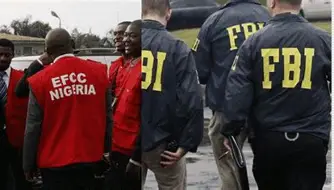
Lagos, Nigeria – September 12, 2026—The U.S. Federal Bureau of Investigation and Nigeria’s Economic and Financial Crimes Commission have begun a joint investigation into the alleged mismanagement and diversion of funds provided under United States government-supported programmes, particularly those focused on HIV and tuberculosis interventions.
The partnership was formalized on Thursday, September 10, when Marcus Maccain, the FBI’s Assistant Law Enforcement Attaché, led a delegation on a courtesy visit to the EFCC’s Lagos Zonal Directorate 2.
He was received by Acting Zonal Director Assistant Commander Bawa Usman Kaltungo.
Maccain said the engagement became necessary after the United States Government discontinued several USAID-supported programmes in 2025.
Questions later arose about how implementing organisations handled funds that remained in their possession once the projects ended. Some organisations are suspected of mismanaging or diverting portions of the money.
Jeremy Kennon, a Special Agent with the Office of Inspector General at the U.S. Department of State, noted that subsequent reviews had uncovered concerns over inflated budgets and other financial irregularities in Kano State and several other states.
Kaltungo assured the American team that the EFCC would thoroughly investigate the allegations, trace the movement of the funds to their ultimate beneficiaries, and determine whether the money was used for its intended purposes.
He confirmed the probe would cover all states where the affected organizations and programmes operated, with close collaboration between both agencies.
Background of Earlier Allegations
The development comes roughly a year after U.S. Congressman Scott Perry, a Pennsylvania Republican, alleged during a February 2025 House subcommittee hearing that USAID funds—roughly $697 million annually — had been channelled to terrorist organizations including Boko Haram, ISIS, and Al-Qaeda.
Those claims were widely disputed at the time. Then-U.S. Ambassador to Nigeria Richard Mills stated there was “absolutely no evidence” of such diversion and emphasized that strict safeguards exist to prevent U.S. assistance from reaching designated terrorist groups.
Nigerian security experts and human-rights observers also described the assertions as unsubstantiated.
Nigeria’s National Assembly later initiated its own inquiries, though detailed public findings have remained limited.
The current FBI-EFCC probe centres on financial accountability after programme closures rather than the earlier terrorism-financing allegations.
What Happens Next
Officials from both agencies said the investigation aims to establish a clearer picture of how residual funds were handled and to identify any financial misconduct.
They also expressed interest in building longer-term intelligence-sharing arrangements.
The move reflects continued scrutiny of foreign-aid accountability in Nigeria at a time when many USAID-supported health programmes have been scaled back or transferred.
As the joint probe unfolds, both Nigerian and American authorities will be watching closely for concrete findings on where the money went and whether any individuals or organizations face sanctions.
Community Additions
Have a news tip, correction, or extra context about this story? Post it below. Submissions appear here straight away.