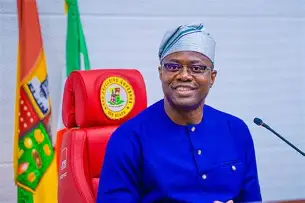
Makinde Insists Nigerians Must Not Pay Higher Petrol Prices for Government’s Border Failures
Ibadan/Abuja—September 6, 2026—Oyo State Governor Seyi Makinde has drawn a firm line in the intensifying national debate on fuel costs, declaring that ordinary Nigerians should not be forced to pay higher petrol prices simply because the Federal Government has failed to secure the country’s borders against fuel smuggling.
In the latest edition of his newsletter, The Business of Governance, Makinde rejected the long-standing argument that pump prices must rise to eliminate the price differential that makes smuggling petroleum products into neighboring countries profitable.
“Nigerians should not be made to bear the cost of the government’s inability to secure its borders,” he stated.
Wrong Question, Bigger Problem
For years, the public conversation has been framed as a binary choice: restore fuel subsidy or let citizens pay the full market price.
Makinde called this framing incomplete and misleading. “I believe we are asking the wrong question. The more important question is, “What is the right pricing framework for an oil-producing country like Nigeria?” he wrote.
He argued that Nigerians deserve full transparency on how pump prices are calculated. The components that should be made public, he said, include the crude oil price benchmark, refining costs and margins, exchange-rate assumptions, logistics and distribution costs, taxes, levies, and other variables.
With clear information, citizens could properly interrogate the prices they pay and compare them with possible alternatives.
Border Security Is a Government Duty
Makinde maintained that securing land and sea borders remains a core constitutional responsibility of the government.
Passing the financial consequences of porous borders and large-scale smuggling onto households, he said, is neither just nor sustainable.
When smuggling creates artificial scarcity and drives up costs, the resulting burden falls disproportionately on ordinary families already struggling with the cost of living.
Instead of continually raising prices to offset losses from leakage, the governor urged federal authorities, energy regulators, and security agencies to fix the root problem through stronger border surveillance and greater accountability for anti-smuggling agencies.
Alternative Model Coming Soon
Makinde disclosed that he will present an alternative petroleum pricing approach in the coming weeks as part of his broader “Reset Nigeria” initiative. He invited Nigerians to examine the proposal on its merits.
The initiative, he explained, goes beyond fuel pricing to address systemic weaknesses in the economy, security architecture, education, institutions, and the country’s social and political order.
“Reset Nigeria means being willing to interrogate the system itself,” Makinde said. He stressed that Nigeria’s challenges cannot be solved merely by replacing individuals in government; attention must also focus on reforming the systems and institutions that repeatedly produce poor outcomes.
Too many citizens remain trapped in poverty, he noted, while insecurity and weak institutions continue to undermine opportunity and well-being.
The governor’s intervention comes amid renewed public debate over energy costs, the legacy of subsidy removal, and the performance of Nigeria’s oil sector.
As an oil-producing nation, he insisted, the country must design a pricing system that allows its people to derive a fair benefit from the natural resources they own.
Whether Makinde’s proposed alternative gains traction remains to be seen. What is clear is that he has shifted the conversation from the familiar subsidy-or-no-subsidy binary to a deeper question about fairness, transparency, and the proper pricing model for an oil-rich nation still struggling to deliver affordable energy to its citizens.
 politics
 Adebayo Challenges Tinubu: Where Is Subsidy Money? Come Out and Account for It
 politics
 NDC Wins Logo Battle as Abuja Court Orders INEC to Use Modified Design
 news
news Atiku Exposes Tinubu’s FAAC Scam: Bigger Naira, Poorer Nigerians
 news
news Police Arrest Hafsat Abubakar Over Fake Fintech Shutdown Document Circulated Online
 politics
 Sowore Declares Peter Obi Yelwata Blockade Government-Sponsored Political Attack
How do you feel about this news?
Community Additions
Have a news tip, correction, or extra context about this story? Post it below instantly. All submissions appear live on this screen immediately.