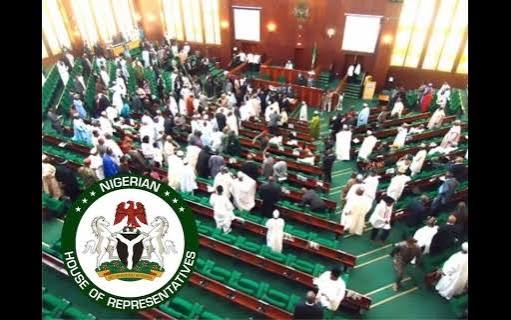
House of Reps Unveils 5 Surprising Facts About How Nigeria’s National Assembly Really Works
Abuja, August 29, 2026 — Think you know how Nigeria’s National Assembly operates? The House of Representatives is challenging that assumption with a fresh set of little-known parliamentary facts designed to demystify the workings of the Green and Red Chambers.
In the latest edition of its public enlightenment series, #Periscope (Part 3), the House on Saturday shared five key insights into the rules, constitutional provisions and institutional structures that shape legislative life in the country.
The thread, posted on the official @HouseNGR account, invites Nigerians to look beyond the headlines and understand the machinery behind every sitting and legislative milestone.
1. The President’s Budget Speech Counts as First Reading
When the President presents and lays the Appropriation Bill before a joint sitting of the National Assembly, the act itself is deemed to have passed the First Reading.
This constitutional and standing-order provision allows both chambers to move straight into Second Reading debates without a separate formal first reading stage.
The practice is rooted in Section 81 of the 1999 Constitution (as amended) and House Standing Orders.
2. The Green Chamber Can Seat Nearly Four Times as Many People as the Red Chamber
Although the House of Representatives has 360 members, its Green Chamber is designed with a seating capacity of 500.
By contrast, the Senate’s Red Chamber holds only about 130 people. The larger capacity explains why the House traditionally hosts joint sittings of the National Assembly.
3. The House Can Rescind Its Own Decisions
Lawmakers are not permanently bound by earlier votes. Through a substantive Motion for Rescission, the House can reverse and reconsider any bill, motion, or question it has previously approved. The power is provided for under House Standing Orders (Order 9, Rule 1(6) and Order 12, Rule 21).
4. Every Sitting Requires a Quorum — With Special Rules for First Meetings
For ordinary business, at least one-third of the members of either chamber must be present. For the inaugural and first sitting of a new Assembly, the threshold rises to two-thirds of members-elect.
At a joint sitting, one-third of the combined membership of both Houses is required. These rules are set out in Section 54 of the 1999 Constitution.
5. Senate President and Speaker Lead the NILDS Governing Council
The President of the Senate serves as Chairman of the Governing Council of the National Institute for Legislative and Democratic Studies (NILDS), while the Speaker of the House acts as Alternate Chairman.
NILDS is the National Assembly’s capacity-building arm, responsible for research, policy analysis, training, and technical support for legislators and other democratic institutions. Its Governing Council approves work programmes, budgets and provides policy oversight.
The House described the series as an effort to strengthen civic engagement and deepen public understanding of the legislative process.
“Behind every sitting and legislative milestone are rules, constitutional provisions and institutional structures that shape how the National Assembly functions,” the account noted.
Previous editions of #Periscope have covered the broader functions of the National Assembly beyond lawmaking and other structural details of the 10th Assembly. Officials say informed citizens are essential to a stronger democracy.
As the thread closed, the House invited Nigerians to share which of the five facts surprised them most and to suggest topics for future explanations—a small but deliberate invitation for the public to engage more closely with the institution that makes their laws.
 politics
 Adebayo Challenges Tinubu: Where Is Subsidy Money? Come Out and Account for It
 politics
 NDC Wins Logo Battle as Abuja Court Orders INEC to Use Modified Design
 news
news Atiku Exposes Tinubu’s FAAC Scam: Bigger Naira, Poorer Nigerians
 news
news Police Arrest Hafsat Abubakar Over Fake Fintech Shutdown Document Circulated Online
 politics
 Sowore Declares Peter Obi Yelwata Blockade Government-Sponsored Political Attack
How do you feel about this news?
Community Additions
Have a news tip, correction, or extra context about this story? Post it below instantly. All submissions appear live on this screen immediately.