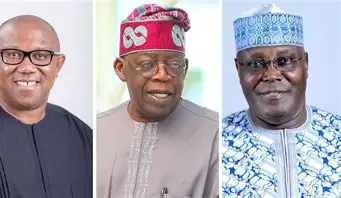
Exclusive: Campaigns Begin Today — Will Nigeria Choose Competence or Repeat the Cycle of Division and Vote-Buying?”
Abuja | August 19, 2026 Today the whistle blows. One hundred and fifty days separate Nigeria from the most consequential presidential and National Assembly elections in a generation.
The formal campaign period opens this morning, and with it comes the full noise, theatre, and high-stakes drama that define our democracy.
From now until January 16, 2027, the nation will be flooded with rallies, promises, posters, digital warfare, and the familiar scramble for power.
This is not just another election cycle. It is a referendum on whether Nigeria will finally break free from the politics of survival and settle for the politics of vision.
The choice before us is stark: continue the cycle of recycled failures or demand competence, integrity, and results.
The Three Major Contenders: A Clear-Eyed Look
Three names dominate the conversation — President Bola Ahmed Tinubu of the All Progressives Congress (APC), former Vice President Atiku Abubakar of the African Democratic Congress (ADC), and former Anambra Governor Peter Obi of theNigerian Democratice Congress (NDC).
Each brings a different political history, a different set of strengths, and a different set of risks.
Bola Ahmed Tinubu — The Incumbent
Strengths:
Tinubu enters this race with the full machinery of incumbency. He controls the levers of federal power, the security architecture, and a well-oiled party structure that still commands significant loyalty in the South-West and parts of the North.
His political survival skills remain legendary. Few Nigerian politicians have shown greater capacity to endure storms and still remain standing.
His supporters argue that his economic reforms, however painful, have begun to reset the foundations of the economy.
Weaknesses:
The cost of those reforms has been brutal for ordinary Nigerians. Inflation, fuel prices, electricity tariffs, and the naira’s volatility have left many households gasping.
Security challenges persist in multiple regions. The lingering questions around transparency and the weight of historical allegations continue to dog him.
Fatigue with the ruling party is real, and the “body language” of many voters suggests a hunger for change.
Opportunities:
If the administration can deliver visible improvements in the next five months—power supply, food prices, security in key corridors—Tinubu can reframe the narrative from “pain” to “progress.” He also has the advantage of experience and the ability to mobilize resources at scale.
Threats:
Voter anger is a powerful force. Any major security lapse, scandal, or economic shock between now and January could prove costly.
The risk of over-reliance on ethnic and regional strongholds is high. If the campaign turns defensive or resorts to intimidation, it will further alienate floating voters.
Atiku Abubakar — The Experienced Challenger
Strengths:
Atiku remains one of Nigeria’s most experienced politicians. His knowledge of the federal system, his extensive networks across the North, and his long-standing relationships with the business community give him depth.
He projects stability and continuity of elite consensus. For many, he represents a return to a more predictable, negotiation-driven style of governance.
Weaknesses:
He carries the heavy baggage of multiple previous presidential bids and the perception of being a perennial contender rather than a transformative leader.
Questions about his age and energy levels will surface. His party, the ADC, is still recovering from internal fractures, and the perception of elite recycling is strong.
Opportunities:
If Atiku can successfully position himself as the unifying alternative to both Tinubu’s incumbency and Obi’s disruption, he can attract pragmatic voters tired of extremes.
A strong showing in the North combined with strategic alliances in the South could create a formidable path.
Threats:
The politics of “same old faces” is a real liability. Younger voters and the urban middle class may see him as part of the problem rather than the solution.
Any perception that he is merely seeking power for its own sake will hurt him.
Peter Obi — The Disruptor
Strengths:
Obi remains the candidate of hope for millions of young Nigerians, professionals, and those who feel locked out of the traditional political order.
His message of fiscal prudence, production over consumption, and measured leadership still resonates.
He has proven capacity to mobilize without massive financial war chests and to inspire loyalty that transcends traditional party structures.
Weaknesses
The Labour Party’s organizational capacity remains uneven across the country. Questions persist about the depth of his national structure and his ability to translate online energy into votes in rural areas.
Some still view him as untested on the national security and elite-management stage.
Opportunities:
If Obi can expand his coalition beyond the South-East and urban centres, and if he can present a credible governing team rather than a one-man movement, he can reshape the electoral map.
The hunger for a different kind of politics remains strong.
Threats:
The system is designed to favor established machines. Voter suppression, logistical challenges, and the sheer weight of incumbency and traditional party structures pose real risks.
Any descent into ethnic framing of his candidacy would be self-defeating.
What to Expect in These 150 Days
Expect the usual: massive spending, carefully staged rallies, celebrity endorsements, and an avalanche of social media content.
Expect the unexpected: late defections, leaked documents, and sudden shifts in alliances. Expect the dangerous: attempts to stoke ethnic and religious fears when policy arguments run thin.
What is possible, however, is more important. It is possible for this campaign to be fought on ideas—on how to create jobs, secure the country, fix power, and restore dignity to public service.
It is possible for candidates to debate their records and their plans without descending into personal insults or collective blame of entire ethnic or religious groups.
Advice to INEC: Non-Partisanship Is Not Optional
The Independent National Electoral Commission stands at the centre of this entire process. INEC’s credibility will determine whether the January 16, 2027 elections are accepted as legitimate or contested as another stolen mandate. There can be no middle ground.
INEC must remain strictly non-partisan. Every guideline, every logistics decision, every deployment of personnel, and every announcement must be guided by the law and by fairness — not by political pressure, not by the preferences of the ruling party, and not by the demands of any opposition group.
The moment INEC is perceived as an extension of any political camp, the entire electoral process loses moral authority.
Zero tolerance for violence against opponents must be enforced without fear or favour.
Political thuggery, attacks on campaign convoys, disruption of rallies, and intimidation of voters or party agents must be met with swift investigation and prosecution.
Selective enforcement — where violence by one side is ignored while the other is punished — destroys public confidence. INEC, working with security agencies, must make it clear that the era of “winning by all means” through blood and fear is over.
The Dangerous Misuse of State Organs
Equally critical is the conduct of the Police, the Military, and the Department of State Services (DSS). These institutions belong to the Federal Republic of Nigeria, not to any political party or sitting president.
Their constitutional duty is to protect the territorial integrity of the country, maintain public order, and defend the rights of all citizens—including those who oppose the government of the day.
The use or misuse of these state organs as tools to silence opposition voices is a direct threat to democracy. When police selectively disrupt opposition rallies while providing heavy protection to ruling party events, the message is clear: the state has taken sides.
When intelligence agencies are deployed to harass, intimidate, or detain opposition figures under the guise of national security, the line between governance and repression disappears.
When the military is dragged into partisan political enforcement, the republic itself is placed at risk.
This must stop. All state organs must remain neutral. Their loyalty is to the Constitution and to the Nigerian people, not to the temporary occupants of power.
A police force that acts as the enforcement arm of a political party ceases to be a police force. A DSS that becomes a weapon against dissenting voices ceases to serve national security.
A military that allows itself to be used for electoral intimidation damages its own professional integrity.
Why Neutrality of State Organs Matters for a Better Nigeria
Neutral state institutions are not a favor to the opposition. They are a requirement for national stability.
When citizens believe that the police, military, and intelligence services will be used against them for political reasons, trust in the state collapses.
When opposition parties conclude that the system is rigged through the security architecture, they lose incentive to participate peacefully.
When the international community sees state organs being weaponized, Nigeria’s democratic credentials suffer.
A better Nigeria cannot be built on fear. It cannot be built on the selective application of force. It cannot be built on the silence of those who are too afraid to speak.
The neutrality of INEC, the Police, the Military, and the DSS is the minimum condition for an election that produces a winner the country can accept—and a loser who can concede without claiming that the entire system was deployed against them.
Any government that uses state power to crush political competition may win an election, but it loses the moral foundation required to govern a diverse and restless nation.
History has shown repeatedly that power maintained through intimidation is power that eventually faces resistance.
The Voter’s Responsibility
The most important actors in this election are not the candidates. They are the citizens who will decide whether to treat their votes as commodities or as instruments of judgement.
Vote-buying is not a victimless transaction. When citizens sell their ballots, they surrender the only peaceful tool they possess for demanding accountability. The politician who buys a vote today will not fear the voter tomorrow.
This election must not be reduced to ethnic arithmetic or religious solidarity. Competence, character, and the capacity to manage a complex country should weigh more heavily than the language a candidate speaks or the place of worship they attend.
Nigeria has paid repeatedly for the politics of identity. The bill is still outstanding.
Young people, in particular, face a choice. They can remain spectators who complain after the fact, or they can organize, register, mobilize, and protect their votes.
The energy that has appeared in previous cycles must now be matched by discipline and presence on election day.
Possible Scenarios
Several outcomes remain possible. An incumbent APC victory built on machinery, regional strength, and the argument of continuity.
An ADC victory driven by elite realignment, northern consolidation, and the appeal of experience.
An NDC victory powered by urban turnout, youth mobilization, and widespread desire for change. Or a closely contested result that tests the resilience of institutions and the maturity of the political class.
Each scenario carries different implications for governance. A president elected on a narrow ethnic or regional base will struggle to govern a diverse federation.
A president elected without a coherent legislative majority will face constant institutional obstruction.
A president elected on the back of high expectations will confront the gap between campaign poetry and the prose of daily administration.
The Deeper Question
Beneath the candidates and the tactics lies a more fundamental issue. Does Nigeria still believe that leadership can be improved through the ballot box, or has cynicism become the dominant political culture?
If citizens conclude that all options are equally flawed, they will either withdraw or sell their participation to the highest bidder. Both responses weaken the country.
The next 150 days will not solve Nigeria’s structural problems. They will, however, reveal whether the political class is capable of speaking to those problems honestly, whether institutions can remain neutral under pressure, and whether citizens are prepared to reward honesty over spectacle.
Campaigns begin with noise. They end with choices. The quality of those choices will determine whether January 16, 2027, becomes another turn of the familiar cycle or the beginning of a more demanding relationship between the Nigerian people and those who seek to lead them.
The time for ethnic and religious mobilization is over. The time for selling votes and conscience is over. The time for using state power to silence opponents is over. The time for choosing with open eyes has arrived.
One hundred and fifty days. The work continues.
A Clear Warning
Nigeria cannot afford another election defined by ethnic and religious incitement. Any candidate, party, or supporter who resorts to such tactics is not fighting for Nigeria — they are fighting for division.
We have paid too high a price for that path already. The country is more fragile than many admit. Words that set communities against each other are not strategy; they are sabotage.
Equally, this is not the time for Nigerians to sell their votes or their conscience. A bag of rice, a few thousand naira, or a temporary favor cannot buy a future. Those who trade their ballot for short-term gain are mortgaging the lives of their children. The politicians will move on. The consequences will remain.
Advice to the Frontrunners
To President Tinubu: Govern as if you are already seeking a mandate for results, not just survival. Use these 150 days to show measurable progress rather than simply defend the past.
To Atiku Abubakar: Move beyond the language of entitlement. Show Nigerians why your experience will produce different outcomes this time.
Present a clear, disciplined team and a coherent economic and security plan.
To Peter Obi: Expand the conversation beyond critique. Present a detailed governing blueprint and demonstrate that the movement around you can translate into institutional capacity. Inspiration must now meet organization.
The Real Stakes
In 150 days, Nigerians will decide whether to reward continuity, return to familiar experience, or take a risk on disruption. None of these paths is risk-free.
All of them will demand more from the eventual winner than campaign slogans can deliver.
This election will not be won by the loudest voice or the deepest pocket alone. It will be shaped by whether ordinary Nigerians decide that their future is worth more than temporary inducements and manufactured divisions.
The campaigns have begun. The real work of choosing wisely starts now.
Nigeria has one more chance in this cycle to demand better. The question is whether we will take it.
Afolabi Olaiya Idowu
TownscribeMedia
 politics
 Adebayo Challenges Tinubu: Where Is Subsidy Money? Come Out and Account for It
 politics
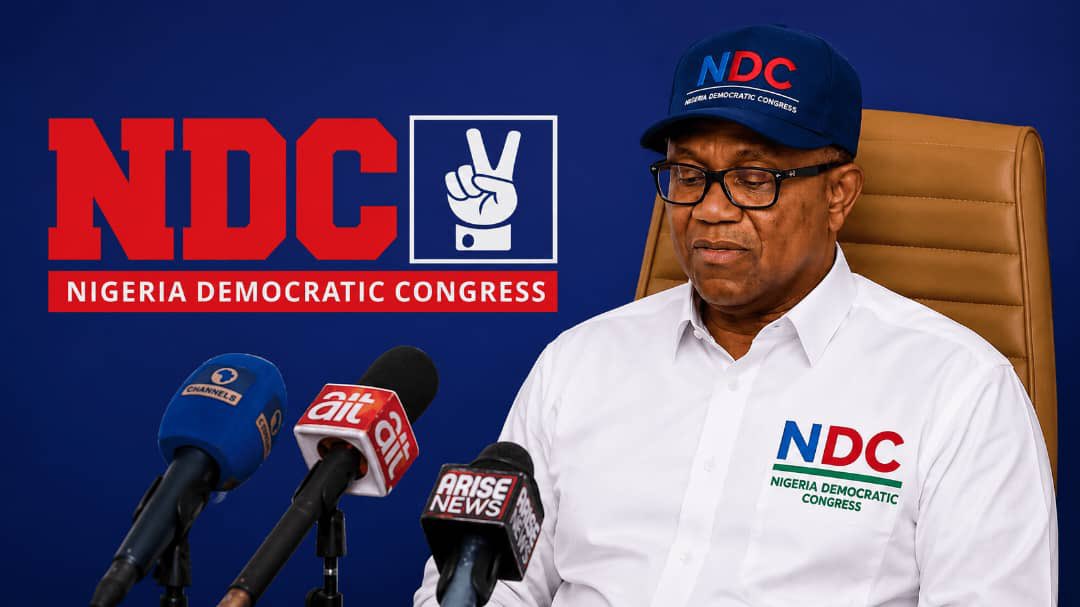
 NDC Wins Logo Battle as Abuja Court Orders INEC to Use Modified Design
 news
news Atiku Exposes Tinubu’s FAAC Scam: Bigger Naira, Poorer Nigerians
 news
news Police Arrest Hafsat Abubakar Over Fake Fintech Shutdown Document Circulated Online
 politics
 Sowore Declares Peter Obi Yelwata Blockade Government-Sponsored Political Attack
How do you feel about this news?
Community Additions
Have a news tip, correction, or extra context about this story? Post it below instantly. All submissions appear live on this screen immediately.