RMAFC Completes New Revenue Allocation Formula Review and Judicial Pay Reforms
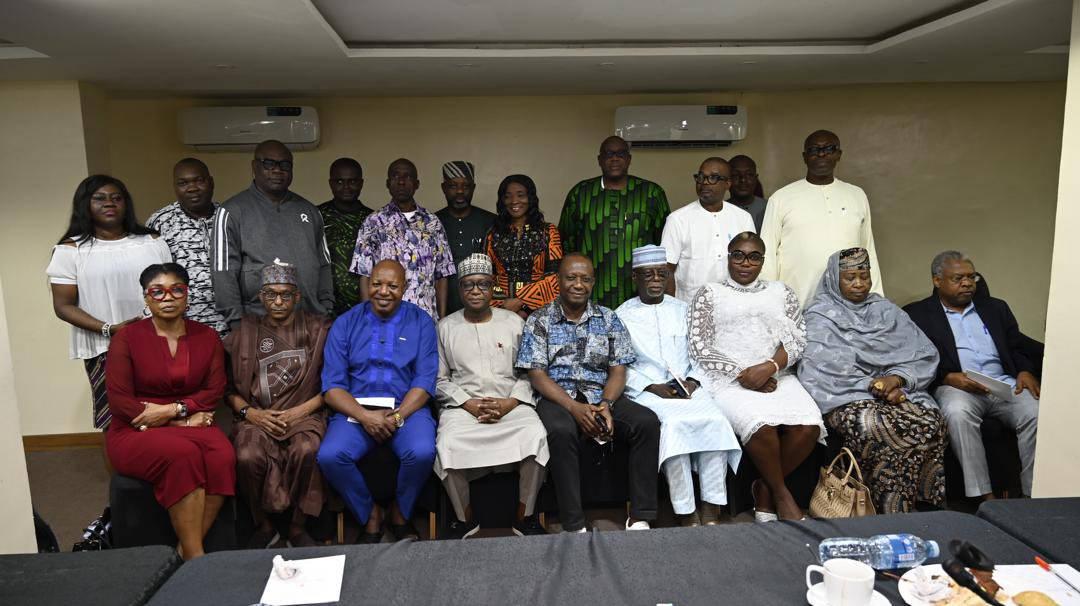
Lagos, Nigeria – August 15, 2026 — The Revenue Mobilisation Allocation and Fiscal Commission (RMAFC) has completed a comprehensive review of Nigeria’s Revenue Allocation Formula and concluded work on remuneration packages for judicial, political, and public office holders, Chairman Dr. Mohammed Bello Shehu has disclosed.
Speaking during an interactive session with members of the Nigerian Guild of Editors (NGE) in Lagos, Shehu presented an overview of the Commission’s work from 2023 to date, describing the period as one of significant fiscal reforms aimed at strengthening revenue monitoring, derivation verification, and equitable distribution across the three tiers of government.
Progress on the Long-Awaited Revenue Formula
Shehu described the Revenue Allocation Formula review as one of the Commission’s most important assignments. The exercise involved extensive consultations with federal, state, and local governments; technical stakeholders; and nationwide engagements.
It analyzed fiscal responsibilities, revenue trends and comparative federal systems, producing a harmonised report and legislative proposals now ready for transmission to the appropriate authorities.
The objective, he said, is to create a more equitable and sustainable revenue-sharing framework that reflects current economic and governance realities.
The existing formula has remained largely unchanged for years and has drawn repeated calls for updating to match evolving responsibilities.
Remuneration Reforms Advance
On salaries and allowances, the Commission has completed its review of judicial office holders, culminating in the enactment of the Judicial Office Holders (Salaries and Allowances) Act, 2025.
The review covering executive and legislative officeholders is at an advanced stage, with an executive bill for the Political and Public Office Holders (Salaries and Allowances) Act, 2026, expected to be transmitted to the National Assembly soon.
Shehu emphasised that higher pay must be matched by accountability and improved service delivery:
“Remuneration reforms must be matched with accountability and performance. Improved pay should translate into improved service delivery.”
Strengthening Derivation and Revenue Monitoring
Beyond the formula and pay reviews, RMAFC has intensified monitoring of oil and gas production data to ensure accurate application of the 13 percent derivation principle.
Through verification exercises, geospatial mapping and inter-agency collaboration, the Commission resolved several long-standing oil-well attribution disputes, including the reallocation of 17 oil wells from Imo State to Rivers State in line with a Supreme Court judgment.
Similar interventions benefited Cross River, Akwa Ibom, Imo and Anambra States, while improved gas production reporting enabled Enugu and Kogi States to access derivation revenues.
Collaboration has been strengthened with the Nigerian Upstream Petroleum Regulatory Commission (NUPRC), NNPC Limited, NMDPRA, the National Boundary Commission and the Office of the Surveyor-General of the Federation.
The Commission is also engaging the Ministry of Defence on crude oil theft, pipeline vandalism, and production losses—challenges it described as major threats to national revenue.
Partnerships with the Federal Airports Authority of Nigeria (FAAN) and the National Space Research and Development Agency (NASRDA) are exploring satellite and geospatial technologies to identify additional revenue sources.
Institutional Strengthening and Transparency
Shehu highlighted improvements in RMAFC’s infrastructure, enhanced security systems and ongoing renovation of its headquarters, alongside better staff welfare, healthcare and capacity-building programmes.
The engagement with the Guild of Editors forms part of efforts to deepen transparency and public understanding of the Commission’s constitutional mandate.
In his vote of thanks, Honourable Ismail Muhammed Agaka, Chairman of the Public Affairs and Communication Committee and Federal Commissioner representing Kwara State, commended the media’s role in democratic accountability and reaffirmed RMAFC’s commitment to sustained stakeholder engagement.
As Nigeria continues to grapple with fiscal pressures and calls for fairer resource distribution, the completion of these long-running reviews places critical proposals before the relevant authorities.
Their eventual adoption will shape how national revenues are shared and how public office holders are compensated in the years ahead.
 politics
 Adebayo Challenges Tinubu: Where Is Subsidy Money? Come Out and Account for It
 politics
 NDC Wins Logo Battle as Abuja Court Orders INEC to Use Modified Design
 news
news Atiku Exposes Tinubu’s FAAC Scam: Bigger Naira, Poorer Nigerians
 news
news Police Arrest Hafsat Abubakar Over Fake Fintech Shutdown Document Circulated Online
 politics
 Sowore Declares Peter Obi Yelwata Blockade Government-Sponsored Political Attack
How do you feel about this news?
Community Additions
Have a news tip, correction, or extra context about this story? Post it below instantly. All submissions appear live on this screen immediately.