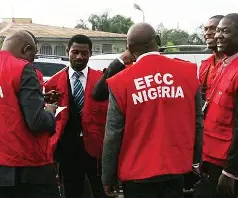
EXCLUSIVE: Three Years of Selective Justice – How the EFCC Under Tinubu Targets Opposition While APC Allies Enjoy Quiet Impunity
Since President Bola Ahmed Tinubu took office in May 2023, the Economic and Financial Crimes Commission has remained one of the most visible and contested institutions in Nigeria.
Established to confront high-level corruption, money laundering, and economic crimes without fear or favor, the agency continues to secure charges, recover assets, and make headlines.
Yet across the past three years, a consistent pattern has emerged that raises profound questions about its independence and even-handedness: aggressive, high-visibility actions against opposition politicians and opposition-controlled states, set against a quieter, slower, or vanishing approach to many cases involving ruling All Progressives Congress figures or those who defect to the party.
The Opposition Under Pressure
Opposition leaders have repeatedly described the EFCC’s operations under the current administration as a form of political warfare.
In joint statements, figures including former Vice President Atiku Abubakar, Labour Party’s Peter Obi, ADC National Chairman David Mark, and others have accused the Tinubu government of weaponizing the EFCC, the police, and the ICPC to intimidate, weaken, and coerce rivals.
Their central claim is that the anti-graft war has been objectified into a tool for emptying opposition ranks and forcing realignments ahead of the 2027 elections.
Specific episodes illustrate the intensity. In August 2025, former Sokoto Governor Aminu Tambuwal, a prominent member of the emerging opposition coalition, was detained and questioned over alleged cash withdrawals of approximately ₦189 billion during his 2015–2023 tenure.
Critics immediately pointed to the timing—shortly after his visible alignment against the ruling party—as evidence of political motivation rather than sudden discovery of new evidence.
Around the same period, the EFCC issued “urgent” requests and revived interest in the brief 2019 tenure of former Imo Governor Emeka Ihedioha and the long-concluded Senate presidency of David Mark, more than a decade after he left office.
These actions were widely interpreted by the opposition as attempts to discredit coalition builders through media trials and the reopening of cold files.
The pattern continued into 2026. Days before the Osun State governorship election, the EFCC froze a key statutory allocation account of the Adeleke administration, citing investigations into the alleged diversion of about ₦11 billion in ecology, intervention, and FAAC funds.
Governor Ademola Adeleke and opposition parties denounced the move as a deliberate effort to starve the state of resources and influence the electoral outcome.
President Tinubu later directed the agency to reverse the freeze, describing the timing as “embarrassing,” an intervention that itself fuelled further debate about the limits of institutional independence. Similar concerns have been raised about earlier actions affecting other opposition-controlled states.
The Contrast: Defections and Fading Files
What makes the pattern especially damaging is the contrasting treatment of many APC-linked cases or those involving politicians who cross over.
Multiple former governors and officials who faced serious EFCC scrutiny saw public updates on their investigations slow dramatically or disappear from view after defecting to the ruling party.
Former Delta Governor Ifeanyi Okowa is frequently cited: once the subject of intense attention, the public trail of his files largely went quiet after he joined the APC with his state’s political machinery.
Similar observations have been made about other high-profile figures whose cases appeared to lose momentum once political loyalty was secured.
This perception is reinforced by the lingering power of a remark attributed to former APC National Chairman Adams Oshiomhole: “Once you have joined APC, all your sins are forgiven.”
Whether intended as political banter or not, the statement has come to symbolize a widespread public belief that party affiliation can still function as a practical form of protection.
Even within the ruling party, some long-running or high-value matters have progressed slowly, faced unexpected withdrawals by the Attorney-General’s office, or remained in procedural limbo, further feeding the narrative of selective urgency.
The EFCC and Presidency Push Back
The EFCC under Chairman Ola Olukoyede has firmly rejected accusations of partisanship. The agency maintains that it investigates and prosecutes suspects from both the ruling party and the opposition strictly on the basis of evidence and its statutory mandate.
It points to ongoing high-profile cases against former APC governors such as Yahaya Bello of Kogi, who faces multiple money-laundering and breach-of-trust charges involving tens of billions of naira, as well as other figures from previous administrations.
Officials insist that no political immunity exists outside constitutional protections for serving officeholders and that claims of witch hunt are often deployed by those seeking to evade accountability.
The Presidency has taken a similar line. Spokesperson Bayo Onanuga has stated that President Tinubu does not issue directives on whom the EFCC should investigate, that defections occur voluntarily in response to the administration’s reform agenda, and that the agency remains an independent institution.
Framing legitimate probes as persecution, the Presidency argues, undermines the broader fight against corruption and Nigeria’s efforts to strengthen its international financial standing.
The Cost to Democracy and Public Trust
An independent assessment of the past three years reveals a mixed but revealing record. The EFCC has recorded genuine successes in asset recovery and the charging of powerful individuals.
Yet the volume, timing, and media intensity of actions against current opposition organizers and opposition state governments stand in noticeable contrast to the trajectory of many ruling-party-linked files.
When account freezes occur close to elections, when decade-old matters suddenly become “urgent,” and when investigations appear to quieten after defections, public confidence suffers regardless of the legal merits of any individual case.
This selective intensity carries serious consequences. It weakens the moral authority of the anti-graft war. It encourages the belief that justice in Nigeria remains politically calibrated rather than blind.
And it raises a fundamental question about the health of multiparty democracy: can genuine political competition survive when the institutions charged with enforcing accountability are widely perceived as instruments of the ruling party?
As the country moves toward 2027, the choices the EFCC makes will be scrutinized more intensely than ever. A consistently even-handed approach would strengthen both the agency and public trust.
Continued asymmetry risks reducing one of Nigeria’s most important institutions to another battlefield in the contest for power — and leaving the real struggle against corruption permanently compromised.
**This exclusive investigation draws on public statements, court developments, media reports and observable patterns across three years of the Tinubu administration. All individuals remain entitled to the presumption of innocence and due process under the law.**
 politics
 Adebayo Challenges Tinubu: Where Is Subsidy Money? Come Out and Account for It
 politics
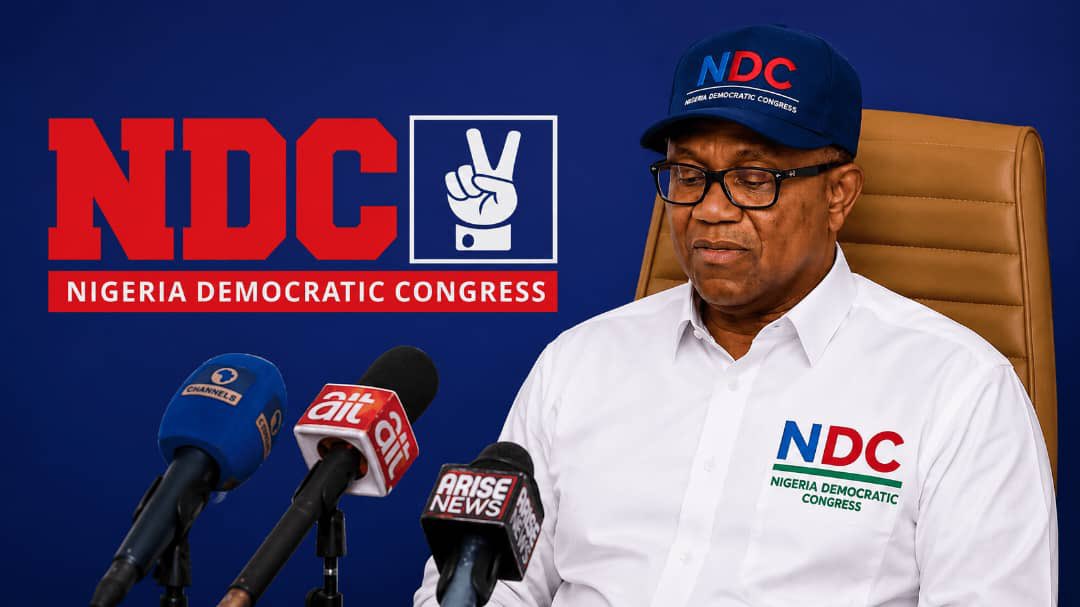
 NDC Wins Logo Battle as Abuja Court Orders INEC to Use Modified Design
 news
news Atiku Exposes Tinubu’s FAAC Scam: Bigger Naira, Poorer Nigerians
 news
news Police Arrest Hafsat Abubakar Over Fake Fintech Shutdown Document Circulated Online
 politics
 Sowore Declares Peter Obi Yelwata Blockade Government-Sponsored Political Attack
How do you feel about this news?
Community Additions
Have a news tip, correction, or extra context about this story? Post it below instantly. All submissions appear live on this screen immediately.