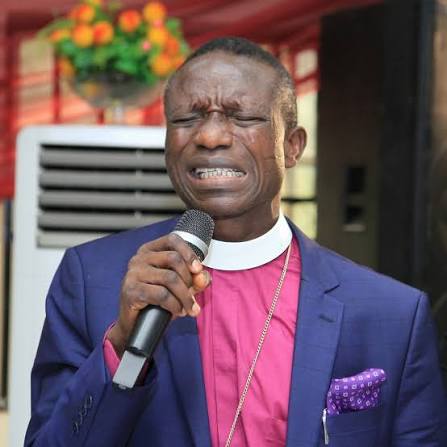
PFN Vows to Defy Bus Preaching Ban, Preferring God Over Man
LAGOS, Nigeria — In a fiery declaration that has reignited national debate over religious freedom and road safety, the President of the Pentecostal Fellowship of Nigeria (PFN), Bishop Francis Wale Oke, has vowed that Christians will not stop preaching the gospel inside commercial buses and taxis, even if it means breaking the law.
Speaking during a church service, Bishop Oke issued a bold challenge to lawmakers and authorities, declaring: “We will rather obey God than man.” He insisted that evangelism remains a divine mandate that no human legislation can override.
“Make all the stadiums in Nigeria become prisons; if you want to enforce that law, we are coming. We will break that law,” Oke said.
“Our Master told us to go into the world and preach the gospel to every creature. You sit somewhere there and say we shouldn’t preach in buses. We will preach in buses! We will preach everywhere!”
The PFN president, who leads an organisation claiming more than 65 million members, urged every Pentecostal believer to enter buses and taxis and continue sharing the gospel without fear of arrest.
He dared authorities to convert stadiums into prisons if they intended to enforce the restriction.
The Contested Legislation
The controversy centres on provisions in the Federal Road Safety Corps (FRSC) Amendment Bill, 2026, which prescribe a ₦50,000 fine, six months’ imprisonment, or both for anyone found preaching, hawking, or trading inside commercial vehicles.
Lawmakers and the FRSC frame the measure as necessary to reduce driver distraction and improve road safety.
The Senate has clarified that the prohibition is not new. According to a statement from the Office of the Senate Leader, the ban on preaching and hawking in commercial vehicles has existed under the FRSC (Establishment) Act since 2007 and is also reflected in the National Road Traffic Regulations.
The Senate emphasised that the law does not outlaw street preaching or other public religious activities.
Nevertheless, Christian groups, led by the PFN, have rejected the provision. At an earlier press conference after its National Executive Council meeting in Lagos, PFN National Secretary Bishop David Bakare argued that the law appears targeted at Christians, who are the primary group known for bus evangelism.
He questioned how preaching had suddenly become a traffic offence and urged President Bola Tinubu to withhold assent and return the bill for wider consultation.
Broader Concerns Raised
Bishop Oke went further, accusing lawmakers of prioritising restrictions on peaceful religious activity while failing to adequately confront insecurity, including killings, kidnappings, rape, and banditry.
“You don’t go after killers; you are not going after those beheading; you are not going after rapists; you are not going after kidnappers. You are not going after bandits who are unlawfully carrying arms.
You are going after us who are preaching the message of peace that changes people’s lives,” he said.
Other Christian bodies, including the Northern States Christian Elders Forum (NOSCEF), have also called on President Tinubu to reject the provision, describing it as an unconstitutional infringement on freedom of religion and expression that could heighten national tensions.
A Clash of Values
The standoff highlights a deeper tension in Nigerian public life: the balance between road safety regulations and the constitutional right to freedom of religion and expression.
Supporters of the restriction argue that unsolicited preaching and trading inside moving vehicles create unnecessary distractions for drivers and discomfort for passengers.
Critics counter that the measure disproportionately affects Christian evangelism and risks being perceived as an attack on a major faith community at a sensitive time.
As the bill awaits further legislative and presidential action, Bishop Oke’s defiant stance has drawn both strong support from many Christians and mixed reactions online.
What remains clear is that any attempt to strictly enforce the restriction is likely to face significant resistance from one of Nigeria’s largest Christian bodies.
For now, the PFN’s message is unambiguous: when the choice is between obeying man-made restrictions and what they regard as a divine command, they will choose the latter — and prepare for the consequences.
 news
news Presidency Brands Economist’s Tinubu Hate Claim Intellectual Fraud as Reforms Push On
 world
world Hegseth Declares Commanders Back in Charge with Major IG Reforms Across War Department
 news
news Suspected Cattle Rustlers Injure Youth in Isolated Bokkos Attack as Plateau Troops Respond
 world
world Trump Credits US Forces as Dozens of Iranian Terror Leaders Sent Straight to Hell
 politics
 Sowore Demands ₦500,000 Wage for INEC Staff, Threatens 2027 Election Boycott
How do you feel about this news?
Community Additions
Have a news tip, correction, or extra context about this story? Post it below instantly. All submissions appear live on this screen immediately.