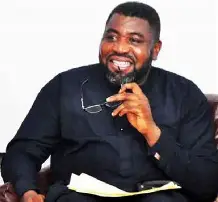
Strategist Anthony Kila Challenges Tinubu: Democratic Leaders Must Strengthen Viable Opposition Platforms
In a pointed intervention that has sparked fresh debate about the health of Nigeria’s democracy, political strategist and Jean Monnet Professor of Strategy and Development Anthony Kila has publicly disagreed with President Bola Tinubu’s position that it is not the duty of the president to help the opposition.
Speaking on Channels Television’s flagship programme Sunday Politics, Kila insisted that the leader of a democratic system carries a responsibility to ensure that opposition parties operate on a viable and competitive platform.
“The president says it is not his duty to help the opposition. Dear Mr President, I disagree with you. I think it is the duty of the leader of a democratic system to ensure that the opposition party have a viable platform,” Kila stated firmly during the broadcast.
The remarks come at a time when Nigeria’s opposition landscape remains fractured. The Peoples Democratic Party (PDP) continues to grapple with internal crises and a wave of high-profile defections, while newer platforms such as the African Democratic Congress (ADC) and other emerging coalitions struggle to present a cohesive national alternative ahead of the 2027 general elections.
Critics of the ruling All Progressives Congress (APC) have repeatedly accused the administration of benefiting from, or even facilitating, the opposition’s disarray through political pressure, selective enforcement of rules, and the broader climate of defections.
The presidency has consistently rejected such claims, maintaining that opposition parties must solve their own internal problems.
Kila’s intervention cuts to a deeper philosophical question about the nature of democratic leadership. In consolidated democracies, strong institutions, independent electoral bodies, and a culture of political tolerance are expected to provide the enabling environment for opposition parties to thrive.
When those conditions weaken, the argument goes, the sitting leader has a moral and systemic duty to protect the competitive space rather than simply watch it erode.
Kila framed the issue not as a partisan call for the government to prop up its rivals, but as a fundamental requirement for the legitimacy and longevity of the democratic system itself.
The political strategist, who serves as Director at the Commonwealth Institute of Advanced and Professional Studies and is widely regarded as one of Nigeria’s more independent public intellectuals, has long argued that democracy cannot survive on the strength of one dominant party alone.
His comments on Sunday Politics echo earlier warnings he has issued about the risks of a de facto one-party state emerging through attrition rather than outright authoritarian decree.
Reactions to the broadcast have been predictably polarized. Supporters of the president argue that no sitting leader is under obligation to resolve the organizational failures of opposition parties, pointing to similar dynamics in other democracies where governing parties rarely assist their challengers.
Critics, however, see Kila’s stance as a necessary reminder that democratic health is a collective responsibility and that a weakened opposition ultimately undermines accountability, policy alternatives, and public trust.
As Nigeria moves closer to the next electoral cycle, the exchange between the president’s reported position and Kila’s rebuttal highlights a central tension: whether the current political environment is producing genuine competition or merely the appearance of it.
For many observers, the quality of opposition platforms will be as decisive for the future of Nigerian democracy as the performance of the government itself.
 news
news Presidency Brands Economist’s Tinubu Hate Claim Intellectual Fraud as Reforms Push On
 world
world Hegseth Declares Commanders Back in Charge with Major IG Reforms Across War Department
 news
news Suspected Cattle Rustlers Injure Youth in Isolated Bokkos Attack as Plateau Troops Respond
 world
world Trump Credits US Forces as Dozens of Iranian Terror Leaders Sent Straight to Hell
 politics
 Sowore Demands ₦500,000 Wage for INEC Staff, Threatens 2027 Election Boycott
How do you feel about this news?
Community Additions
Have a news tip, correction, or extra context about this story? Post it below instantly. All submissions appear live on this screen immediately.