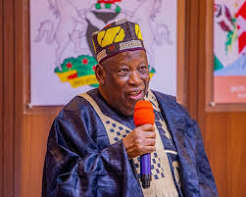
Ganduje Buries Obi-Kwankwaso Ticket: Dead on Arrival in Kano
Kano, Nigeria – July 21, 2026 – In a pointed political assessment that has ignited fresh debate about opposition strategies for the next general elections, Abdullahi Ganduje, former national chairman of the All Progressives Congress (APC) and ex-governor of Kano State, has declared that a joint presidential ticket featuring Peter Obi and Rabiu Kwankwaso on the platform of the Nigeria Democratic Congress (NDC) would be “dead on arrival” in Kano.
Speaking with journalists on Tuesday, Ganduje argued that the proposed alliance lacks the necessary political strength, grassroots structure, and proven governance record to make any meaningful impact in Kano — one of Nigeria’s most populous and politically strategic states.
The remarks come as rumours continue to swirl about possible realignments ahead of 2027, with Peter Obi (former Labour Party presidential candidate) and Rabiu Kwankwaso (former Kano governor and NNPP leader) frequently mentioned as potential partners in a bid to challenge the ruling APC.
Ganduje, a long-time political rival of Kwankwaso in Kano politics, dismissed the idea outright, suggesting the ticket would struggle to gain traction in his home state.
Kano has historically been a kingmaker in Nigerian presidential contests due to its massive voter base. Ganduje’s strong stance signals that the APC intends to fiercely defend its influence in the North-West, where internal party dynamics and personality clashes have long shaped outcomes.
Ganduje’s comments are rooted in deep familiarity with Kano’s complex political terrain.
Having served as governor and later as APC national chairman, he understands the ethnic, religious, and factional nuances that determine electoral success in the state.
His dismissal of the Obi-Kwankwaso possibility reflects confidence in the APC’s machinery while highlighting perceived weaknesses in the opposition’s ability to forge a viable coalition.
For their part, supporters of Obi and Kwankwaso often point to the broad appeal of a potential alliance that could unite southern and northern opposition sentiments.
However, translating that theoretical strength into actual votes in strongholds like Kano remains a significant challenge, especially given existing rivalries.
With over a year to go before the next general elections, early verbal skirmishes like this are setting the tone for what promises to be a highly competitive and unpredictable race.
Ganduje’s intervention serves as both a warning shot to the opposition and a rallying call for APC loyalists in Kano.
It also underscores a recurring theme in Nigerian politics: the difficulty of building cross-regional alliances that can overcome entrenched local power structures and personal animosities.
As a journalist who has covered Nigerian politics since the return to civilian rule, I have seen how seemingly distant alliances can reshape — or shatter — political landscapes.
Ganduje’s blunt verdict on the Obi-Kwankwaso ticket may be partisan, but it highlights a hard political reality: in Kano, local dynamics often trump national branding.
Whether the opposition can prove him wrong will depend on their ability to build genuine grassroots support and present a compelling alternative vision.
For now, the former governor has drawn a clear battle line in one of Nigeria’s most critical political theatres.
The coming months will test whether such early dismissals are mere bravado or accurate predictions of the road ahead.
 news
news Tinubu Set to Crush Obi, Atiku in 2027 Poll
 news
news Israel Urges Nigerian Doctors for Capacity Training Abroad
 news
news Kano Woman Stabs Boyfriend, Severs Manhood Completely
 world
world Trump Hails Court Win Over New York Times Lawsuit
 news
news Minister Hails NTA’s World-Class Studio in Tinubu Media Push
How do you feel about this news?
Community Additions
Have a news tip, correction, or extra context about this story? Post it below instantly. All submissions appear live on this screen immediately.