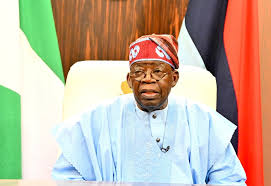
US Officials Receive Tinubu 1993 Drug Forfeiture Dossier
In a move that is already rippling through Nigeria’s volatile political landscape, documents detailing historical U.S. allegations linked to President Bola Ahmed Tinubu have been presented to senior American officials in Washington.
The materials, centered on a 1993 civil forfeiture case tied to a Chicago-area heroin trafficking investigation, are being circulated amid heightened scrutiny of Nigeria’s leadership and its strategic relationship with the United States.
Dr. Usman Isyaku, a Nigerian academic and vocal government critic with credentials including a PhD from the University of Leicester and post-doctoral work in Bergen, Norway, shared the development on X (formerly Twitter) on July 20, 2026.
Accompanying his post were images of a detailed chronology prepared by the U.S. government affairs firm Von Batten-Montague-York, L.C.
The Documents and Their Context
The briefing packet, spanning over 60 pages according to reports, outlines a 1993 U.S. Department of Justice (DOJ) civil forfeiture action: United States v. Funds in Account No. 263226700 et al.
It alleges that funds deposited into bank accounts controlled by then-younger Tinubu were linked to proceeds of a heroin trafficking operation involving associates Adegboyega Mueez Akande and Abiodun Agbele.
Tinubu forfeited approximately $460,000 in a negotiated civil settlement, with no criminal conviction recorded.
The chronology traces the case from the late 1980s investigation through 1993 proceedings and recent Freedom of Information Act (FOIA) litigation.
In 2023, American journalist Aaron Greenspan filed suits compelling agencies like the FBI and DEA to process related records.
A 2025 U.S. District Court ruling in D.C. rejected blanket denials by some agencies, keeping the matter alive into 2026.
The firm notes these materials are being shared with the Trump administration, congressional committees (including Foreign Affairs, Judiciary, and Intelligence), and in the context of Nigeria’s request for a Tinubu-Trump meeting at the upcoming UN General Assembly.
Dr. Isyaku’s message was direct and urgent: “Ignorance is not an excuse for putting the wrong people in charge of your country. Every single vote for Tinubu is carrying a serious repercussion for the entire country. Vote wisely or live with the consequences of your decisions. Be careful!”
Broader Political Backdrop
This latest development lands as Nigeria grapples with economic hardship, insecurity, and intense jockeying for the 2027 presidential election.
Tinubu’s administration has faced criticism over inflation, fuel subsidy removal impacts, and persistent banditry/kidnapping crises — though recent rescues, such as in Oyo State, have been touted as successes.
Opposition figures, including former Vice President Atiku Abubakar, continue to highlight governance challenges, while voices like Dr. Isyaku — who frequently posts on coalition-building, judicial independence, and anti-Tinubu sentiments — amplify concerns about leadership integrity.
Tinubu’s defenders have long maintained that the 1990s forfeiture was a civil matter without criminal implications and that it was litigated and settled decades ago. The issue featured prominently in the 2023 election petitions but did not derail his victory.
Reactions and Implications
As of this reporting, the Nigerian government has not issued an official response to the latest Washington briefings.
The development raises questions about potential diplomatic ripples, especially given ongoing U.S.-Nigeria security cooperation on counter-terrorism.
Analysts suggest the timing — months before 2027 voting — could fuel public discourse on eligibility, transparency, and international reputation.
Dr. Isyaku, who positions himself as an informed observer urging strategic voting, represents a segment of the diaspora and domestic voices pushing for accountability.
Whether these historical documents will influence U.S. policy or Nigerian voter sentiment remains to be seen.
In a deeply polarized nation, they underscore enduring debates about leadership fitness and the long shadow of personal histories in public life.
For now, one thing is clear: In Nigeria’s high-stakes political arena, old files can still ignite new fires.
 news
news Tinubu Set to Crush Obi, Atiku in 2027 Poll
 news
news Israel Urges Nigerian Doctors for Capacity Training Abroad
 news
news Kano Woman Stabs Boyfriend, Severs Manhood Completely
 world
world Trump Hails Court Win Over New York Times Lawsuit
 news
news Minister Hails NTA’s World-Class Studio in Tinubu Media Push
How do you feel about this news?
Community Additions
Have a news tip, correction, or extra context about this story? Post it below instantly. All submissions appear live on this screen immediately.