Federal High Court Issues 2026 Pre-Election Rules Amendment Ahead of 2027 Polls
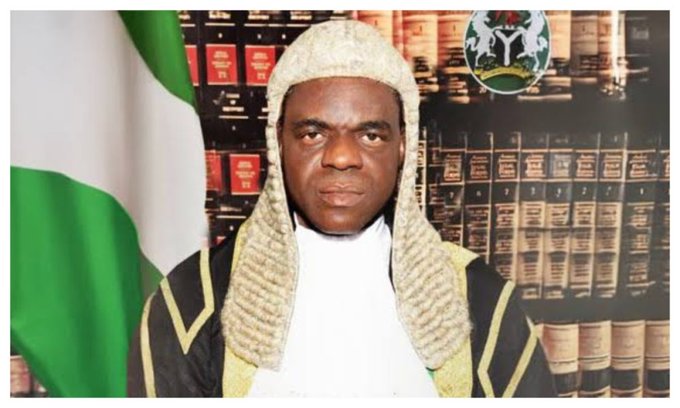
ABUJA, Nigeria — In a proactive move aimed at strengthening Nigeria’s electoral justice system, the Chief Judge of the Federal High Court, Justice John Terhemba Tsoho, has issued the Federal High Court (Pre-Election) Practice Directions (Amendment), 2026.
This update refines the initial directions that took effect on June 26, 2026, signaling a firm commitment to timely and efficient handling of pre-election disputes.
Announced on Wednesday, July 15, 2026, through a statement by the court’s Director of Information, Dr. Catherine Oby Christopher, the amendments are grounded in key constitutional provisions (Sections 254 and 285(9), (10), and (14) of the 1999 Constitution as amended) and relevant sections of the Electoral Act, 2026.
The goal is crystal clear: to enhance the speedy, efficient, and fair determination of pre-election matters in line with the Constitution and electoral laws.
With the 2027 general elections on the horizon, these updated directions come at a critical moment.
Pre-election litigation has historically clogged courts, delayed processes, and sometimes undermined public confidence in the democratic process.
By streamlining procedures, Justice Tsoho’s directive seeks to reduce delays, minimize technicalities that favor the powerful, and ensure justice is served within constitutionally mandated timelines.
Lawyers and political actors have been urged to thoroughly familiarize themselves with the new rules to facilitate smoother adjudication of emerging cases.
This move reflects a broader judicial effort to safeguard the integrity of Nigeria’s democracy by prioritizing efficiency without sacrificing fairness.
Nigeria’s electoral environment remains highly litigious. Pre-election cases often involve candidate nominations, party primaries, disqualification disputes, and compliance with electoral guidelines.
The Federal High Court, as the primary venue for such matters, plays a pivotal role.
Previous practice directions were introduced to meet tight constitutional deadlines, and this amendment builds on that foundation to address any observed gaps.
Justice Tsoho’s leadership continues a tradition of judicial reform aimed at making the court more responsive to the demands of modern democratic governance.
For ordinary Nigerians, this development offers hope that disputes will be resolved faster, reducing the uncertainty that often clouds election cycles and allowing focus to shift toward substantive issues of governance and development.
As the nation prepares for 2027, the judiciary’s proactive steps send a strong signal: the rule of law will remain central, and courts will not be instruments of delay or manipulation.
Citizens, political parties, and legal practitioners alike must now align with these updated standards to uphold democratic values.
The full details of the amended Practice Directions are expected to be widely circulated, and stakeholders are advised to study them closely.
In a country where credible elections are foundational to stability and progress, every reform that strengthens judicial efficiency deserves commendation—and vigilant public oversight.
 news
news Tinubu Set to Crush Obi, Atiku in 2027 Poll
 news
news Israel Urges Nigerian Doctors for Capacity Training Abroad
 news
news Kano Woman Stabs Boyfriend, Severs Manhood Completely
 world
world Trump Hails Court Win Over New York Times Lawsuit
 news
news Minister Hails NTA’s World-Class Studio in Tinubu Media Push
How do you feel about this news?
Community Additions
Have a news tip, correction, or extra context about this story? Post it below instantly. All submissions appear live on this screen immediately.