
Hadi Sirika: Buhari Left Nigeria's Economy Flourishing, Sparks Outrage
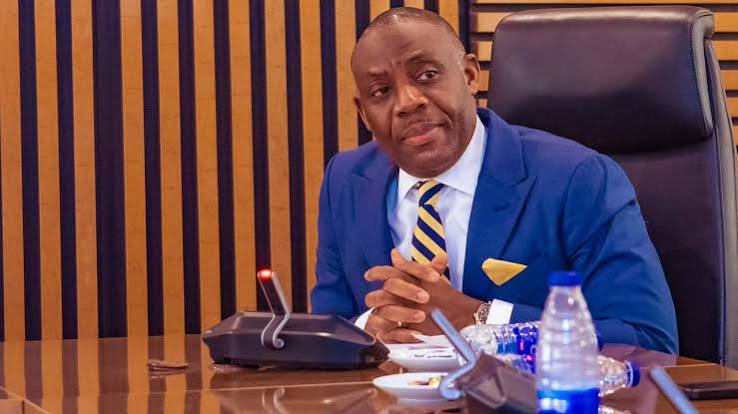
Abuja, Nigeria - In a pointed television interview aired on ARISE News, Hadi Sirika, Nigeria’s former Minister of Aviation under the late President Muhammadu Buhari, staunchly defended his former boss’s economic stewardship, asserting that Buhari “excelled on the economy and left it flourishing.”
Sirika further lauded improvements in the education sector, describing the country as being in a “much better state” at the end of Buhari’s tenure.
The remarks, delivered during a discussion on posthumous commemorations for Buhari, have ignited a firestorm of criticism across social media and political circles, with many Nigerians questioning the portrayal in light of persistent economic hardships and ongoing controversies surrounding Sirika himself.
Speaking in traditional attire against a studio backdrop, Sirika emphasized Buhari’s commitment to ordinary Nigerians.
He positioned the late president’s administration as one that strengthened key sectors despite challenges, stopping short of a full-throated critique of current policies under President Bola Tinubu while declining to deeply compare the two eras.
“I’m neither President Buhari nor President Tinubu,” Sirika noted, underscoring a measured tone even as he painted a positive picture of the 2015-2023 period.
The interview forms part of broader reflections on Buhari’s legacy following his passing, with Tinubu and associates reportedly planning commemorative events.
Sirika’s comments align with a narrative from some APC loyalists highlighting infrastructure gains, social investment programs, and stability efforts during Buhari’s eight years in power.
Independent assessments paint a more complex and often challenging picture of Buhari’s economic record.
Public debt nearly doubled or ballooned significantly (estimates vary from roughly N42 trillion to N77-87 trillion), inflation climbed sharply to around 22.4% by the end of his term, and the naira depreciated dramatically.
Nigeria’s global economic ranking slipped, with GDP growth averaging a modest 1.24% annually amid recessionary pressures, high unemployment, and widespread poverty affecting over 130 million citizens at points during his tenure.
Critics argue that while infrastructure projects advanced and some social programs were launched, structural issues like fuel subsidy burdens, exchange rate distortions, and policy inconsistencies undermined broader prosperity.
Many Nigerians recall the currency redesign chaos in Buhari’s final months, which exacerbated cash shortages and economic pain.
Comparisons to the current Tinubu administration, which inherited these challenges and implemented bold reforms like fuel subsidy removal and exchange rate unification, remain hotly debated.
While some metrics show stabilization efforts and increased foreign direct investment, everyday hardships such as rising living costs persist, fueling public skepticism toward glowing retrospectives of the prior era.
Sirika’s intervention has drawn particular ire due to his own legal troubles.
He faces ongoing EFCC charges related to the ill-fated Nigeria Air project, accused of irregularities including chartering an Ethiopian Airlines plane, repainting it, and presenting it as Nigeria’s national carrier—only for the initiative to collapse without a functional airline materializing despite significant expenditures.
Social media reactions were swift and scathing. Users labeled the appearance tone-deaf, with comments decrying it as “Nigeria is a crime scene” and questioning why figures facing serious allegations continue on public platforms instead of facing accountability.
References to “scamming the country” and calls for imprisonment were common, reflecting deep public frustration with elite impunity.
This episode underscores enduring fault lines in Nigeria’s political discourse: the tension between partisan loyalty and empirical performance, the power of media narratives in shaping legacies, and the public’s demand for transparency amid economic struggles.
As the nation grapples with insecurity, inflation, and governance challenges, invocations of past “flourishing” economies risk alienating citizens still navigating daily hardships.
Veteran observers note that such interviews, while newsworthy, often serve as battlegrounds for competing historical interpretations ahead of future elections.
Sirika’s defense, whether rooted in genuine belief or political signaling, highlights how Buhari’s mixed legacy—marked by anti-corruption rhetoric, infrastructure push, and macroeconomic shortfalls—continues to polarize.
 news
news Tinubu Set to Crush Obi, Atiku in 2027 Poll
 news
news Israel Urges Nigerian Doctors for Capacity Training Abroad
 news
news Kano Woman Stabs Boyfriend, Severs Manhood Completely
 world
world Trump Hails Court Win Over New York Times Lawsuit
 news
news Minister Hails NTA’s World-Class Studio in Tinubu Media Push
How do you feel about this news?
Community Additions
Have a news tip, correction, or extra context about this story? Post it below instantly. All submissions appear live on this screen immediately.