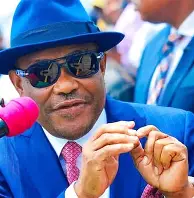
Wike: PDP Will Struggle to Win 2027 Presidential Election
ABUJA, Nigeria — In a frank assessment that has sent ripples through Nigeria’s political landscape, Minister of the Federal Capital Territory (FCT) and prominent PDP figure Nyesom Wike has declared that it will be difficult for the Peoples Democratic Party (PDP) to clinch the presidential election in 2027.
Speaking during his monthly media chat in Abuja on Thursday, July 9, 2026, Wike attributed the party’s challenges to persistent internal problems that have weakened its structures and cohesion.
“PDP has a problem,” he stated bluntly, emphasizing that overcoming these divisions to mount a credible presidential campaign is no easy task.
Wike further critiqued how political discourse in Nigeria has become narrowly focused on the participation of specific figures.
He remarked that many now equate active democracy solely with the involvement of leaders like Atiku Abubakar (ADC Presidential Candidate) and Peter Obi, questioning whether other Northern candidates could emerge without them.
“That’s the level we’ve taken ourselves to,” he observed, highlighting the polarized nature of current opposition dynamics.
The FCT Minister stressed the need for the PDP to prioritize rebuilding at the grassroots and state levels rather than fixating prematurely on the presidency.
“We are not even talking about the ordinary Ward election,” he noted, urging party members to “put your pieces together and prepare.”
Wike, who has been a vocal voice within the PDP despite ongoing factional battles, referenced past accusations labeling him an “agent of the APC.”
He used the platform to defend his loyalty while calling for realism: winning the presidency requires robust structures across all 36 states — a feat the party currently struggles to achieve.
His comments come at a time of heightened political maneuvering. With the 2027 elections approaching, opposition parties including the PDP, ADC, and others are positioning themselves amid public dissatisfaction with economic conditions under the current administration.
Wike’s remarks underscore the self-inflicted wounds within the PDP that could hinder its competitiveness.
Political analysts view Wike’s statement as both a reality check and a strategic nudge for the PDP to address its leadership and unity crises.
The party has faced significant defections, legal battles, and factional disputes in recent years, complicating efforts to present a formidable front against the ruling APC.
For ordinary Nigerians, such intra-party admissions fuel ongoing debates about the quality of opposition politics and the prospects for credible alternatives in 2027.
As economic hardships persist — from inflation and unemployment to infrastructure gaps — voters are increasingly demanding parties that can deliver tangible solutions rather than recycled rhetoric.
Wike’s intervention adds to the vibrant and often contentious pre-election discourse in Nigeria. Whether the PDP heeds his call to “build a party” and mend internal rifts will likely shape its fortunes in the coming months.
As the nation watches, the minister’s blunt honesty serves as a reminder that in politics, internal strength often determines external success.
This development will undoubtedly dominate headlines and political calculations as stakeholders across PDP, ADC, and other platforms gear up for what promises to be one of Nigeria’s most fiercely contested electoral cycles.
 news
news Tinubu Set to Crush Obi, Atiku in 2027 Poll
 news
news Israel Urges Nigerian Doctors for Capacity Training Abroad
 news
news Kano Woman Stabs Boyfriend, Severs Manhood Completely
 world
world Trump Hails Court Win Over New York Times Lawsuit
 news
news Minister Hails NTA’s World-Class Studio in Tinubu Media Push
How do you feel about this news?
Community Additions
Have a news tip, correction, or extra context about this story? Post it below instantly. All submissions appear live on this screen immediately.