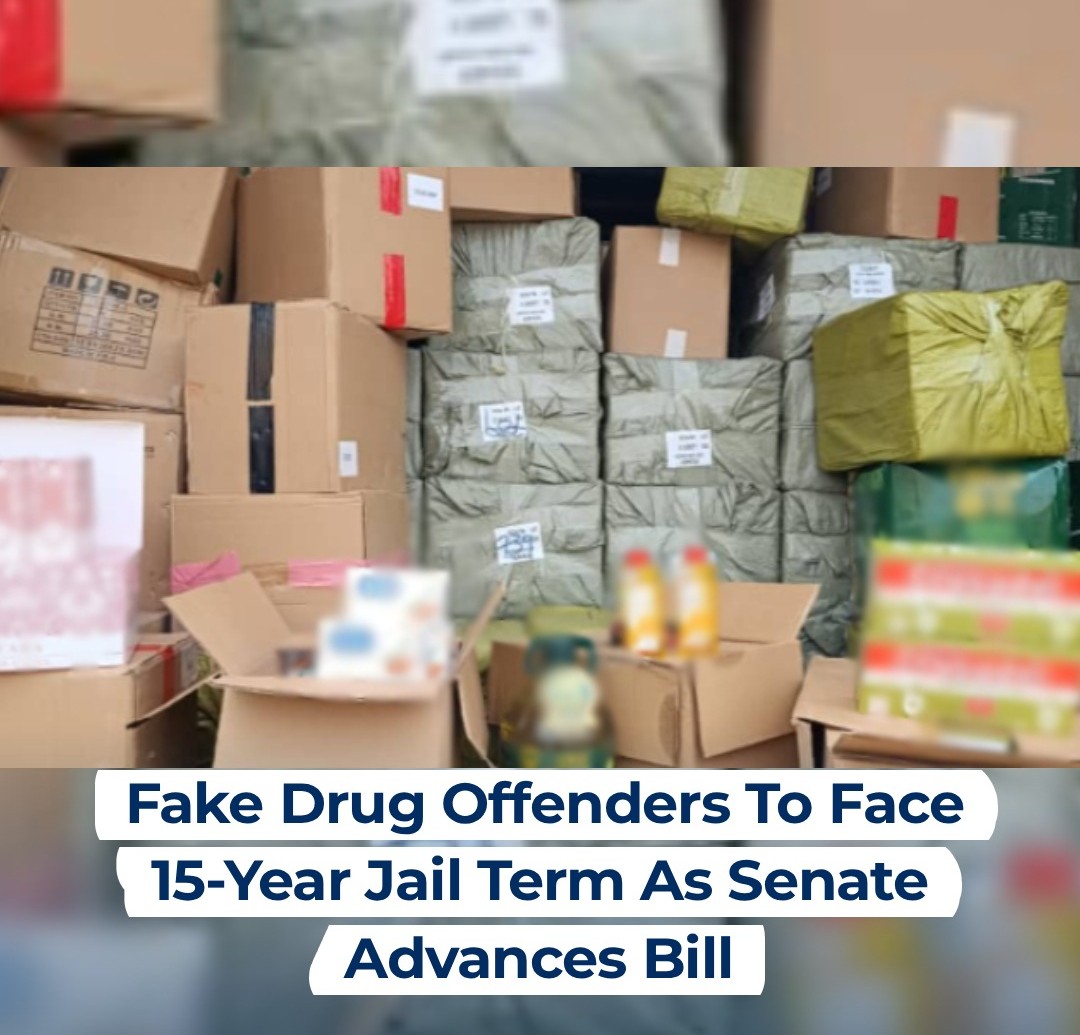
Senate Takes Bold Stand Against Fake Drugs: 15-Year Jail Terms for Hawking Counterfeits to Protect Nigerian Lives
On July 8, 2026, the Nigerian Senate advanced the Counterfeit Medical Products, Fake Drugs and Unwholesome Processed Foods (Prohibition and Control) Bill, 2026, sponsored by Senator Umar Suleiman.
This legislation seeks to repeal the outdated 2004 Act and introduce a robust, modern framework to combat the persistent scourge of counterfeit and substandard medicines.
The bill’s key provisions mark a significant escalation in enforcement:
- Criminalization of illicit activities: It explicitly bans the production, importation, distribution, sale, possession, and hawking of fake drugs and counterfeit products.
Hawking in unauthorized locations—such as markets, motor parks, roadside stalls, buses, ferries, and unlicensed online platforms—will now carry serious consequences.
- Harsher penalties: Offenders face up to 15 years imprisonment, substantial fines, victim compensation, and sanctions for corporate entities and their directors.
- Enhanced regulatory powers:
The National Agency for Food and Drug Administration and Control (NAFDAC) gains authority to deploy tracking technologies, form task forces, conduct inspections, seize products, arrest suspects, seal premises, and bolster port surveillance.
- Judicial efficiency: Cases will be handled exclusively by the Federal High Court with accelerated prosecution timelines.
Senator Suleiman described the bill as a “life-saving intervention,” emphasizing its role in protecting Nigerians from preventable deaths, safeguarding legitimate pharmaceutical businesses, and aligning Nigeria with global standards.
The bill has been referred to the Senate Committee on Health (Secondary and Tertiary) for further scrutiny, with a report expected within four weeks.
Nigeria has long grappled with a counterfeit drug epidemic that undermines healthcare and claims countless lives.
Estimates suggest that substandard and falsified medicines contribute to tens of thousands of deaths annually in the country, with broader sub-Saharan Africa figures reaching up to 500,000 deaths per year from fake drugs— including around 267,000 from substandard malaria treatments and 169,000 child deaths from fake pneumonia antibiotics.
Drug hawkers have been a major vector for this problem, supplying unregistered, expired, banned, or falsified products—including narcotics like tramadol and morphine, antibiotics, and sex enhancement drugs—directly to vulnerable populations.
NAFDAC’s recent operations highlight the scale: seizures of fake drugs and cosmetics worth billions of naira, including over ₦3 billion in one Lagos warehouse raid and massive hauls from open drug markets in Onitsha, Aba, and Idumota.
Public health implications are profound:
- Treatment failures and drug resistance, complicating conditions like malaria, hypertension, diabetes, and infections.
- Increased hospital admissions, prolonged illnesses, and higher healthcare costs.
- Erosion of trust in the medical system, pushing people toward self-medication via unregulated channels.
- Links to broader societal issues, including crime, as hawkers sometimes feed narcotics to criminal networks.
This bill builds on ongoing NAFDAC efforts and addresses gaps exposed by technological advancements, online sales, and organized crime. It shifts from reactive seizures to proactive deterrence and systemic protection.
Positive angles:
- Consumer protection: Everyday Nigerians—especially in rural areas or low-income communities reliant on hawkers—will benefit from reduced exposure to harmful products.
- Economic boost: Legitimate manufacturers and pharmacies gain a level playing field, potentially strengthening the local pharmaceutical industry and reducing billions lost to fakes.
- Global alignment: It modernizes Nigeria’s laws to match international best practices, which could improve trade relations and access to quality medicines.
- Youth and community safety: By curbing easy access to dangerous substances, it indirectly supports efforts against drug abuse, which affects students, drivers, and other demographics.
Edge cases and considerations:
- Implementation will be key. Success depends on adequate funding for NAFDAC, inter-agency coordination, judicial capacity, and public awareness campaigns.
- Potential challenges include resistance from informal traders, enforcement in remote areas, and ensuring penalties don’t disproportionately affect small-scale operators versus kingpins.
- Complementary measures—like expanding licensed pharmacies, affordable genuine medicines, and rehabilitation programs—will maximize impact.
- While focused on counterfeits, the bill intersects with separate drug trafficking laws (some carrying even stricter penalties), requiring clear delineation to avoid overlaps.
This isn’t just another piece of legislation; it’s a proactive step toward a healthier Nigeria.
As the bill progresses, stakeholders from civil society, pharmacists, and the public should engage to refine it.
For families who have lost loved ones to fake drugs, or patients wary of buying medicines, this offers real hope.
What You Can Do: Support licensed pharmacies, report suspicious hawkers to NAFDAC, and stay informed via official channels. Together with strong legislative action, these efforts can turn the tide against counterfeit drugs.
 news
news Tinubu Set to Crush Obi, Atiku in 2027 Poll
 news
news Israel Urges Nigerian Doctors for Capacity Training Abroad
 news
news Kano Woman Stabs Boyfriend, Severs Manhood Completely
 world
world Trump Hails Court Win Over New York Times Lawsuit
 news
news Minister Hails NTA’s World-Class Studio in Tinubu Media Push
How do you feel about this news?
Community Additions
Have a news tip, correction, or extra context about this story? Post it below instantly. All submissions appear live on this screen immediately.