IMF Bombshell Reveals ₦8.8 Trillion Unrecorded Spending Under Tinubu Administration
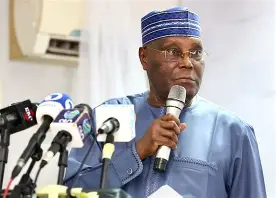
ABUJA, Nigeria— Former Vice President and ADC Presidential Candidate for the 2027 elections, Atiku Abubakar, has issued a scathing indictment of the Tinubu administration following a major International Monetary Fund (IMF) disclosure.
The IMF report highlights approximately ₦8.8 trillion in public expenditures — equivalent to 2% of Nigeria’s GDP — that went unrecorded in recent official budgets.
In a detailed statement released on Saturday, July 4, 2026, Atiku described the revelation as “the most consequential act of fiscal impunity in Nigeria’s recent democratic history.”
Citing Reuters coverage of the IMF’s Article IV consultation, he pointed to large-scale government projects executed entirely off-budget, placing them beyond the scrutiny of the Auditor-General, procurement laws, and National Assembly oversight.
Atiku drew direct parallels between the federal anomalies and practices allegedly developed during President Bola Tinubu’s time as Governor of Lagos State.
He referenced the controversial Alpha Beta revenue arrangement, suggesting a similar model of fiscal opacity has now been scaled to the national level, creating what he termed a “parallel fiscal universe.”
The statement also flagged the alleged illegal deduction of ₦800 billion from state governments’ statutory allocations, describing the combined sums as potentially forming a substantial undeclared resource pool ahead of the 2027 general elections.
Atiku contrasted the government’s stringent austerity measures — including fuel subsidy removal, repeated naira devaluations, and elevated interest rates — with the existence of this unaccounted “shadow treasury.”
Ordinary Nigerians continue to battle soaring living costs, unemployment, unpaid salaries, and business closures, while vast sums reportedly operate outside transparent channels.
He referenced his own 2023 economic recovery proposal, including a $10 billion stimulus package, noting that the IMF findings suggest significant resources were available but deployed without public accountability.
This, he argued, has exacerbated rather than alleviated Nigeria’s economic challenges.
As the leading ADC Presidential Candidate eyeing the 2027 race, Atiku made several pointed demands:
- The National Assembly should immediately convene emergency investigative hearings.
- The Auditor-General must conduct a comprehensive, independent audit of all off-budget spending.
- Full public disclosure of every project, contractor, and authorization related to the unrecorded funds.
- Immediate restitution of the ₦800 billion to state governments with detailed accounting.
- Independent investigations by the EFCC, ICPC, and other anti-corruption agencies.
He called on civil society, the business community, media, and international partners to demand answers, emphasizing that governance in secret equates to plunder.
The IMF’s observations, articulated by its resident representative Christian Ebeke, focus on statistical discrepancies affecting fiscal transparency and accurate assessment of Nigeria’s financing needs.
Off-budget activities complicate efforts to evaluate the true impact of ongoing economic reforms.
Atiku’s intervention has generated widespread reactions across social media and political circles.
While supporters view it as a bold stand for accountability, critics question opposition motives and point to Nigeria’s complex history of fiscal controversies across administrations.
Many everyday citizens, facing persistent economic pressures, are calling for genuine transparency regardless of political affiliation.
As Nigeria prepares for the 2027 presidential election, issues of public finance management, budget integrity, and responsible governance are set to dominate national discourse.
The ₦8.8 trillion unrecorded spending revelation adds significant weight to ongoing debates about fiscal discipline, anti-corruption efforts, and the delivery of economic relief to millions of Nigerians.
The coming weeks will reveal whether this IMF-backed disclosure prompts concrete institutional action or fades into the familiar cycle of political accusations.
For a country striving to balance reform with tangible improvements in citizens’ lives, demands for openness in public spending have never been more pressing.
 news
news Tinubu Set to Crush Obi, Atiku in 2027 Poll
 news
news Israel Urges Nigerian Doctors for Capacity Training Abroad
 news
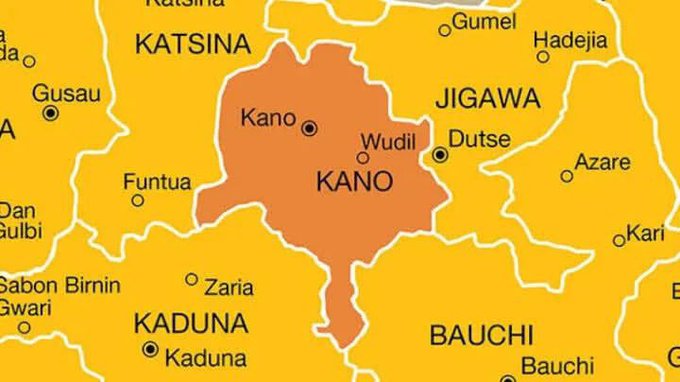
news Kano Woman Stabs Boyfriend, Severs Manhood Completely
 world
world Trump Hails Court Win Over New York Times Lawsuit
 news
news Minister Hails NTA’s World-Class Studio in Tinubu Media Push
How do you feel about this news?
Community Additions
Have a news tip, correction, or extra context about this story? Post it below instantly. All submissions appear live on this screen immediately.