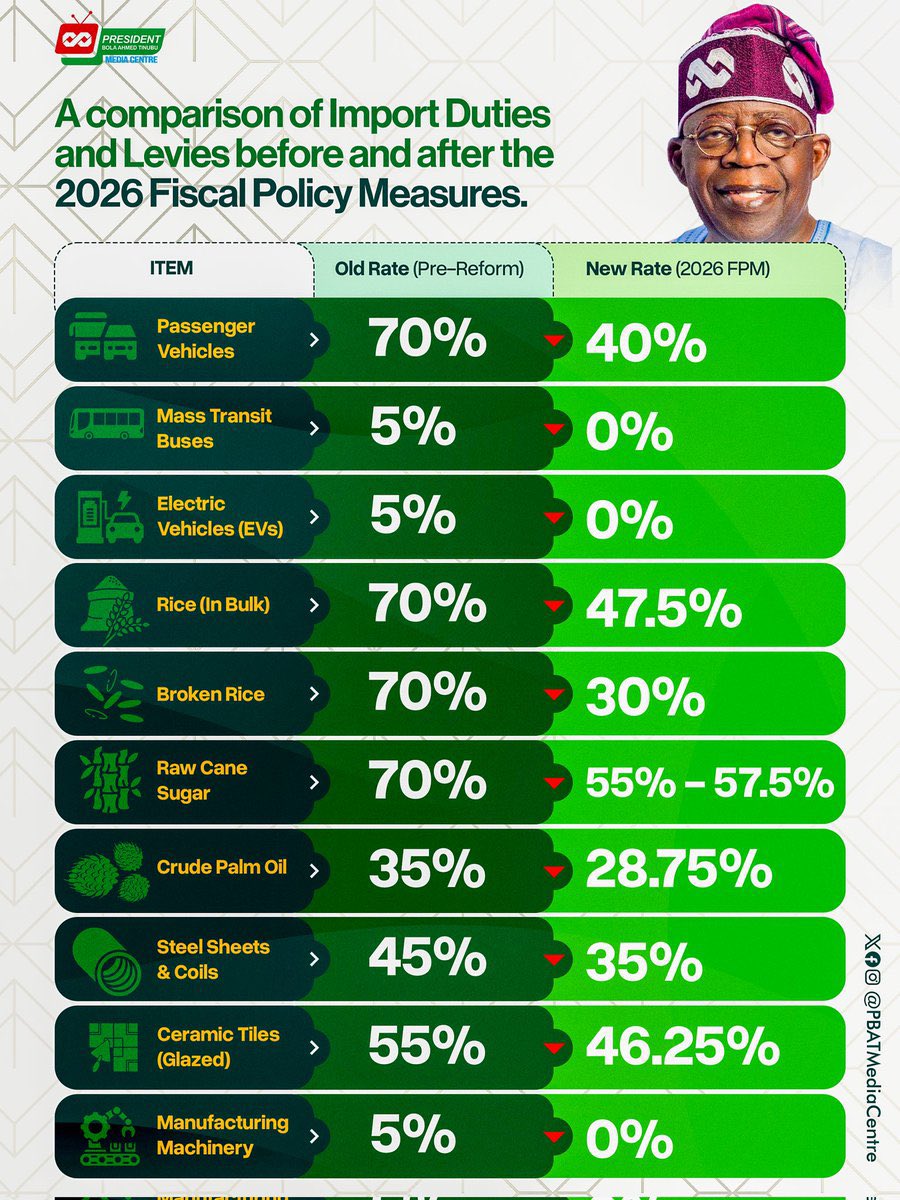
Government Slashes Vehicle Import Levies to Ease Nigerian Burdens
Abuja, Nigeria – July 2, 2026 – In a timely policy shift aimed at tackling soaring vehicle costs and supporting everyday Nigerians amid persistent economic pressures, the Federal Government has cut import levies on both new and used vehicles, with the changes taking full effect from July 1.
Under the new 2026 Fiscal Policy Measures, the import levy on new vehicles drops from 20% to 10%, while that on used vehicles (popularly known as Tokunbo) falls sharply from 15% to 5%.
The move forms part of a broader tariff revision designed to reduce the cost of importation, ease financial burdens on dealers and consumers, and stimulate economic activity.
Announced through official channels and widely shared by presidential media aides, the reduction seeks to make personal mobility more accessible at a time when high inflation, currency fluctuations, and previous duties have priced many vehicles beyond the reach of middle-class and aspiring buyers.
The levy cuts come alongside the introduction of a new “Green Tax Surcharge” on vehicles with larger engine capacities (typically above 2,000cc), ranging from 2% to 4%.
Smaller-engine cars, electric vehicles (EVs), mass transit buses, and locally assembled vehicles are exempt, reflecting a deliberate push toward cleaner transport and support for local manufacturing.
This dual approach — lowering baseline levies while introducing targeted environmental charges — aims to deliver immediate relief without undermining long-term sustainability objectives.
Public response has been cautiously optimistic but tempered by skepticism. Many Nigerians welcome the potential for lower car prices, with social media buzzing about the prospect of more affordable vehicles.
However, concerns persist that dealers and middlemen may not fully pass on the savings, echoing past experiences where policy relief failed to translate into market reductions due to exchange rate volatility and profit margins.
Others worry about impacts on local auto assembly initiatives, questioning whether cheaper imports could undermine emerging domestic production.
Calls for strict monitoring by the Nigeria Customs Service (NCS) and relevant agencies have grown louder to ensure compliance and prevent exploitation.
The vehicle levy adjustment is one element of the government’s wider 2026 fiscal strategy, which includes tariff reductions on essential items like rice, palm oil, and sugar to combat inflation and improve living standards.
It reflects ongoing efforts to recalibrate trade policy in line with ECOWAS and AfCFTA commitments while addressing domestic pressures.
For ordinary citizens, the policy offers a glimmer of hope: the possibility of owning reliable transportation without crippling costs.
For the auto import sector, it could boost volumes and competition. Yet success hinges on effective implementation, transparent enforcement, and complementary measures to stabilize the naira.
As Nigerians navigate daily economic realities, this policy stands as a pragmatic step toward relief — one that will be judged not by announcements, but by tangible changes at dealerships and on the roads in the months ahead.
Monitoring how quickly — and how fully — prices respond will be the true test of its impact on the Renewed Hope agenda.
 news
news Tinubu Set to Crush Obi, Atiku in 2027 Poll
 news
news Israel Urges Nigerian Doctors for Capacity Training Abroad
 news
news Kano Woman Stabs Boyfriend, Severs Manhood Completely
 world
world Trump Hails Court Win Over New York Times Lawsuit
 news
news Minister Hails NTA’s World-Class Studio in Tinubu Media Push
How do you feel about this news?
Community Additions
Have a news tip, correction, or extra context about this story? Post it below instantly. All submissions appear live on this screen immediately.