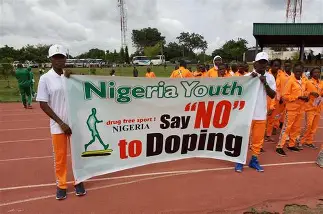
FG Unleashes Independent Anti-Doping Board To Reclaim Sporting Glory
Abuja, Nigeria – July 2, 2026—In a landmark ceremony that could reshape Nigeria’s troubled sporting landscape, the Federal Government today formally inaugurated the Technical Board of the Nigeria Anti-Doping Centre (NADC), equipping the nation with a robust, independent institution to combat doping and restore credibility to its athletes on the global stage.
Speaking at the event in Abuja, Secretary to the Government of the Federation (SGF), Senator George Akume, CON, hailed the occasion as “a defining moment in Nigeria’s sporting history.” He described the move as a transition “from commitment to structure, from policy to action, and from internal management to a fully constituted, independent and law-backed institution.”
The inauguration follows the enactment of the National Anti-Doping Act, 2025, which established the NADC as a statutory body aligned with the World Anti-Doping Code.
For years, Nigerian sports have suffered reputational damage from doping violations that sidelined athletes, embarrassed the nation, and undermined public trust. Today’s development represents a forceful official response.
A Call to Serious Service
Senator Akume charged the newly appointed board members to treat their roles as a solemn duty rather than a ceremonial honor.
Their mandate includes educating athletes and stakeholders at all levels — from elite competitors to grassroots sports, schools, community clubs, and national federations — preventing violations, protecting clean athletes, and enforcing regulations with professionalism, independence, and accountability.
The Technical Board is chaired by Alh. Hon. Bar. Rasheed Olarenwaju Kazeem, a figure with prior experience in anti-doping efforts.
Other members include Justine Chidi Okoroji Jnr. PhD, Dr. Ibrahim Abubakar Gyaran, MON, Pharm. Femi Ayorinde, Bar. Ben Okolo, Bar. Mrs. Cynthia N. Aloke, Col. Abbas Mohammed (Rtd), and Mainasara Illo, who serves as Executive Secretary/CEO.
In his acceptance speech, Chairman Kazeem assured Nigerians that the board would not disappoint, pledging full commitment to the responsibilities entrusted by President Bola Ahmed Tinubu.
Broad Support Across Government
The event drew strong endorsements from key stakeholders. Senator Abdul Ahmed Ningi, Chairman of the Senate Committee on Sports Development, congratulated the board and highlighted the Tinubu administration’s unprecedented focus on sports, evidenced by increased budgetary allocations.
“I have been involved in sports oversight since 1999,” he noted, “and I can confidently say that the level of attention and funding being accorded the sector under President Bola Ahmed Tinubu is among the most significant we have witnessed.”
Mallam Shehu Dikko, Chairman of the National Sports Commission (NSC), described the inauguration as “another decisive step in Nigeria’s sporting rebirth.”
He urged the board to act as the “internal compass” of the sports ecosystem, expand education nationwide, and push for a WADA-accredited laboratory in Nigeria to cut costs and boost regional capacity.
Other speakers, including Permanent Secretary Dr. Ibrahim Abubakar Kana and NSC Director-General Bukola Olapade, echoed calls for integrity and full compliance with international standards.
Context and Implications
Nigeria’s anti-doping journey has been long and challenging. Previous efforts, such as the National Anti-Doping Committee inaugurated in earlier years, lacked the full statutory independence now provided by the 2025 Act.
The new Centre replaces earlier structures and positions Nigeria to meet World Anti-Doping Agency (WADA) expectations more effectively.
For athletes, this means clearer rules, better education, and stronger protections for those who compete cleanly.
For the nation, it offers a chance to rebuild international confidence ahead of major competitions, potentially unlocking greater opportunities in global sports diplomacy and economic benefits from a thriving sports sector.
As one official put it, the focus extends beyond elite events to nurturing integrity at every level of Nigerian sport.
Success will depend not only on enforcement but on widespread cultural change — turning anti-doping from a reactive measure into a foundational value.
The board’s work begins immediately. Nigerians and the international sporting community will be watching closely to see whether this “from policy to action” moment translates into lasting results on the field of play.
 news
news Tinubu Set to Crush Obi, Atiku in 2027 Poll
 news
news Israel Urges Nigerian Doctors for Capacity Training Abroad
 news
news Kano Woman Stabs Boyfriend, Severs Manhood Completely
 world
world Trump Hails Court Win Over New York Times Lawsuit
 news
news Minister Hails NTA’s World-Class Studio in Tinubu Media Push
How do you feel about this news?
Community Additions
Have a news tip, correction, or extra context about this story? Post it below instantly. All submissions appear live on this screen immediately.