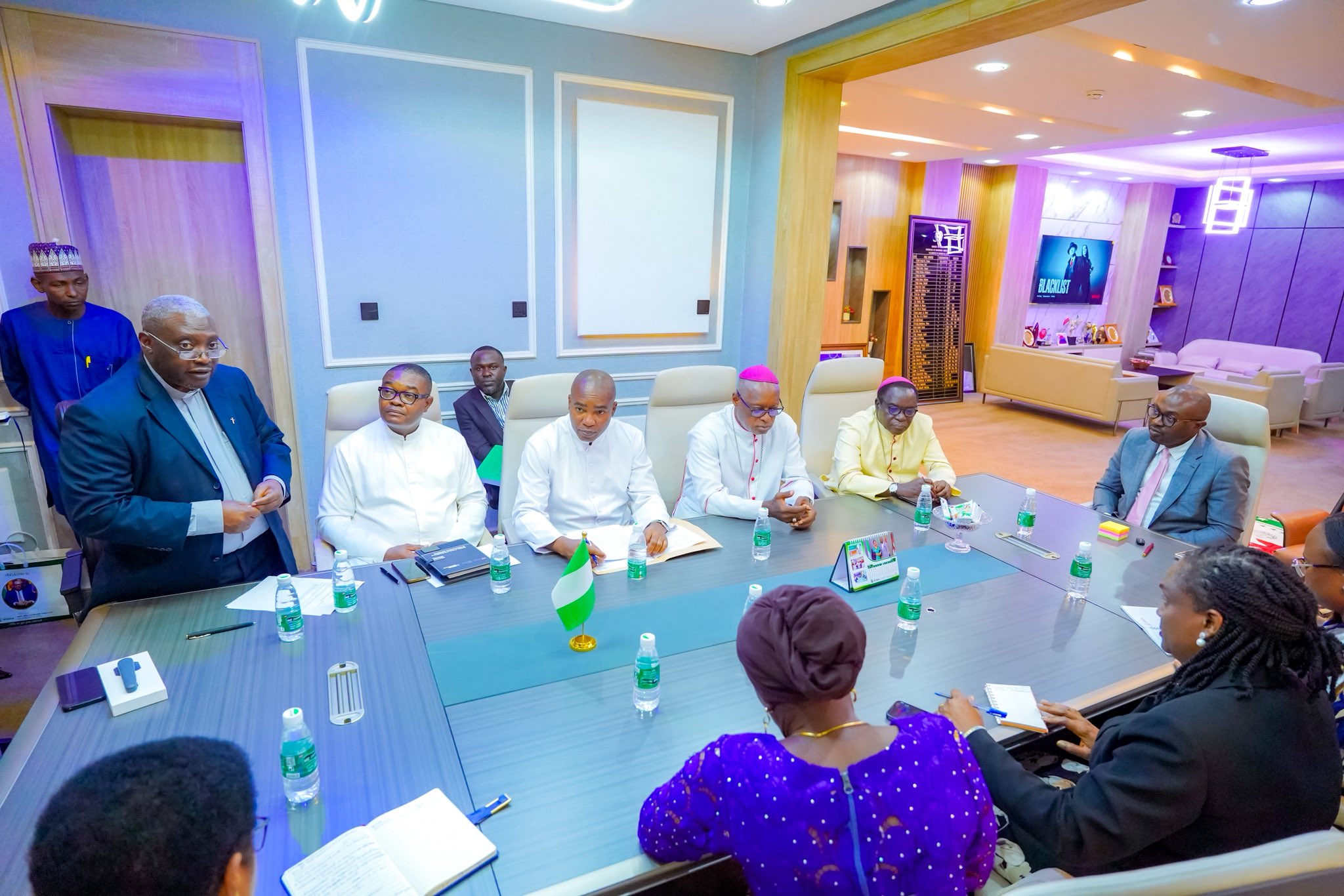
Nigeria's Interior Minister Hosts Bishop Kukah for Security Dialogue
Abuja, Nigeria -In a significant step toward fostering interfaith collaboration amid Nigeria’s complex security challenges, Honourable Olubunmi Tunji-Ojo, Minister of Interior, received a high-level delegation from the Catholic Secretariat of Nigeria on Tuesday afternoon.
The delegation was led by the outspoken and respected Most Rev. Matthew Hassan Kukah, Bishop of the Catholic Diocese of Sokoto.
The meeting, held in a cordial atmosphere, centered on strengthening partnerships in national security, peaceful coexistence, and broader national development.
Photographs from the session show the minister and religious leaders seated around a conference table adorned with the Nigerian flag, engaged in focused discussion.
Minister Tunji-Ojo, dressed in a sharp grey suit, listened intently alongside Catholic clergy in traditional white and yellow robes, including figures wearing pink zucchettos.
In his statement following the engagement, the minister emphasized the government’s openness to constructive dialogue: “As a government, we remain open to constructive engagements that advance national development, unity, and harmony across Nigeria.”
Bishop Kukah, a longtime advocate for justice, peace, and good governance, brings decades of experience to such conversations.
Born in 1952 in Kaduna State, he was ordained in 1976, served as Secretary General of the Catholic Bishops’ Conference of Nigeria, and has earned advanced degrees in peace studies and public policy from institutions including the University of Bradford and Harvard’s Kennedy School.
His leadership in the Muslim-majority Sokoto Diocese underscores his commitment to bridge-building in a diverse nation.
This meeting aligns with ongoing efforts by religious leaders and the government to address insecurity, which remains a pressing concern across Nigeria.
Faith-based organizations often play vital roles in community mediation, early warning systems for conflict, and promoting social cohesion in regions affected by banditry, insurgency, and communal tensions.
Public reactions on social media have been largely positive, with many Nigerians praising the initiative as a model for inclusive governance.
Comments highlighted that “security is everyone’s responsibility” and applauded the focus on dialogue as essential for national progress, especially with elections approaching.
Nigeria’s security landscape demands multi-stakeholder approaches. By engaging influential voices like Bishop Kukah—known for his fearless commentary on governance and human development—the Interior Ministry signals a willingness to harness religious institutions’ grassroots reach and moral authority.
Minister Tunji-Ojo, an engineer-turned-politician appointed to oversee internal security, immigration, and related matters, has positioned stakeholder engagement as a cornerstone of his tenure.
This encounter exemplifies practical steps toward the unity and harmony the minister referenced.
As Nigeria navigates its challenges, moments of quiet diplomacy between government and faith leaders offer hope.
They remind citizens that lasting peace arises not from isolation but from shared commitment to the common good—building bridges across divides for a more secure and prosperous future.
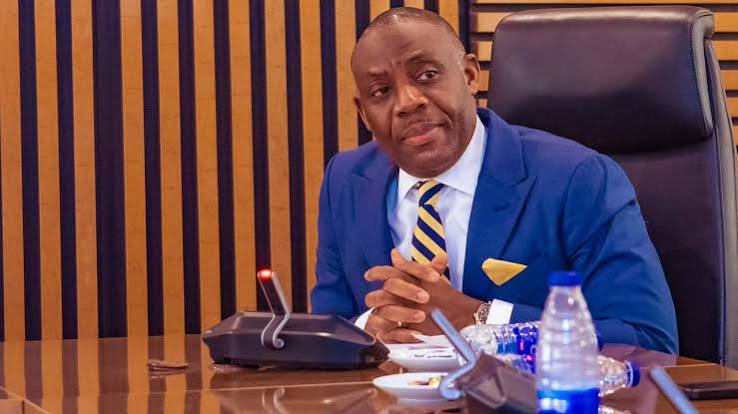 news
news Tinubu Set to Crush Obi, Atiku in 2027 Poll
 news
news Israel Urges Nigerian Doctors for Capacity Training Abroad
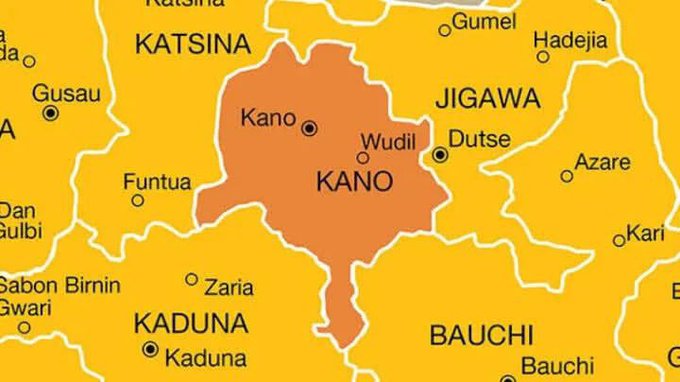 news
news Kano Woman Stabs Boyfriend, Severs Manhood Completely
 world
world Trump Hails Court Win Over New York Times Lawsuit
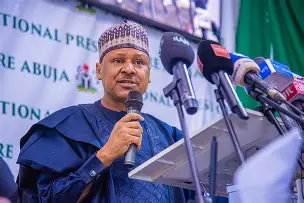 news
news Minister Hails NTA’s World-Class Studio in Tinubu Media Push
How do you feel about this news?
Community Additions
Have a news tip, correction, or extra context about this story? Post it below instantly. All submissions appear live on this screen immediately.