Nigeria Moves to End JSS-SSS Split in Bid to Stem 20 Million Dropouts
Abuja—In a significant policy shift aimed at reversing Nigeria’s staggering education crisis, the Federal Government has announced plans to scrap the long-standing separation of Junior Secondary Schools (JSS) from Senior Secondary Schools (SSS), citing its failure to deliver seamless learning and its contribution to over 20 million pupils dropping out before reaching the senior level.
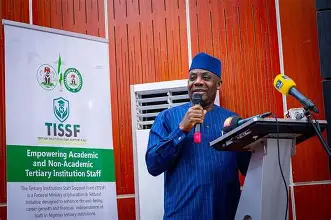
Education Minister Dr. Tunji Alausa made the declaration on Tuesday in Abuja while inaugurating the Universal Basic Education Commission (UBEC) Ministerial Implementation and Monitoring Committee.
He described the “disarticulation policy”—which mandated separate physical facilities, administrations, principals, and operations for JSS and SSS—as a well-intentioned reform that ultimately backfired.
“This disarticulation policy has failed. We will phase it out,” Alausa stated firmly. “We can’t be creating positions because we want to create a director level for people while we harm our education system.”
The policy, introduced years ago as part of efforts to strengthen basic education under the 6-3-3-4 system, was intended to allow focused attention on junior secondary learners.
Instead, officials say it created unnecessary transitions, administrative bottlenecks, and barriers that discouraged many students — particularly in northern states like Kaduna — from progressing.
Alausa emphasized that the move is part of broader reforms to expand access, improve learning outcomes, and introduce a more unified secondary education structure.
A position paper on the change will be presented at the next meeting of the National Council on Education for consideration and adoption.
Nigeria’s out-of-school children crisis remains one of the world’s most pressing. With millions of young Nigerians — many from vulnerable and rural communities — falling through the cracks at the critical JSS-to-SSS transition, the human and economic costs are immense.
Dropouts face limited job prospects, higher risks of exploitation, and perpetuate cycles of poverty.
Parents and educators have long complained about the disruptions caused by separate school systems: duplicated costs, inconsistent curricula, and logistical nightmares for families.
By merging JSS and SSS operations, the government hopes to create smoother pathways, reduce attrition, and foster a more cohesive 12-year basic education experience before tertiary studies.
While the announcement has been welcomed by many as a pragmatic response to data-driven realities, some stakeholders urge caution.
Implementation will require careful planning to avoid new disruptions, including retraining staff, harmonizing facilities, and ensuring states — which largely manage secondary education — buy into the vision.
Education experts note that scrapping the separation alone won’t solve deeper issues like inadequate funding, teacher shortages, poor infrastructure, and insecurity affecting schools in conflict zones.
However, it signals a willingness at the federal level to rethink structures that no longer serve Nigeria’s children.
Dr. Alausa’s remarks come amid renewed government focus on human capital development under the current administration. Observers will be watching closely to see how quickly this policy translates from announcement to action in classrooms across the federation.
For millions of Nigerian families, this could mark the beginning of a more hopeful chapter—one where the journey from primary to secondary education no longer feels like crossing a perilous bridge.
 news
news Tinubu Set to Crush Obi, Atiku in 2027 Poll
 news
news Israel Urges Nigerian Doctors for Capacity Training Abroad
 news
news Kano Woman Stabs Boyfriend, Severs Manhood Completely
 world
world Trump Hails Court Win Over New York Times Lawsuit
 news
news Minister Hails NTA’s World-Class Studio in Tinubu Media Push
How do you feel about this news?
Community Additions
Have a news tip, correction, or extra context about this story? Post it below instantly. All submissions appear live on this screen immediately.