Nigeria Draws Red Line on Xenophobia: No Humiliation, No Damage to Interests
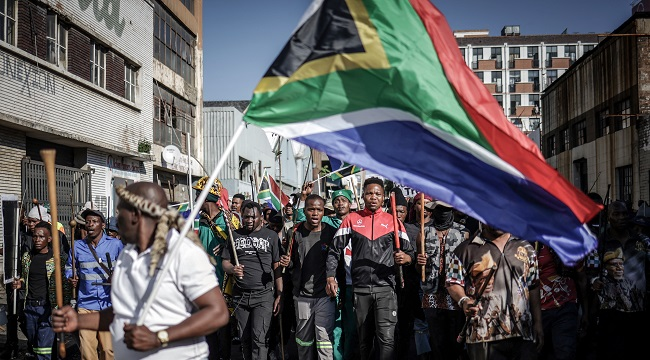
Johannesburg/Lagos, June 30, 2026 — As anti-migrant protesters marched through South African cities today, brandishing sticks and flags under a self-imposed June 30 deadline for undocumented foreigners to leave, Nigeria’s government issued its firmest warning yet: it will not tolerate any humiliation of its citizens or threats to its substantial interests in the Rainbow Nation.
Presidential Adviser on Foreign Affairs Demola Oshodi delivered the message with unmistakable clarity on Channels Television.
We will not accept any sort of humiliation or definitely any huge damages to our interests there. It’s just not possible,” he said.
The statement comes amid a renewed surge in xenophobic tensions that has already forced the repatriation of hundreds of Nigerians.
Another batch of returnees arrived home Tuesday, many leaving behind businesses, properties, and livelihoods built over years. Isolated clashes, stone-throwing, and looting were reported in Johannesburg and other areas, prompting a heavy police and military presence.
Oshodi emphasized that protecting Nigerian lives remains paramount even above economic stakes. President Bola Tinubu has dispatched his ambassador to the ground, and the government has moved “hundreds of the most vulnerable people” out of harm’s way while escalating diplomatic pressure on Pretoria.
“We’ve escalated this to the South African government, and we are taking steps to do more,” Oshodi assured. Yet he cautioned against extreme measures, citing deep historical ties, mutual investments, and the two nations’ status as Africa’s largest economies.
“We don’t want to throw the baby out with the bathwater,” he said, advocating an incremental “watch and see” approach as the deadline unfolds.
Nigeria is not stopping at evacuation. Acting High Commissioner Alexander Ajayi revealed that the Federal Government is systematically documenting losses and will pursue compensation from South Africa for properties and businesses seized or destroyed.
“We will not allow the labour people have suffered to build over the years to just go down the drain,” Ajayi stated on The Morning Brief.
This latest wave echoes painful patterns of the past. South African groups like Operation Dudula have framed the protests as a stand against undocumented immigration, crime, and resource strain—rhetoric that critics say masks outright xenophobia targeting African migrants, particularly Nigerians.
Four lives have already been lost in recent violence, with shops shuttered and communities on edge.
Nigeria has responded with citizen-first diplomacy under the Renewed Hope Agenda: rapid evacuations via Air Peace, reception support, and reintegration planning.
Yet officials and analysts alike stress that repatriation alone is no long-term fix. Many returnees face the trauma of starting over after years abroad.
The episode tests the resilience of Africa’s two economic giants.
Nigeria played a pivotal historical role in opposing apartheid and supporting South Africa’s liberation. Today, that shared past collides with present-day frustrations over safety, reciprocity, and continental solidarity.
As crowds dispersed and security forces maintained order into the night, Oshodi’s words captured the national mood: firm, measured, and resolute.
Nigeria will protect its people and interests — but it remains committed to dialogue and the bigger picture of African unity.
The coming days will reveal whether South Africa’s government matches that resolve with concrete protection for foreign nationals within its borders.
 news
news Tinubu Set to Crush Obi, Atiku in 2027 Poll
 news
news Israel Urges Nigerian Doctors for Capacity Training Abroad
 news
news Kano Woman Stabs Boyfriend, Severs Manhood Completely
 world
world Trump Hails Court Win Over New York Times Lawsuit
 news
news Minister Hails NTA’s World-Class Studio in Tinubu Media Push
How do you feel about this news?
Community Additions
Have a news tip, correction, or extra context about this story? Post it below instantly. All submissions appear live on this screen immediately.