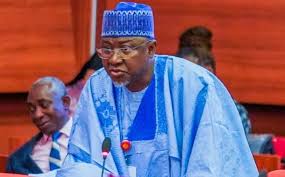
Senator Maidoki: "We Cry for Security, They Cry for Budgets – Nigeria's Leaders Fail Their People"
Abuja, Nigeria - In a raw, emotional address that has ignited widespread debate across Nigeria, Senator Garba Musa Maidoki, representing Kebbi South Senatorial District, has delivered a scathing critique of the Bola Tinubu administration’s fiscal management and the persistent banditry ravaging his state.
Speaking in a widely circulated video clip from late June 2026, the senator voiced deep frustration over what he described as three years of unfulfilled budgets, unchecked borrowing, and a growing disconnect between leaders and the suffering masses.
“And what is my fault in Kebbi?” Maidoki asked passionately. “I stood up here in the Senate to tell Nigerians to assist us that bandits are killing us. And suddenly, the governor thought I was fighting him. I have never fought the governor. I have nothing against him. But my people that sent me here asked me to cry, and I cried.”
A Senator’s Cry Amid Bandit Terror
Maidoki’s remarks highlight the dire security situation in parts of Kebbi State, particularly the Zuru axis, where bandit attacks have repeatedly claimed lives, displaced communities, and instilled fear.
He has long advocated for federal intervention, previously noting during Senate sessions that authorities “know the bandits and what they want,” urging a clear choice between negotiation and decisive military action.
His outspokenness, he claims, has cost him politically. Maidoki recently defected from the All Progressives Congress (APC) to the African Democratic Congress (ADC), attributing the loss of his party’s re-election ticket partly to his criticism of insecurity and alleged victimization by Kebbi State Governor Nasir Idris.
The state government has pushed back, dismissing his claims as misleading and pointing to progress in tackling banditry in affected areas.
This personal and regional grievance unfolds against a national backdrop of economic strain. Maidoki’s broader indictment strikes at the heart of governance under Tinubu: “Three years since Tinubu’s government—2023, 2024, and 2025—the budget has not been implemented. He has never implemented a budget. How does a country run without a budget?”
Fiscal Chaos: Overlapping Budgets and Unaccounted Funds
Independent reporting supports elements of his frustration. Nigeria’s budget implementation under the current administration has been marked by repeated extensions, supplementary budgets, and overlapping fiscal frameworks—described by analysts and editorials as “chaotic.”
The 2025 capital budget, for instance, has seen multiple rollovers, with portions of 2023, 2024, and 2025 budgets operating concurrently well into 2026.
President Tinubu has presented ambitious budgets, including a massive ₦58.18 trillion proposal for 2026, emphasizing infrastructure and defense.
Yet critics point to low capital release rates (e.g., only about 17.7% of the 2025 capital budget by Q3 in one reported period), persistent debt accumulation, and questions over revenue from agencies that claim to exceed targets.
Selective project financing and the lack of full transparency fuel public skepticism about where borrowed funds are truly going.
Maidoki’s questions resonate with many ordinary Nigerians facing hardship: “All the revenue generating agency in this country told us they have exceeded their target.
Where is the money going?” In a country battling inflation, unemployment, and eroded purchasing power, such sentiments tap into widespread disillusionment.
Broader Context and Political Ripples
This is not an isolated outburst. Maidoki has warned that ordinary Nigerians, not the military, could truncate democracy if governance failures persist.
His comments come as the Senate debates issues like state police—a proposal he has accused the presidency of politicizing ahead of 2027 elections.
Reactions on social media and in public discourse are polarized. Supporters hail him as a courageous voice finally speaking truth to power.
Critics accuse him of hypocrisy or sour grapes after losing APC favor, noting that many in the current National Assembly were part of the system they now question.
Northern elites’ selective awakening to issues also draws commentary, alongside reminders of similar challenges under previous administrations.
The Kebbi governor’s camp maintains that significant efforts against insecurity have been made, and that Maidoki’s narrative overlooks collaborative progress.
Implications for Nigeria’s Democracy and Future
As a veteran lawmaker, Maidoki’s intervention underscores deeper structural issues: weak budget execution, security governance gaps, and the tension between federal and state leadership.
It raises uncomfortable questions about accountability in a democracy where revenue shortfalls, debt servicing burdens, and overlapping budgets risk eroding public trust.
For citizens in bandit-plagued regions like Kebbi, the human cost is immediate—lost lives, disrupted livelihoods, and fear.
Nationally, it signals potential fractures within the ruling party and the APC’s broader coalition as the 2027 political season looms.
Whether Maidoki’s defection and public critique signal a genuine shift toward accountability or political opportunism remains debated.
What is clear is that his “cry” has amplified voices demanding better: full budget implementation, transparent spending, decisive action on insecurity, and leaders who prioritize constituents over partisanship.
In Nigeria’s complex political landscape, one senator’s frustration may not topple systems—but it forces a necessary conversation.
As Maidoki put it, if anyone tells the president “all is well, it’s a lie.” Nigerians, enduring daily realities, are listening closely.
This story continues to evolve, with calls for stronger oversight, fiscal discipline, and collaborative security strategies.
For a nation rich in potential yet strained by governance challenges, bridging the gap between rhetoric and results remains the urgent imperative.
 news
news Tinubu Set to Crush Obi, Atiku in 2027 Poll
 news
news Israel Urges Nigerian Doctors for Capacity Training Abroad
 news
news Kano Woman Stabs Boyfriend, Severs Manhood Completely
 world
world Trump Hails Court Win Over New York Times Lawsuit
 news
news Minister Hails NTA’s World-Class Studio in Tinubu Media Push
How do you feel about this news?
Community Additions
Have a news tip, correction, or extra context about this story? Post it below instantly. All submissions appear live on this screen immediately.