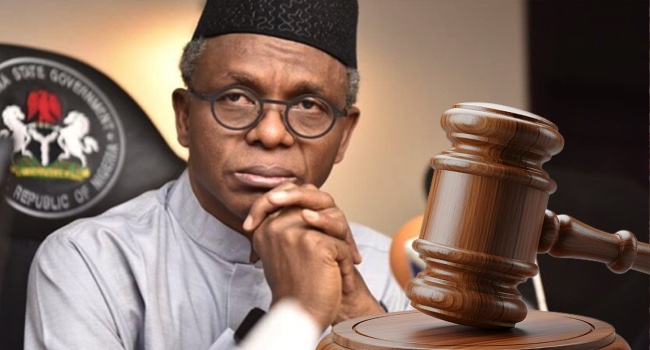
Court Slams Door on El-Rufai Bail as DSS Ends Wiretap Case
Abuja, Nigeria — In a significant development in one of Nigeria’s most closely watched political-legal dramas, the Department of State Services (DSS) has formally closed its case against former Kaduna State Governor Mallam Nasir El-Rufai in the high-profile alleged wiretapping trial.
Justice Joyce Abdulmalik of the Federal High Court in Abuja rejected the defence’s bid to relax his stringent bail conditions and adjourned proceedings to September 22, 2026, for arguments on a “no-case submission” and trial continuation.
The ruling comes amid intense public scrutiny and partisan debate, as El-Rufai — a former influential APC figure, policy heavyweight, and now vocal critic aligned with opposition elements — navigates multiple legal challenges following his time in office (2015–2023).
The Core Allegations and Trigger The charges stem from a February 13, 2026, appearance by El-Rufai on Arise TV’s *Prime Time*.
He claimed his team had intercepted communications revealing National Security Adviser (NSA) Nuhu Ribadu directing security operatives in a manner that concerned him, reportedly stating something to the effect of “we listened to the conversation of the NSA.”
Prosecutors allege this amounts to unlawful interception of communications, breaching the Cybercrimes (Prohibition, etc.) Amendment Act 2024 and the Nigerian Communications Act 2003, including failure to report accomplices and compromising public safety.
Key prosecution witness Deji Adeyanju, a lawyer and activist, testified that El-Rufai admitted on air to receiving information from tapped sources.
Another witness reportedly corroborated elements involving Ribadu acknowledging a related conversation.
The DSS presented evidence, including video recordings, but closed its case on Tuesday without calling further witnesses.
El-Rufai pleaded not guilty to the (amended) counts when arraigned earlier in 2026. His legal team, led by Paul Erokoro, argues the prosecution has failed to establish a prima facie case, planning a no-case submission.
They contend the evidence rests heavily on public statements rather than direct proof of orchestration or harm.
Strict Bail Conditions and Rejection of Variation El-Rufai was granted bail in the sum of ₦100 million with one surety in like sum. However, the conditions are notably onerous: the surety must be a federal civil servant at Level 17 or above (with salary slips for at least three months), own property in Abuja’s upscale Maitama or Asokoro districts (original Certificate of Occupancy to be deposited), provide an affidavit of means, tax clearance, and other verifications.
On Tuesday, the court rejected an application to ease these terms, ruling that qualified sureties exist.
Critics, including some observers and social media commentators, have called the conditions unrealistic or punitive, noting the salary and property requirements far exceed typical civil servant means and appear designed to prolong detention. Supporters of the process view them as necessary safeguards in a sensitive national security matter.
El-Rufai has spent time in custody earlier in 2026 linked to related probes by agencies like the EFCC and ICPC, adding layers of complexity and perceptions of coordinated pressure.
Broader Context and Political Undertones Nasir El-Rufai, often styled “Mallam,” built a reputation as a reformist technocrat during his governorship — praised by some for infrastructure, education, and fiscal discipline, criticized by others for alleged rights issues, religious tensions, and authoritarian style in Kaduna.
His post-office shift toward opposition politics, including sharp public critiques, has fueled narratives of political persecution versus accountability.
The timing — with the next general elections approaching in 2027 — has amplified speculation. Some see the case as a legitimate probe into potential security breaches; others interpret it as selective targeting of a vocal figure.
Defence sources and allies hint at appeals or further challenges, while the prosecution maintains the rule of law is being upheld without fear or favor.
Public reaction on platforms like X reflects Nigeria’s polarized polity: predictions of prolonged detention, debates over “karma” or due process, and questions about judicial independence.
One observer noted the irony of stringent bail for a bailable offence; others await the no-case outcome as a pivotal test.
What Lies Ahead With the DSS case closed, the burden shifts. If the no-case submission succeeds, El-Rufai could be discharged. If not, the defence will present its evidence, potentially prolonging a saga that touches on press freedom, surveillance powers, elite accountability, and the health of Nigeria’s democracy.
As the September 22 date looms, this case transcends one man’s legal battle. It tests the balance between national security imperatives and individual rights in a country where high-profile prosecutions often carry heavy political weight. Nigerians across divides will be watching whether evidence or optics ultimately prevail.
 news
news Tinubu Set to Crush Obi, Atiku in 2027 Poll
 news
news Israel Urges Nigerian Doctors for Capacity Training Abroad
 news
news Kano Woman Stabs Boyfriend, Severs Manhood Completely
 world
world Trump Hails Court Win Over New York Times Lawsuit
 news
news Minister Hails NTA’s World-Class Studio in Tinubu Media Push
How do you feel about this news?
Community Additions
Have a news tip, correction, or extra context about this story? Post it below instantly. All submissions appear live on this screen immediately.