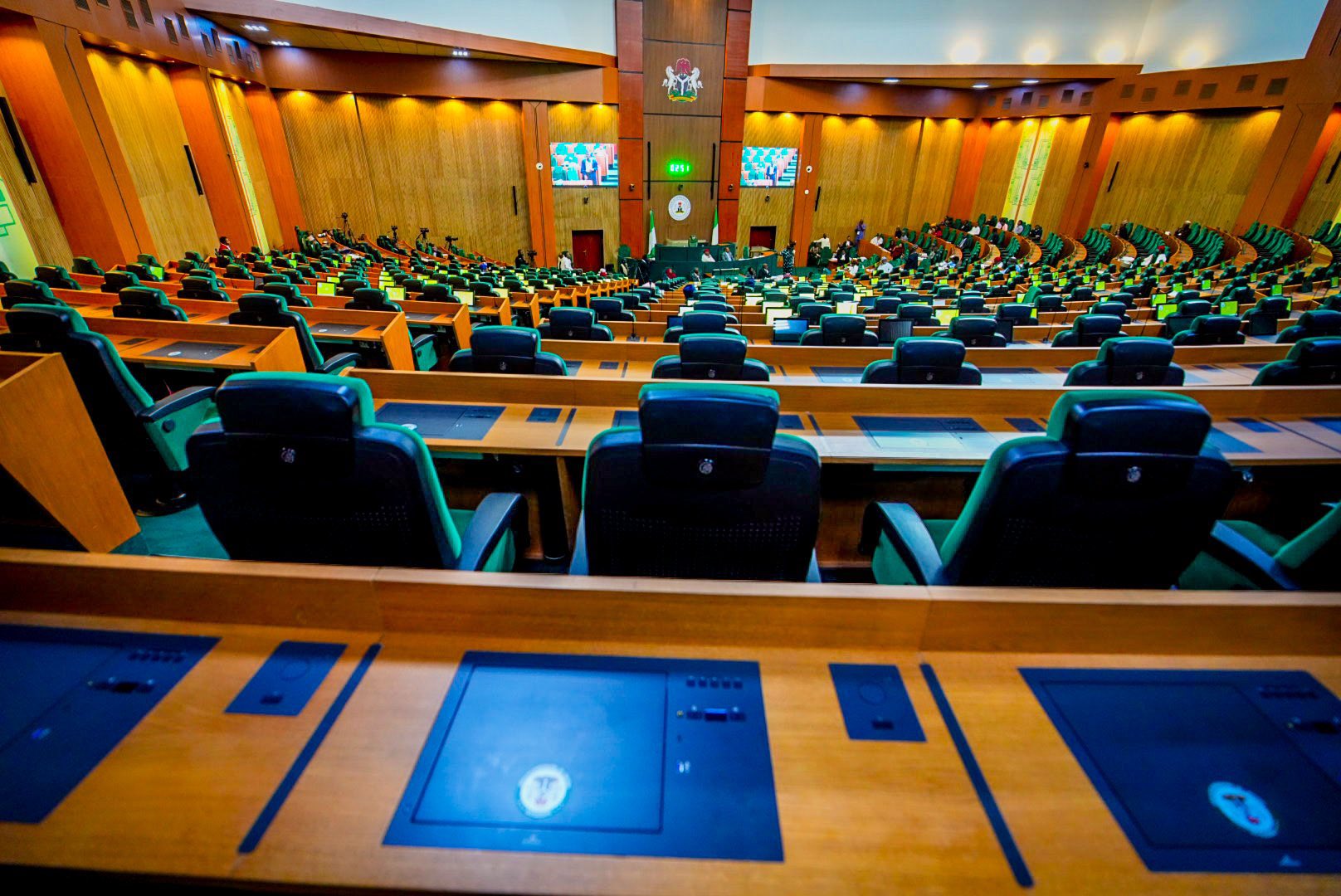
House of Reps Advances State Police Bill for Thursday Vote
Abuja, Nigeria – June 10, 2026 - Nigeria’s House of Representatives is set to take a decisive step on Thursday toward establishing state police, with lawmakers scheduled to vote on key constitutional amendment bills aimed at decentralizing the country’s policing system.
Deputy Speaker Benjamin Kalu, who chairs the House Committee on Constitution Review, made the announcement at a media briefing shortly after plenary on Wednesday.
He revealed that the House has prioritized the state police bill ahead of other legislative items in the ongoing constitutional review process.
Kalu disclosed that the House has directed all members currently on oversight functions outside Abuja to immediately suspend their activities and return to the National Assembly on Thursday to participate in the crucial voting session.
The State Police Bill (HB617), sponsored by Deputy Speaker Kalu and 14 other members, seeks to amend the 1999 Constitution to allow states to establish and control their own police forces.
The bill has already passed second reading with broad bipartisan support and is now at an advanced stage.
Context and Legislative Momentum
The move comes amid mounting pressure to address Nigeria’s persistent security challenges, including banditry, insurgency, kidnapping, and communal violence.
Proponents argue that state police would enable faster, more localized responses by leveraging community knowledge and giving governors direct operational control over security in their domains — a sharp departure from the current centralized system where the Inspector-General of Police reports to the President.
Recent consultations between the National Assembly and the Presidency have further accelerated the process.
The Senate is also fast-tracking similar provisions this week, with indications that the matter could soon be transmitted to the 36 State Houses of Assembly for concurrence.
Potential Benefits and Risks
Supporters view the bill as a long-overdue reform that could strengthen Nigeria’s security architecture by bringing policing closer to the people.
They highlight the possibility of improved intelligence gathering, quicker response times, and greater accountability at the state level.
However, critics and cautious observers warn of significant risks.
Chief among them is the potential for governors to misuse state police forces against political opponents, a concern echoed in public reactions on social media.
Other challenges include ensuring uniform recruitment standards, adequate funding, professional training, and safeguards against politicization or the emergence of abusive units reminiscent of past controversies.
The design details — including oversight mechanisms, funding models, and coordination with federal agencies — will be critical in determining whether the reform succeeds or creates new problems.
What Happens Next
If the House passes the bill on Thursday, it will proceed to the Senate for concurrence.
Both chambers may harmonize their versions before transmitting a final draft to President Bola Tinubu for assent.
For the constitutional amendment to take effect, it must also be ratified by at least 24 State Houses of Assembly.
Thursday’s vote represents a pivotal moment in Nigeria’s long-running debate on security sector reform.
While the outcome is not guaranteed, the prioritization of the bill signals strong legislative momentum driven by the urgent need to tackle insecurity more effectively.
Lawmakers and security experts alike are watching closely as Nigeria inches closer to potentially reshaping its policing landscape.
 politics
 Adebayo Challenges Tinubu: Where Is Subsidy Money? Come Out and Account for It
 politics
 NDC Wins Logo Battle as Abuja Court Orders INEC to Use Modified Design
 news
news Atiku Exposes Tinubu’s FAAC Scam: Bigger Naira, Poorer Nigerians
 news
news Police Arrest Hafsat Abubakar Over Fake Fintech Shutdown Document Circulated Online
 politics
 Sowore Declares Peter Obi Yelwata Blockade Government-Sponsored Political Attack
How do you feel about this news?
Community Additions
Have a news tip, correction, or extra context about this story? Post it below instantly. All submissions appear live on this screen immediately.