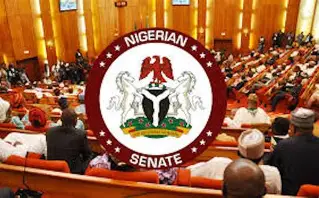
Court Declares National Assembly’s N110bn Vehicle, Allowance Scheme Unlawful
Lagos, Nigeria — In a landmark judgment that could reshape public accountability in government spending, a Federal High Court in Lagos has declared unlawful the National Assembly’s N110 billion allocation for official vehicles and support allowances for lawmakers, describing the expenditure as a violation of procurement laws and ethical standards expected of public office holders.
The ruling, delivered by Justice Yellim Bogoro, followed a suit filed by the Socio-Economic Rights and Accountability Project (SERAP), which challenged the legality of the expenditure approved for members of the 10th National Assembly.
At the centre of the controversy were N40 billion earmarked for the purchase of 465 vehicles for federal lawmakers and an additional N70 billion allocated as support allowances for newly elected legislators.
The allocations formed part of the 2022 supplementary budget signed into law by President Bola Ahmed Tinubu and attracted widespread public criticism after details became public in 2023.
In his judgment, Justice Bogoro held that the National Assembly failed to demonstrate compliance with the provisions of Nigeria’s Public Procurement Act, particularly regarding competitive bidding, transparency, and value-for-money assessments.
According to the court, the scale of the expenditure, combined with the absence of evidence showing due process was followed, rendered the procurement exercise arbitrary and inconsistent with established legal standards.
The judge further observed that lawmakers stood to benefit directly from spending they personally approved, creating what he described as a clear case of conflict of interest and self-dealing.
“The beneficiaries of the expenditure are the same officials responsible for approving it,” the court held, noting that such an arrangement undermines public trust and raises serious ethical concerns.
Justice Bogoro also linked the expenditure to the broader economic realities confronting Nigerians, questioning the priorities of public officials at a time when millions of citizens continue to struggle with rising living costs.
He noted that inflation, high food prices, declining purchasing power, and widespread poverty have placed enormous pressure on households across the country, making the allocation difficult to justify from a public-interest perspective.
The court stated that allocating N110 billion for lawmakers’ benefits while many Nigerians face severe economic hardship reflected a failure to place national interest above personal or institutional gain.
Rejecting arguments by the National Assembly that the judiciary lacked authority to review legislative spending decisions, the judge ruled that constitutional separation of powers does not grant immunity from legal scrutiny.
“The doctrine of separation of powers does not operate as a shield for illegality,” the court declared.
Justice Bogoro also dismissed objections regarding SERAP’s legal standing to institute the action, holding that the organisation had fulfilled necessary requirements by notifying the National Assembly of its intention to seek judicial intervention before filing the suit.
Beyond procurement violations, the court ruled that the expenditure breached the Code of Conduct for Public Officers and contradicted the oath of office sworn by elected lawmakers.
According to the judgment, public office should never be used as a platform for personal enrichment, and public resources must be managed with transparency, accountability, and a commitment to serving citizens.
As part of the ruling, the court formally declared both the N40 billion vehicle procurement programme and the N70 billion support allowance scheme unlawful.
The National Assembly was also directed to ensure that future expenditures comply strictly with procurement regulations and are guided by principles of openness, accountability, and value for money.
The decision is expected to reignite national conversations about public spending, fiscal responsibility, and the need for stronger oversight of government institutions at a time when many Nigerians continue to demand greater accountability from elected officials.
 politics
 Adebayo Challenges Tinubu: Where Is Subsidy Money? Come Out and Account for It
 politics
 NDC Wins Logo Battle as Abuja Court Orders INEC to Use Modified Design
 news
news Atiku Exposes Tinubu’s FAAC Scam: Bigger Naira, Poorer Nigerians
 news
news Police Arrest Hafsat Abubakar Over Fake Fintech Shutdown Document Circulated Online
 politics
 Sowore Declares Peter Obi Yelwata Blockade Government-Sponsored Political Attack
How do you feel about this news?
Community Additions
Have a news tip, correction, or extra context about this story? Post it below instantly. All submissions appear live on this screen immediately.